Top Treadmill Workouts: Walking Pad vs Standard Machine Mistakes
Discover how to fix common form and machine errors ruining your top treadmill workouts. Compare walking pads and standard treadmills to optimize routines.

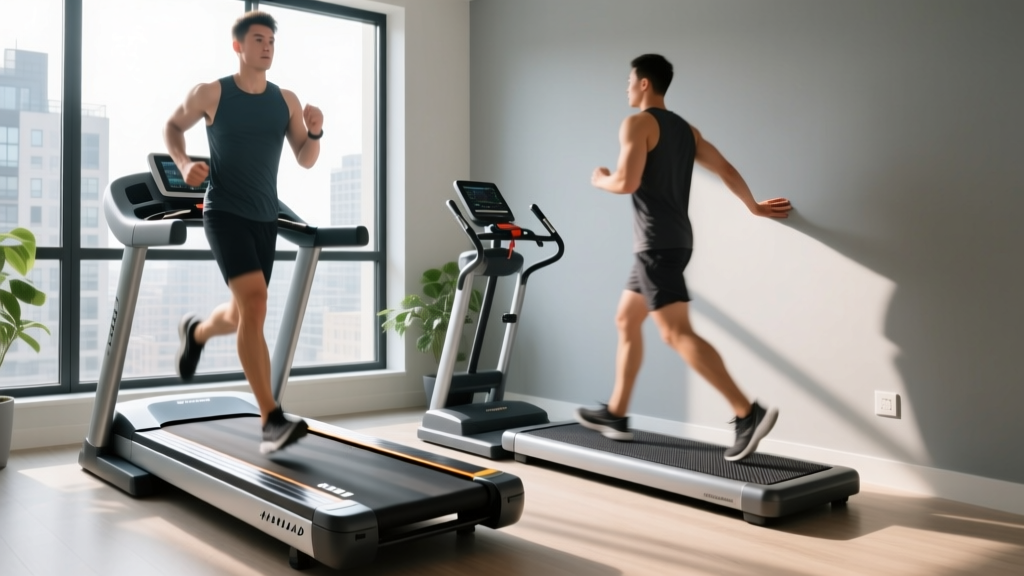
The explosion of compact under-desk walking pads has revolutionized home fitness, but it has also created a massive wave of biomechanical confusion. As we navigate the fitness equipment landscape in 2026, countless users are attempting to execute their top treadmill workouts on folding pads designed exclusively for strolling. This mismatch leads to severe frustration, premature hardware failure, and unexpected joint pain.
Whether you are trying to crush a high-intensity interval training (HIIT) session or simply hit your daily step count, using the wrong machine—or using the right machine with flawed mechanics—will sabotage your progress. In this comprehensive troubleshooting guide and comparison review, we break down the exact mistakes ruining your cardio sessions and how to fix them.
The Biomechanical Clash: Walking Pads vs. Standard Treadmills
Before troubleshooting your form, you must understand the hardware limitations. The most common error users make is assuming a walking pad can handle the mechanical load of a standard treadmill workout. According to the Centers for Disease Control and Prevention (CDC), achieving optimal cardiovascular health requires a mix of moderate and vigorous aerobic activity. However, vigorous activity (like running intervals) demands specific machine specifications that walking pads simply do not possess.
| Feature | KingSmith WalkingPad R2 (Compact) | Sole Fitness F63 (Standard) |
|---|---|---|
| Motor Type | 1.25 HP (Peak) | 3.0 CHP (Continuous) |
| Belt Length | 47 inches | 60 inches |
| Max Speed | 7.5 mph (Handlebar raised) | 12 mph |
| Incline Capability | 0% (Fixed Flat) | 0% - 15% (Motorized) |
| Ideal Use Case | LISS, Under-desk walking (2.0 - 3.5 mph) | HIIT, Tempo Runs, Incline Walking |
| Average 2026 Price | $499 - $599 | $999 - $1,199 |
4 Fatal Mistakes Sabotaging Top Treadmill Workouts on Compact Belts
If you are trying to adapt standard running routines to a compact walking pad, you are likely making one of these four critical errors.
1. Overstriding on a 47-Inch Belt
Standard treadmill belts range from 55 to 60 inches in length to accommodate the 'flight phase' of a running stride. When users attempt jogging at 5.0 mph on a 47-inch walking pad, the brain subconsciously restricts the stride to prevent stepping off the back. This results in a high-cadence 'shuffle' that drastically increases patellofemoral joint stress and shin splints.
2. Ignoring Continuous Horsepower (CHP) Limits
Walking pads advertise 'Peak HP', which is the maximum power the motor can draw for a few seconds before overheating. A 1.25 Peak HP motor cannot sustain a 180-lb user walking at 3.5 mph for 45 minutes. Attempting endurance workouts on these motors will trigger the machine's internal thermal shutoff sensor mid-workout.
3. The Handrail Death Grip
Many walking pads feature a fold-up handlebar. Users often grip this bar tightly while walking at an incline or fast pace, leaning backward. This completely disengages the core, reduces caloric expenditure by up to 20%, and alters natural spinal alignment.
4. Expecting Incline Adaptations
One of the most popular top treadmill workouts in 2026 is the '12-3-30' method (12% incline, 3 mph, 30 minutes). Walking pads are mechanically locked at 0% incline. Attempting to simulate this by increasing the speed to 4.5 mph on a flat pad does not yield the same posterior chain (glute and hamstring) activation, leading to users wondering why their results have plateaued.
⚠️ Troubleshooting Warning: If your walking pad suddenly stops and displays an 'E02' or 'Overheat' error code, do not immediately restart it. The motor's thermal fuse has tripped. Unplug the machine, allow it to cool for 45 minutes, and check the belt tension. A belt that is too tight forces the motor to draw excess amperage, generating fatal heat.Hardware Troubleshooting: Belt Slippage and Motor Stutter
When executing faster intervals on compact machines, hardware failure is common. Here is how to troubleshoot the two most frequent mechanical issues.
- The 'Stutter' Effect: If the belt hesitates or stutters every time your foot strikes, your belt is either too loose or lacking lubrication. Fix: Lift the edge of the belt. If it feels dry, apply exactly 10ml of 100% silicone treadmill lubricant in a zig-zag pattern under the center of the belt. Run the machine at 2.0 mph for 3 minutes to distribute it. Do this every 40 miles.
- Static Shock: Walking pads placed on carpeted floors in low-humidity rooms build up static electricity, which can short-circuit the digital display. Fix: Place a high-density PVC equipment mat (minimum 1/4 inch thick) under the pad and ensure the room humidity is above 40%.
Form Rehabilitation: Fixing the 'Walking Pad Shuffle'
To safely perform moderate-intensity workouts on a walking pad without destroying your joints, you must retrain your gait. The Mayo Clinic emphasizes that proper walking form requires a heel-to-toe strike and natural arm swing.
- Cadence over Speed: Instead of pushing the machine to 4.0 mph and shuffling, cap your speed at 3.2 mph and focus on deliberate, full-foot strikes.
- Arm Swing Mechanics: Bend your elbows at 90 degrees and drive them forward and back. This counter-rotation stabilizes the pelvis and naturally lengthens your stride within the confines of a short belt.
- The 'One-Third' Rule: Position yourself in the front third of the walking pad belt. If you drift to the back half, your brain will trigger the stride-shortening survival mechanism. Use a piece of brightly colored tape on the side rail as a visual marker to maintain your forward position.
'Cardiovascular health is dictated by sustained heart rate elevation, not necessarily the mechanical complexity of the machine. A brisk, intentional 3.0 mph walk on a flat walking pad yields superior long-term adherence and joint preservation compared to a sloppy, high-impact jog on the same device.'
The 2026 Buyer's Framework: Matching Machine to Routine
Before investing in new equipment or abandoning your current one, align your machine with your actual workout profile. The American Heart Association recommends at least 150 minutes of moderate-intensity or 75 minutes of vigorous aerobic activity per week.
Choose a Walking Pad (e.g., UREVO Strol 2E, KingSmith R2) If:
- Your primary goal is NEAT (Non-Exercise Activity Thermogenesis) and hitting 10,000+ daily steps.
- You work from home and need an under-desk solution for LISS (Low-Intensity Steady State) cardio.
- You have strict spatial constraints and need to fold the unit into a closet.
Choose a Standard Treadmill (e.g., Sole F63, Horizon T101) If:
- Your top treadmill workouts include sprint intervals, tempo runs, or heart-rate zone 4 training.
- You weigh over 200 lbs (continuous duty motors are required to prevent belt drag and motor burnout).
- You require incline training to target the glutes and prepare for outdoor hiking or marathons.
Final Verdict
The secret to maximizing your cardio results isn't just about finding the best routines; it is about respecting the engineering limits of your equipment. Walking pads are phenomenal tools for daily movement and combating a sedentary lifestyle, but they are not built for the biomechanical violence of running. By correcting your stride, maintaining your belt lubrication, and matching your workout intensity to the machine's continuous horsepower, you can safely achieve your fitness goals without compromising your joints or your hardware.
More gear to consider
All reviews
Cardio Noise Setup: ProForm Treadmill Maintenance Lubrication

ProForm 330x Treadmill Belt Maintenance in Tight Spaces
Walking Pad vs Matrix Treadmill Programs: Setup & Review

Beyond Barry's Treadmills: 2026 Stationary Bike Market Trends

Curved vs Motorized: Picking Your HIIT Cardio Workout Treadmill