Upgrading From ProForm Treadmill Older Models: Stair Climber Guide
Transitioning from ProForm treadmill older models? Read our 2026 stair climber buying guide with space specs, model comparisons, and joint-health tips.

The Cardio Pivot: Why Leave the Treadmill Behind?
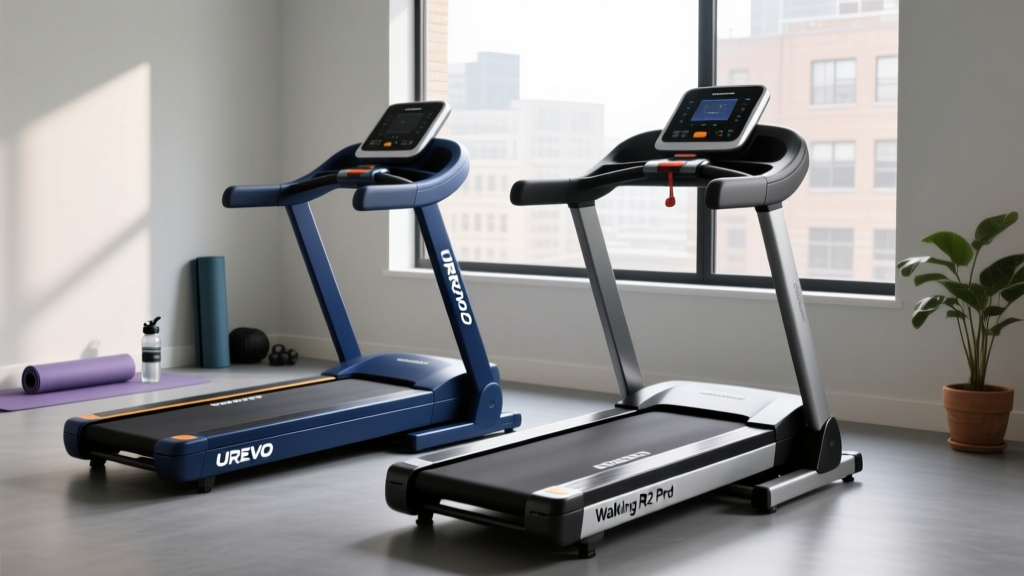
If you have been running on ProForm treadmill older models—such as the widely purchased ProForm 505 CST or 705 CST from the early-to-mid 2010s—you are likely familiar with the creeping frustrations of aging home cardio equipment. The 2.0 CHP motors begin to whine under continuous load, the running belts require constant silicone lubrication to prevent friction burns, and the console ribbon cables inevitably degrade, causing erratic speed changes. When the cost to replace a drive motor or control board on these ProForm treadmill older models easily exceeds $350, most home gym owners face a critical decision: repair the aging belt, or pivot to a more biomechanically efficient modality?
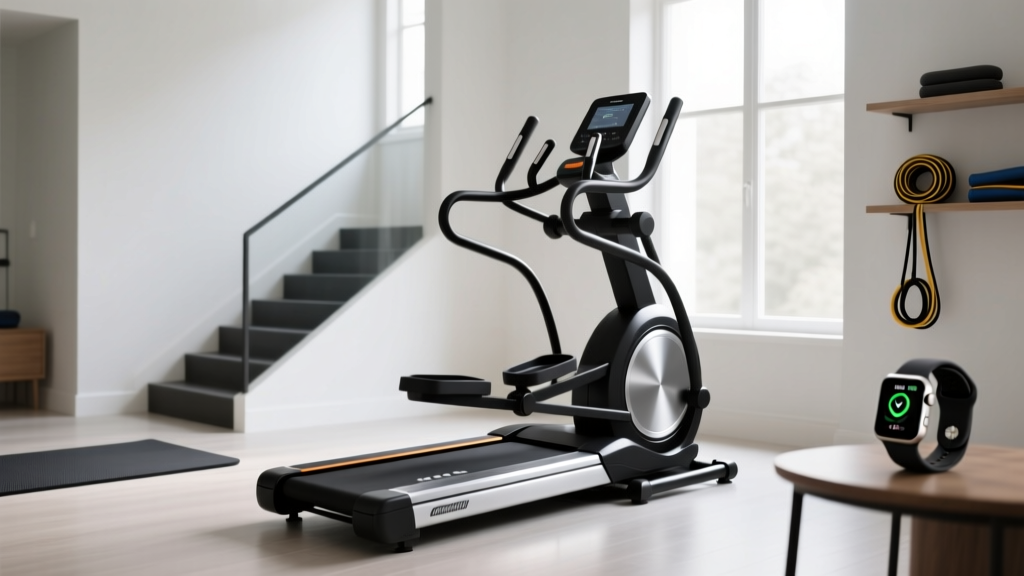
Enter the home stair climber. In 2026, the stair climber has evolved from a niche bodybuilding tool to a premier cardiovascular machine that offers superior glute and quad engagement without the repetitive ground-reaction forces associated with treadmill running. According to the American Heart Association, achieving 150 minutes of moderate-to-vigorous aerobic activity is essential for cardiovascular longevity, but doing so without destroying your knee cartilage is equally important. Stair climbers provide the high metabolic output of a steep incline run with the low-impact joint preservation of an elliptical.
The #1 Edge Case: The Ceiling Clearance Trap
The most common reason home stair climbers are returned or sold on the secondary market has nothing to do with the machine's quality and everything to do with spatial geometry. Unlike ProForm treadmill older models which only require clearance for the user's head, stair climbers elevate the user's entire body by 12 to 18 inches during the peak of the stepping motion.
⚠️ CRITICAL MEASUREMENT WARNING: Before purchasing any vertical stair climber or stepper, you must calculate your maximum step height. Use this formula: User Height + 16 inches = Minimum Ceiling Height Required. If you are 6'0" (72 inches), you need a ceiling clearance of at least 7'4" (88 inches). Many standard basements and converted garages only have 8-foot ceilings, leaving less than 4 inches of overhead clearance, which is a major safety hazard and causes severe claustrophobia during high-intensity intervals.2026 Stair Climber Market: Model Comparison Matrix
When upgrading from ProForm treadmill older models, you generally have three distinct architectural choices: the hybrid stride-stepper, the commercial pedal-climber, and the isolated stair-mill. Below is a data-driven comparison of the top-tier home models dominating the 2026 market.
| Model | Architecture | Max User Weight | Footprint (L x W) | 2026 Est. Price |
|---|---|---|---|---|
| Bowflex Max Trainer M9 | Hybrid Stride/Stepper | 300 lbs | 49" x 30" | $1,999 |
| Sunny Health SF-SBE9010 | Commercial Pedal Stepper | 350 lbs | 52" x 31" | $2,499 |
| StairMaster FreeClimber | Isolated Stair-Mill | 300 lbs | 74" x 31" | $3,899 |
| NordicTrack FS14i | FreeStride Elliptical/Stepper | 375 lbs | 58" x 29" | $2,299 |
Breaking Down the Contenders
- Bowflex Max Trainer M9: The ideal bridge for treadmill refugees. It combines the upper-body engagement of an elliptical with the steep vertical resistance of a stepper. It requires significantly less ceiling clearance than traditional pedal steppers because the user's head does not elevate vertically; rather, the stride angle steepens.
- Sunny Health SF-SBE9010: This brings the commercial gym experience home. It uses a heavy-duty chain drive and magnetic braking. However, it demands a 9-foot ceiling for anyone over 5'8" and weighs over 250 lbs, making it a permanent installation rather than a movable piece of gear.
- StairMaster FreeClimber: Unlike the rotating escalator style (which poses a severe trip hazard in small home gyms if you lose your footing), the FreeClimber uses independent pedals that only move when you push them. If you stop, the machine stops. This is the ultimate safety feature for home environments lacking the safety lanyards of older treadmills.
Biomechanics: Treadmill Incline vs. True Stair Climbing
Many users of ProForm treadmill older models attempt to simulate stair climbing by maxing out the treadmill's incline motor (usually capped at 10% to 12% on older ProForm models). However, biomechanically, walking on an inclined belt is vastly different from lifting your body weight against gravity on a stair climber.
"When you hold onto the handrails of an inclined treadmill, you effectively reduce your body weight load by up to 30%, negating the caloric and muscular benefits of the incline. A true stair climber forces unilateral weight transfer, activating the gluteus medius and vastus lateralis in a way that belt propulsion simply cannot replicate."
— Insights adapted from the Mayo Clinic's guidelines on aerobic exercise and joint loading.
Transitioning Your Routine: A 4-Week Protocol
If you are moving from a treadmill to a stair climber, your cardiovascular engine might be strong, but your stabilizing muscles and Achilles tendons are not adapted to the deep dorsiflexion required on a stepper. Follow this progression to avoid plantar fasciitis and calf strains:
- Week 1 (The Acclimation Phase): Limit sessions to 15 minutes at a low RPM (40-50 steps per minute). Focus entirely on pushing through the heel rather than the toe to engage the posterior chain.
- Week 2 (Postural Correction): Increase to 25 minutes. Practice 'no-hands' climbing. Hover your hands an inch above the console to force your core to stabilize your pelvis, mimicking the balance requirements of real-world staircases.
- Week 3 (Interval Integration): Introduce 30-second high-RPM sprints (70+ SPM) followed by 90 seconds of active recovery. This replaces the HIIT running intervals you previously did on the treadmill.
- Week 4 (Endurance Loading): Complete a continuous 45-minute steady-state climb, utilizing the machine's resistance levels rather than speed to elevate your heart rate into Zone 3 (aerobic capacity), as recommended by the CDC's physical activity frameworks.
Maintenance: Avoiding the Failures of the Past
The primary reason ProForm treadmill older models end up in landfills is neglected drivetrain maintenance. Stair climbers have different failure points. To ensure your new investment outlasts your old treadmill, implement these specific maintenance protocols:
- Chain Tensioning (Pedal Steppers): Unlike a treadmill belt that slips, a stepper chain will stretch over the first 50 hours of use. Locate the tensioner bolts on the rear axle and tighten them when you hear a 'clicking' sound during the downstroke.
- Magnetic Brake Dusting: Hybrid climbers like the Bowflex use eddy-current magnetic resistance. While there is no physical friction, static electricity attracts dust to the flywheel housing. Vacuum the side vents monthly to prevent the internal hall-effect sensors from overheating.
- Pivot Point Lubrication: The pedal arms pivot on heavy-duty bearings. Apply a PTFE-based (Teflon) dry lubricant to the pivot joints every six months. Avoid WD-40, which strips factory grease and attracts grit.
Frequently Asked Questions
Can I put a stair climber on the second floor of my house?
Proceed with caution. A commercial-style stepper like the Sunny SF-SBE9010 weighs over 250 lbs. Add a 200-lb user dynamically loading the pedals, and you are generating localized point-loads that can exceed standard residential floor joist ratings (typically designed for 40 lbs per square foot of static live load). Always place heavy cardio equipment directly over load-bearing walls or reinforce the subfloor.
Is a stair climber better for bad knees than an elliptical?
It depends on the specific knee pathology. Stair climbers require deep knee flexion under load, which can aggravate patellofemoral pain syndrome (runner's knee). If you have severe osteoarthritis or meniscus tears, a recumbent bike or a zero-impact elliptical is generally safer. However, for strengthening the VMO (vastus medialis oblique) to support a healthy knee, the stair climber is unparalleled.
What happens to my old ProForm treadmill?
Do not throw it in the municipal trash. Many local recycling centers accept e-waste and heavy metals. Alternatively, organizations like Goodwill or local community centers sometimes accept working (even if imperfect) older treadmills for parts or light use. If the motor is completely dead, strip the electronics and scrap the steel frame, which is highly recyclable.
More gear to consider
All reviews
Bike Types & What Incline and Speed Should I Walk on a Treadmill

Sole F80 Treadmill vs Walking Pads: Beginner Setup Guide

Sole F63 Treadmill Assembly: Small Space Folding Review
Best Under Desk Treadmills With Smart Treadmill Programs (2026)

Weslo Cadence 80 Treadmill Maintenance & Compact Cardio Care