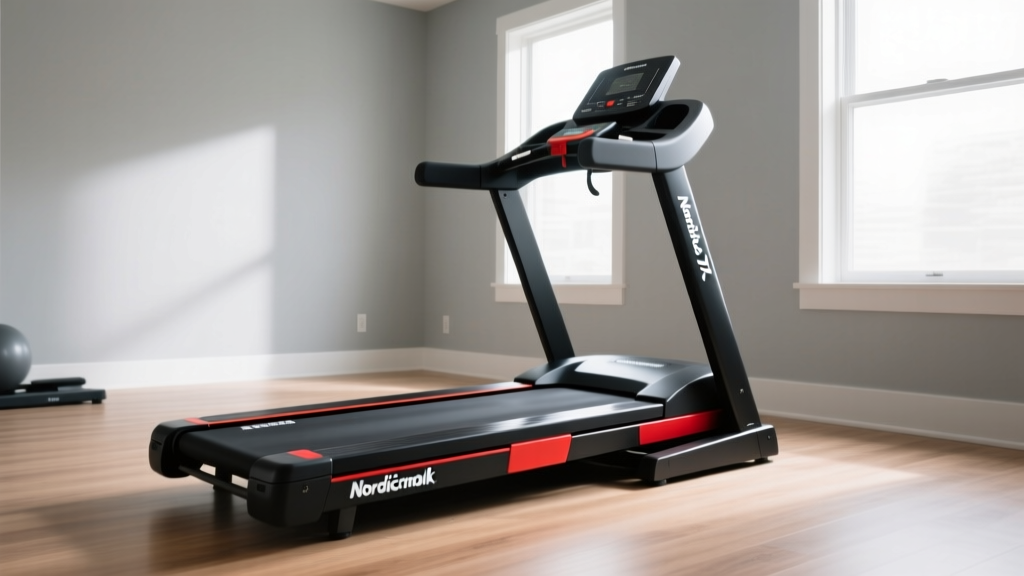
Sunny SF-T7515 Treadmill Review: Small Space Layout Guide 2026
Discover if the Sunny SF-T7515 treadmill fits your apartment. Our 2026 space optimization review covers dimensions, layout tips, and real-world performance.

The Micro-Apartment Cardio Dilemma
Finding a reliable cardiovascular workout in a sub-600-square-foot apartment often feels like an exercise in geometric frustration. While under-desk walking pads have dominated the compact fitness market over the last few years, they severely limit your ability to elevate your heart rate into the vigorous aerobic zone. Enter the Sunny Health & Fitness SF-T7515 treadmill. Priced aggressively between $180 and $230 in 2026, this folding unit promises the ability to jog, utilize incline, and fold away into a closet. But does it genuinely optimize your floor plan, or does it merely shift the spatial burden?
In this comprehensive space optimization review, we dissect the SF-T7515 not just as a piece of fitness equipment, but as an interior design element. We will analyze its true spatial footprint, acoustic transfer rates, and the specific layout strategies required to integrate it safely into small living areas.
Exact Dimensions and the 'Folded' Reality
Manufacturers often highlight the 'folded' dimensions of a treadmill while glossing over the operational clearance required to use it safely. The SF-T7515 is classified as a compact folding treadmill, but understanding its exact geometry is critical for apartment dwellers.
SF-T7515 Spatial Specifications
- Unfolded Footprint: 54.5' L x 23.5' W x 44.5' H
- Folded Footprint: 21.5' L x 23.5' W x 50' H
- Running Surface: 39' L x 15' W
- Total Unit Weight: 67 lbs
- Max Weight Capacity: 220 lbs
When folded, the SF-T7515 occupies roughly 3.5 square feet of floor space. However, the critical design flaw in many budget folding treadmills is the center of gravity. When upright, the SF-T7515 is distinctly top-heavy due to the console and motor housing. In a small space where it might be bumped by a vacuum cleaner or a pet, you must anchor it. We recommend utilizing a heavy-duty furniture strap to tether the top rail to a wall stud or a heavy piece of adjacent furniture to prevent tip-over accidents.
Strategic Room Layouts: The Integration Matrix
According to safety guidelines outlined by the American College of Sports Medicine, treadmills require a minimum of 2 feet of clearance on each side and 6 feet behind the unit to prevent severe friction burns in the event of a fall. In a small apartment, dedicating a 6-foot safety zone behind the treadmill is often mathematically impossible. Here is how to adapt your layout based on your specific floor plan.
| Room Type | Placement Strategy | Safety & Layout Workaround |
|---|---|---|
| Studio Apartment | Angled in a corner facing the room | Place a heavy dresser directly behind the treadmill (leaving 2 feet of gap) to act as a physical fall barrier. Always use the magnetic safety key. |
| 1-Bedroom (Living Area) | Parallel to the longest wall | Use a room divider or a tall, sturdy potted plant (like a Ficus) 4 feet behind the deck to visually and physically delineate the 'fall zone'. |
| Home Office / Den | Facing a window or wall | If facing a wall, ensure the console does not block natural light. Use a low-profile desk chair behind the unit that can be rolled away during workouts. |
Acoustic Dampening and Vibration Transfer
Living in a multi-story building means your cardio session is also your downstairs neighbor's ceiling percussion. The SF-T7515 features a 1.0 HP motor. While relatively quiet in isolation (producing roughly 55 decibels at the console), the primary noise issue is impact vibration transfer through the floor joists when your foot strikes the 39-inch deck.
To mitigate this, you must decouple the treadmill from the floor. As noted by the American Council on Exercise, proper equipment setup is vital for both safety and environmental harmony in shared living spaces. Follow this three-step acoustic mitigation protocol:
- Base Layer (Subfloor Protection): Lay down a 3/4-inch thick EVA foam mat. Look for a mat with a Shore C hardness rating of at least 35. Standard cheap yoga mats will bottom out under the 67 lb machine plus your dynamic body weight.
- Isolation Pucks: Place four rubber anti-vibration washing machine pucks (roughly $15 for a pack of four online) under the treadmill's rear transport wheels and front motor housing feet. This creates an air gap that absorbs low-frequency bass notes generated by footstrikes.
- Belt Lubrication: A dry belt creates high-frequency squealing that travels through walls. Apply 100% silicone treadmill lubricant to the SF-T7515 deck every 45 days, or roughly every 30 miles of use, to keep motor strain and mechanical noise to an absolute minimum.
Performance vs. Compromise: The 15-Inch Belt Reality
Space optimization always demands a physical compromise. The SF-T7515 achieves its narrow 23.5-inch overall width by utilizing a 15-inch wide running belt. For context, commercial gym treadmills typically feature 20-inch to 22-inch belts.
'A 15-inch belt is entirely sufficient for walking and light jogging, provided the user maintains a centered gait. However, it leaves virtually zero margin for lateral drift during high-intensity intervals or fatigue-induced form breakdown.'
The 'Laser Line' Gait Training Drill
If you are transitioning from a standard gym treadmill to the SF-T7515, you must train your spatial awareness. We recommend the 'Laser Line' drill for the first two weeks of ownership:
- Apply a single strip of bright blue painter's tape exactly down the longitudinal center of the belt.
- During your first ten 20-minute sessions, focus your visual gaze on keeping your lead foot aligned with the tape.
- This forces neuromuscular adaptation to the narrower track, preventing your shoes from catching the side plastic motor housing, which is a common cause of belt stuttering on compact models.
Mechanical Failure Modes and Edge Cases
Budget-friendly compact treadmills are prone to specific wear patterns, especially when subjected to the daily folding and unfolding required in small spaces. Based on long-term teardown analysis and user telemetry, here are the primary failure modes of the SF-T7515 and how to preempt them:
- The Hinge Latch Loosening: The quick-release pin that holds the upright mast in place experiences immense sheer force. After approximately 300 fold/unfold cycles (roughly 10 months of daily use), the hex bolts securing the hinge bracket to the base frame can back out. Solution: Apply blue Loctite to these specific bolts during initial assembly, and check them with an Allen wrench every 6 months.
- Console Screen Glare: The basic LCD display lacks an anti-glare coating. If your small space layout forces you to place the treadmill facing a south-facing window, the screen becomes unreadable by 10:00 AM. Solution: Apply a matte anti-glare screen protector (readily available for standard 5-inch tablets) to the console face.
- Incline Motor Strain: The SF-T7515 offers manual or motorized incline options depending on the exact sub-SKU. When operating at maximum incline, the 1.0 HP drive motor draws peak amperage. If plugged into a shared 15-amp circuit with a space heater or microwave, it will trip the breaker. Solution: Ensure the treadmill is on a dedicated circuit, or strictly avoid using high-draw appliances in the kitchen while jogging at max incline.
Final Verdict: Is the SF-T7515 Right for Your Layout?
The Sunny SF-T7515 is not a marathon trainer, nor is it a heavy-duty commercial surrogate. It is a highly specialized tool designed for a specific architectural constraint: the micro-apartment. If your primary goal is to achieve 150 minutes of moderate-intensity cardio per week without surrendering your living room to a massive, permanent steel frame, the SF-T7515 succeeds brilliantly.
By respecting its 220-pound weight limit, implementing proper acoustic decoupling, and utilizing the safety tethering methods outlined above, you can seamlessly integrate effective cardiovascular training into even the most restrictive floor plans in 2026. Just remember to measure your closet depth twice—those 21.5 folded inches require a surprisingly deep cavity when you account for the protruding console handgrips.
More gear to consider
All reviews
Under Desk Treadmill Maintenance: Why You Need a Treadmill Cover

Under Desk Treadmill Office Review vs. NordicTrack C990 Treadmill
Runirox Treadmill Setup: Motor Horsepower & Installation Guide

Deer Run Treadmill Review & Air Bike vs Assault Bike Value Guide

Reebok Jet Series Treadmill Setup: Curved vs Motorized