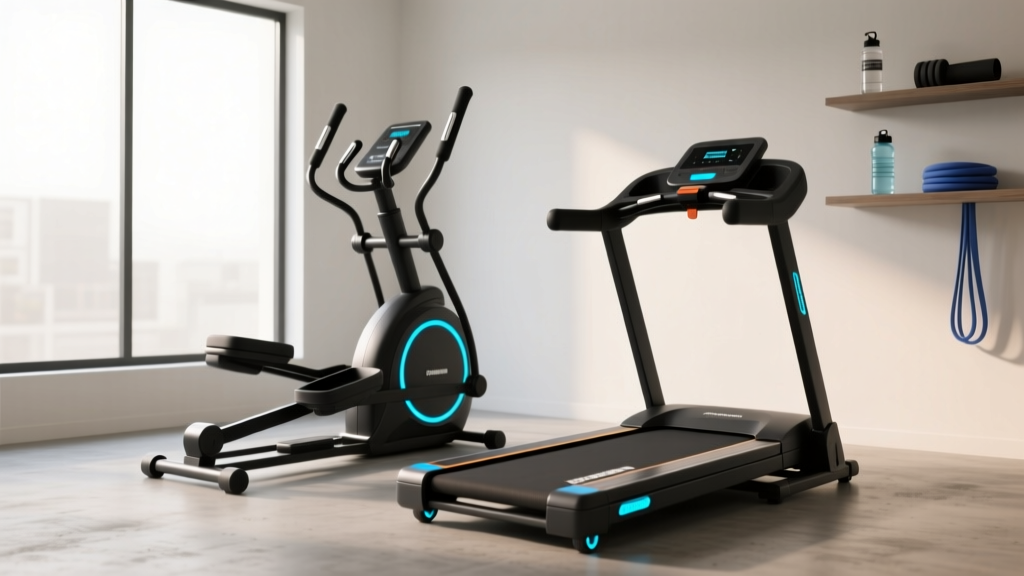
Stationary Bike Types Care & Silicone-Based Treadmill Lubricant Tips
Learn essential maintenance for upright, recumbent, and spin stationary bike types, plus expert tips on applying silicone-based treadmill lubricant.

Maintaining a home gym in 2026 requires more than just wiping down handlebars after a sweaty session. With premium cardio equipment prices averaging between $1,500 and $3,500, understanding the distinct mechanical and chemical needs of your machines is critical for protecting your investment. Two of the most common categories in home fitness—stationary bikes and treadmills—require vastly different maintenance protocols. In this comprehensive guide, we break down the specific care routines for the three primary stationary bike types (upright, recumbent, and spin) and provide an expert-level masterclass on the proper application of silicone-based treadmill lubricant.
Decoding Stationary Bike Types: Upright, Recumbent, and Spin
Before applying any grease or cleaner, you must identify your bike's architecture. The drive system and resistance mechanism dictate your maintenance schedule. According to equipment longevity data tracked by Consumer Reports, drive-train failure and sweat-induced corrosion account for over 65% of out-of-warranty home bike repairs.
1. Spin Bikes (Indoor Cycling)
Models like the Peloton Bike+, Schwinn IC4, and Keiser M3i are designed for high-cadence, out-of-the-saddle riding. They generate massive amounts of sweat, which drips directly onto the flywheel and bottom bracket. Spin bikes utilize either chain drives (requiring regular lubrication) or polyurethane/Gates Carbon belt drives (which require zero lubrication but strict tension monitoring).
2. Upright Bikes
Traditional upright bikes (e.g., NordicTrack VR25 or Sole B94) mimic outdoor cycling geometry but typically use enclosed magnetic resistance systems and poly-V belts. Because the moving parts are shrouded, they are less susceptible to sweat corrosion but require periodic belt tension checks and console calibration.
3. Recumbent Bikes
Recumbent models like the Sole R92 feature a stepped-through frame and a seated backrest. The primary maintenance concern here is the motorized seat-rail adjustment mechanism, which can seize if dust and pet hair accumulate in the track, alongside the internal magnetic brake assembly.
The Stationary Bike Maintenance Matrix
Use this decision framework to identify the exact care requirements for your specific machine type.
| Bike Type | Drive System | Primary Failure Mode | Key Maintenance Task | Interval |
|---|---|---|---|---|
| Spin (Chain) | Steel Roller Chain | Chain stretch & rust | Apply dry PTFE chain lube | Every 50 hours |
| Spin (Belt) | Gates Carbon / PU | Belt slipping / debris | Clean with isopropyl alcohol | Monthly |
| Upright | Poly-V Belt | Belt fraying / dust | Vacuum flywheel housing | Every 3 months |
| Recumbent | Motorized Magnetic | Seat rail motor burnout | White lithium grease on rails | Bi-annually |
Deep-Care Protocols for Stationary Bikes
To maximize the lifespan of your bike, you must address the silent killer of indoor fitness equipment: chloride-rich sweat. Human sweat has a pH ranging from 4.5 to 7.0 and contains high levels of sodium chloride. When left on steel or aluminum components, it triggers rapid galvanic corrosion.
Expert Warning: Never use standard household glass cleaners or bleach-based wipes on your bike's frame or console. The ammonia and harsh chlorides will strip the powder-coat finish and accelerate rust. Instead, use a diluted solution of Simple Green All-Purpose Cleaner (1 part cleaner to 10 parts water) or dedicated fitness equipment wipes.Belt vs. Chain: The Lubrication Divide
If you own a chain-driven spin bike (like the older Sole SB900), you must use a dry PTFE (Teflon) bicycle chain lubricant. Wet lubes attract dust and create a grinding paste that destroys the sprockets. Conversely, if you own a belt-driven bike, never apply any lubricant to the belt. Lubricants will cause the polyurethane to degrade and the belt to slip under heavy resistance. If a belt squeaks, it is either misaligned or lacks tension; consult your manufacturer's manual for the specific tension deflection measurement (usually 10mm of play at the midpoint).
The Critical Role of Silicone-Based Treadmill Lubricant
While your stationary bikes require specific mechanical attention, the other centerpiece of most home gyms—the treadmill—demands an entirely different chemical approach. This brings us to the most misunderstood consumable in fitness equipment care: silicone-based treadmill lubricant.
Treadmill belts are typically constructed from PVC or rubber layered over a woven fabric backing. As the belt rubs against the wooden or MDF deck, friction generates immense heat. If this heat is not mitigated, the belt will delaminate, the deck will warp, and the drive motor will overheat and draw excessive amperage, eventually burning out the motor controller board.
Why 100% Silicone is Non-Negotiable
You must exclusively use 100% silicone-based treadmill lubricant. Silicone is a synthetic polymer that is chemically inert to rubber and PVC. It boasts a high flash point and maintains its viscosity (typically around 1000 cSt) under the heavy friction of a runner's footstrike. According to the American Council on Exercise (ACE), proper deck lubrication can extend the life of a treadmill motor and belt by up to 40%.
Critical Mistake: Never use WD-40, 3-in-One oil, or any petroleum-based distillate on a treadmill deck. Petroleum products will immediately break down the polymer chains in the PVC belt, causing it to swell, blister, and permanently ruin the deck surface.Step-by-Step: Applying Silicone-Based Treadmill Lubricant
Most manufacturers recommend applying 15ml (0.5 oz) of silicone-based treadmill lubricant every 150 miles or every 3 months, whichever comes first. Here is the professional application method:
- Power Down and Loosen: Unplug the treadmill. Use the provided Allen wrench to loosen the rear roller bolts by exactly 3 to 4 full turns on each side. This creates enough slack to lift the belt edge.
- Clean the Deck: Slide a microfiber cloth under the belt to wipe away old, blackened silicone sludge and dust. A clean deck ensures the new lubricant bonds properly.
- Apply the Silicone: Insert the applicator tube of your 100% silicone-based treadmill lubricant under the center of the belt. Squeeze the bottle to apply a continuous zig-zag or wavy line across the width of the deck, moving from the front roller toward the back.
- Re-Tension the Belt: Tighten the rear roller bolts back to their original position (count your turns). Ensure the belt is centered.
- Distribute the Lube: Plug the machine in, stand on the side rails, and start the belt at 3.0 mph. Let it run for 5 minutes so the silicone spreads evenly across the entire deck surface.
Cross-Contamination: Keep Treadmill Lube Away from Bikes
A common error among home gym owners is attempting to use their silicone-based treadmill lubricant on the chains or seat rails of their stationary bikes. Do not do this.
'Silicone spray or liquid silicone is a poor choice for high-load, metal-on-metal mechanical linkages like bicycle chains. It lacks the extreme-pressure (EP) additives required to prevent metal wear and will quickly fling off under high cadence.' — Fitness Repair Parts Technical Bulletin
For your recumbent bike's seat rails, use a white lithium grease. For spin bike chains, use a dry PTFE lube. Keep the silicone-based treadmill lubricant strictly reserved for the treadmill deck and belt interface.
Conclusion: A Proactive Maintenance Mindset
Whether you are meticulously wiping down the Gates Carbon belt on your spin bike or carefully measuring out 15ml of silicone-based treadmill lubricant for your morning run, proactive maintenance is the key to equipment longevity. By respecting the unique material science of each machine—avoiding petroleum on rubber, keeping sweat off steel, and matching the right lubricant to the right drivetrain—you ensure your home gym remains a reliable, squeak-free sanctuary for years to come.
More gear to consider
All reviews
Cardio Machine Noise Comparison & Planet Fitness Treadmill Speed Fixes

Yosuda Treadmill Review: Under Desk Office Value in 2026

Stair Climber Setup Guide: Pairing With a Dumbbell Rowing Machine

Reebok Z Tech Treadmill Review: Small Space Verdict

Does Nike Run Club Work on Treadmills? Setup & 2026 Buyer Guide