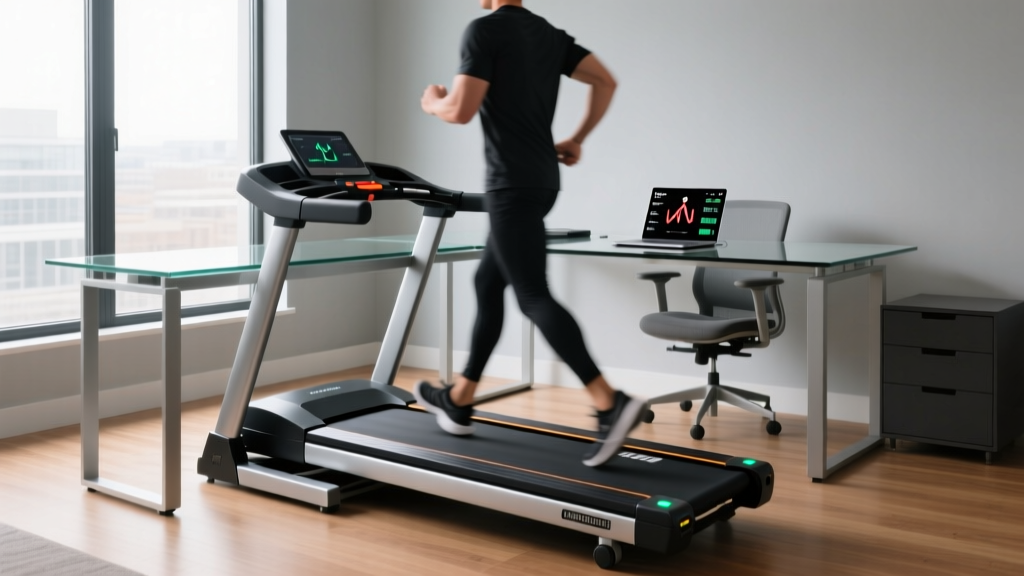
Budget Breakdown: Stationary Bike Types vs Assault Treadmill
Compare the cost and value of stationary bike types (upright, recumbent, spin) against an assault treadmill to find your best cardio budget fit.

The Home Cardio Investment Dilemma in 2026
Allocating a home gym budget requires balancing upfront costs, long-term durability, and biomechanical value. When fitness enthusiasts begin cross-shopping premium cardio equipment, the debate frequently narrows down to stationary bike types (upright, recumbent, and spin) versus high-end manual runners. Specifically, many buyers search for an 'assault treadmill'—a colloquial term for the elite curved, non-motorized treadmills pioneered by brands like Assault Fitness.
According to the American Heart Association, consistent aerobic exercise is non-negotiable for cardiovascular health, but the modality you choose dictates your joint impact, caloric expenditure, and spatial requirements. This comprehensive budget breakdown dissects the true cost of ownership, hidden fees, and ROI of upright, recumbent, and spin bikes, benchmarking them against the premium assault treadmill category.
Upright Bikes: The Traditional Middle-Ground
Upright bikes mimic the geometry of a traditional outdoor bicycle but with a heavier base and fixed cockpit. They are the most common entry point for home cardio budgets.
Budget & Pricing Tiers
- Entry-Level ($200 - $450): Typically feature friction resistance, lighter flywheels (15-20 lbs), and chain drives. Expect a lifespan of 1-3 years with heavy use.
- Mid-Range ($500 - $900): The sweet spot for value. Models like the Sole SB700 ($599) offer a 40 lb flywheel, belt-drive silence, and magnetic resistance.
- Premium ($1,000 - $2,000): Connected fitness models with integrated touchscreens and automated resistance adjustments.
Value Analysis & Failure Modes
The primary value of an upright bike is its compact footprint (usually around 20 x 40 inches). However, the value proposition drops if the user experiences saddle sores or lower back fatigue, which is common on rigid, poorly adjustable upright seats. The most common failure mode in budget upright bikes is the degradation of the friction felt pad and the stretching of the chain drive, requiring frequent maintenance.
Recumbent Bikes: Ergonomics and Rehabilitation
Recumbent bikes feature a step-through design with a bucket seat and backrest, positioning the pedals in front of the user rather than below them. As noted by Mayo Clinic fitness experts, low-impact aerobic exercise is critical for individuals managing joint issues or recovering from injuries.
Budget & Pricing Tiers
- Entry-Level ($300 - $600): Basic LCD consoles, limited resistance levels, and narrower seats. Example: Basic Amazon-branded models.
- Mid-Range ($700 - $1,200): The Schwinn 270 ($699) dominates this tier, offering 29 workout programs, a dual-track LCD, and a padded, ventilated lumbar-support seat.
- Commercial/Premium ($1,500 - $2,500): Models like the Horizon Fitness Comfort R ($1,099) or Life Fitness Club Series feature induction braking systems, self-generating power (no wall outlet needed), and ultra-wide Q-factors.
Value Analysis & Biomechanical Edge
The true value of a recumbent bike lies in its 'Q-factor' (the horizontal distance between the pedals). Premium recumbents engineer a narrow Q-factor (around 160mm) to mimic natural walking gait, drastically reducing lateral knee strain. While they cost more upfront and require a larger footprint (up to 65 inches long), their resale value remains remarkably stable because they are highly sought after by aging demographics and physical therapy clinics.
Spin Bikes (Indoor Cycles): High-Intensity ROI
Spin bikes are designed for high-cadence, out-of-the-saddle interval training. They feature aggressive geometry, heavy flywheels, and infinite micro-adjustability.
Budget & Pricing Tiers
- Budget Spin ($400 - $800): Often suffer from poorly calibrated magnetic resistance and sweat-prone exposed steel frames that rust within two years.
- Mid-Range ($900 - $1,500): Solid magnetic resistance and belt drives, though often lacking advanced telemetry.
- Premium/Commercial ($1,800 - $2,600): The Keiser M3i ($2,295) remains the gold standard. It features an aluminum V-frame (immune to sweat corrosion), a rear-mounted 8 lb flywheel with a high gear ratio, and native Bluetooth FTMS for seamless integration with Zwift and TrainerRoad.
Value Analysis: The Flywheel Myth
Many budget brands market 50 lb flywheels as a sign of quality. In reality, a massive flywheel is only necessary for friction resistance to maintain momentum. Premium magnetic spin bikes like the Keiser M3i use lightweight flywheels paired with high gear ratios and eddy-current magnets to create a perfectly smooth, silent pedal stroke. The ROI on a premium spin bike is immense for HIIT enthusiasts, as the drivetrain is virtually maintenance-free.
Expert Insight: Cost Per Use (CPU)When evaluating cardio equipment, do not just look at the upfront MSRP. Factor in the 'Cost Per Use' and the machine's depreciation curve. A $2,300 spin bike used 4 times a week over 5 years yields a CPU of roughly $2.21 per session. Conversely, a $400 upright bike that breaks down or becomes a clothes rack after 6 months has an infinite CPU. Buy for the workout you will actually sustain.
The Premium Benchmark: Assault Treadmill Value Proposition
When buyers search for an 'assault treadmill', they are almost exclusively referring to the AssaultRunner series (Pro or Elite) by Assault Fitness. These are curved, non-motorized manual treadmills. Because there is no motor, the user dictates the pace entirely through their own biomechanical force and stride placement on the curved deck.
Budget Breakdown
- AssaultRunner Pro: ~$2,999. Features a standard rubber belt and standard console.
- AssaultRunner Elite: ~$3,499. Upgrades to a 1/8-inch thick vulcanized rubber slat belt, a premium console with Bluetooth, and a 320 lb weight capacity.
Is the Premium Price Tag Justified?
At roughly $3,500, the AssaultRunner Elite is significantly more expensive than mid-tier stationary bikes. However, the value analysis reveals unique advantages:
- Caloric Expenditure: Studies on curved manual treadmills indicate they can burn up to 30% more calories than motorized treadmills at the same perceived exertion, due to the lack of motor assistance and the requirement to engage the posterior chain (glutes and hamstrings) to pull the belt down.
- Zero Electrical Costs: The assault treadmill is entirely self-powered. You can place it anywhere in your home, garage, or patio without worrying about proximity to a 120V outlet.
- Longevity & Warranty: With no motor to burn out and no electronic incline motors to fail, the mechanical lifespan of a curved treadmill far exceeds traditional motorized treadmills. Assault Fitness backs the Elite frame with a 5-year warranty and parts for 3 years.
Cost vs. Value Comparison Matrix
| Machine Type | Target Price Range | Best For | Maintenance Level | Resale Value Retention |
|---|---|---|---|---|
| Upright Bike | $500 - $900 | General fitness, small spaces | Medium (Chain/felt wear) | Low (30-40%) |
| Recumbent Bike | $700 - $1,200 | Rehab, seniors, back issues | Low | High (60-75%) |
| Spin Bike | $1,500 - $2,300 | HIIT, cyclists, Zwift users | Very Low (Belt/Magnetic) | High (50-70%) |
| Assault Treadmill | $2,999 - $3,499 | Sprinters, CrossFit, high burn | Low (Belt tensioning) | Very High (70-85%) |
Hidden Costs: Subscriptions, Space, and Flooring
A true budget breakdown must account for the periphery costs of owning cardio machines in 2026.
- Connected Subscriptions: If you opt for a smart upright or spin bike (like Peloton or NordicTrack), expect to pay $15 to $44 per month for all-access memberships. The AssaultRunner and Keiser M3i, by contrast, allow you to use third-party apps or your own tablet without locking the machine's basic telemetry behind a proprietary paywall.
- Flooring & Shock Absorption: Dropping a 300 lb assault treadmill or a heavy spin bike on hardwood requires high-density EVA foam or rubber horse-stall mats (approx. $60 - $100 per 4x6 mat) to prevent floor denting and noise transfer to rooms below.
- Climate Control: Manual treadmills and spin bikes generate massive amounts of user body heat. Budgeting for a high-velocity floor fan (like the Vornado or Dyson Purifier Cool) is a mandatory $100-$300 addition to your setup for comfort and sweat management.
Final Verdict: Allocating Your Cardio Budget
Choosing between stationary bike types and an assault treadmill ultimately hinges on your biomechanical needs and spatial constraints. If your budget is strictly under $1,000 and you require joint-friendly rehabilitation, a mid-tier recumbent bike like the Schwinn 270 offers unmatched ergonomic value. For high-intensity interval training and gamified riding in a compact footprint, a premium spin bike like the Keiser M3i provides a commercial-grade experience with virtually zero maintenance.
However, if your budget exceeds $3,000 and your goal is maximum caloric burn, posterior chain development, and total-body sprint conditioning, the assault treadmill (AssaultRunner Elite) is a superior, long-term investment. Its non-motorized design eliminates the most common point of failure in home treadmills, ensuring that your premium budget allocation translates into decades of reliable, high-performance cardio.
More gear to consider
All reviews
Air Bike vs Assault Bike: Track Treadmill Workouts & Cardio ROI
Spin, Upright & Recumbent Bike Care vs. Exercise Treadmill Machine

Reebok Treadmill Belt Maintenance: Optimizing Room Layout
Troubleshoot Cardio Noise When Using Free Apps for Treadmill Walking

Air Bike vs Assault Bike: Space Layouts & Horizon T95 Treadmill