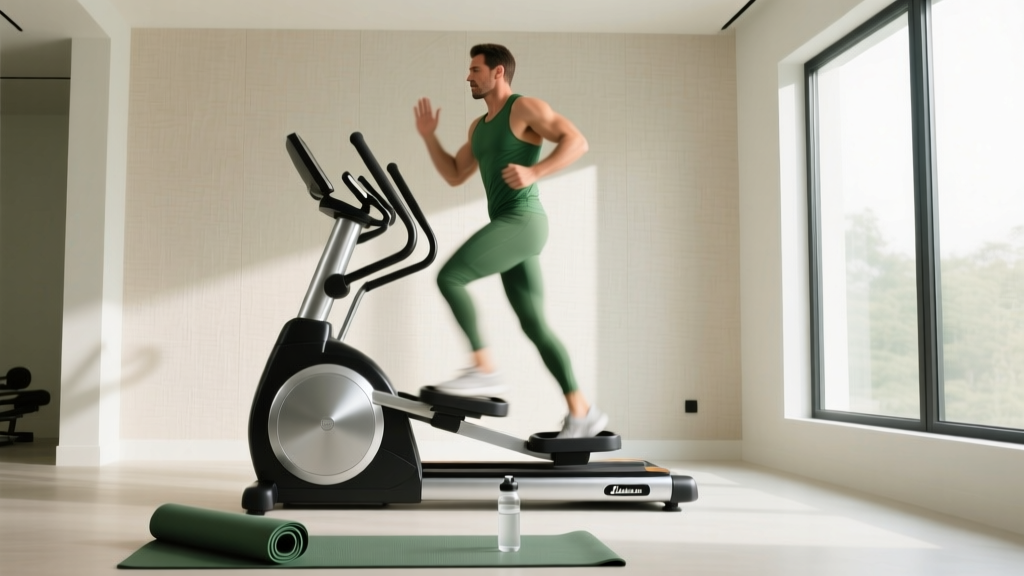
Home Stair Climber Guide: Mistakes vs Treadmill for Fat People
Expert stair climber machine for home use guide. Avoid common mistakes, troubleshoot heavy-duty gear, and compare it to a treadmill for fat people.

The Great Cardio Debate: Stair Climber vs. Treadmill for Fat People
Many plus-size fitness enthusiasts begin their home gym journey searching for the perfect treadmill for fat people, often prioritizing high weight capacities (400+ lbs), wide 22-inch running belts, and heavy-duty shock absorption. While premium bariatric treadmills like the Sole F85 or LifeSpan TR5000i are excellent investments, they present a significant biomechanical hurdle: repetitive high-impact joint loading. According to the Cleveland Clinic, high-impact activities can exacerbate knee and hip degradation in heavier individuals, leading to early workout abandonment.
This reality has triggered a massive shift toward low-impact, high-yield alternatives. Enter the stair climber machine for home use. Stair climbers provide a closed-chain kinetic exercise environment, drastically reducing shear forces on the patellofemoral joint while delivering superior cardiovascular conditioning. The American Heart Association notes that stair climbing burns calories at a significantly higher rate than level walking, making it an elite choice for heavy users seeking efficient fat oxidation without the skeletal pounding of a treadmill deck.
⚠️ Critical Warning for Heavy Users: Never exceed the manufacturer's stated maximum user weight on a stair climber. Doing so doesn't just void the warranty; it causes catastrophic failure of the pedal arm bearings and can snap the main drive shaft during the downward thrust phase.5 Critical Mistakes When Using a Home Stair Climber
Transitioning from a treadmill to a stair climber requires a complete recalibration of your posture and machine maintenance. Here are the most common errors heavier users make when operating home stair climbers:
1. The 'Death Grip' on Handrails (Postural Collapse)
Leaning heavily on the console or side handrails is the number one mistake among plus-size climbers. When you support 20% to 30% of your body weight through your arms, you artificially reduce the caloric expenditure by up to 30%. More importantly, it forces your spine into a kyphotic (hunched) curve, leading to severe lower back pain. The Fix: Use a 'piano touch' grip. Your hands should only rest on the rails for balance, not weight support. If you must lean, the resistance or step rate is too high.
2. Placing the Machine on Plush Carpeting
Home gym setups often place climbers directly on thick bedroom carpet. The heavy downward force of a 300+ lb user compresses the machine's baseplate into the carpet fibers, completely blocking the motor shroud's intake vents. This leads to thermal throttling, where the internal computer shuts the machine off after 12-15 minutes to prevent a fire. The Fix: Always use a high-density PVC equipment mat (at least 3/16-inch thick) and elevate the rear leveling feet by 10mm to ensure unobstructed airflow.
3. Ignoring Lateral Pedal Play
Heavier users exert immense lateral torque on the pedal arms. Over time, the bronze bushings inside the pedal hinges wear down, creating a side-to-side wobble. Ignoring this 'slop' will eventually snap the pedal arm bracket. The Fix: Perform the 'wiggle test' weekly. Grab the outer edge of the pedal and shake it laterally. Any movement greater than 2mm requires immediate bushing replacement.
4. Using the Wrong Lubricant on the Drive Chain
Many users reach for standard WD-40 to silence a squeaky stair climber chain. WD-40 is a solvent, not a long-term lubricant. It strips away factory grease and attracts dust, creating an abrasive grinding paste that destroys the sprocket teeth. The Fix: Use a PTFE-based dry bicycle chain lubricant or white lithium grease specifically rated for high-load fitness equipment.
5. Stepping Off While the Flywheel is Engaged
Unlike a treadmill belt that slows down, a magnetic resistance stair climber's flywheel retains momentum. Stepping off abruptly while the pedals are still cycling can cause the machine to violently jerk, leading to ankle sprains or damage to the magnetic braking caliper.
Troubleshooting Guide: Fixing Common Stair Climber Failures
When your machine acts up, don't immediately call for an expensive out-of-warranty repair. Use this expert troubleshooting matrix to diagnose and fix the most common issues encountered by heavy-duty users.
| Symptom | Root Cause | Expert Fix & Required Tools |
|---|---|---|
| Console displays 'Error 1' or 'Err' | Speed sensor (reed switch) misalignment due to heavy vibration. | Remove front shroud. Locate the reed switch near the flywheel magnet. Use a 3mm hex key to loosen the bolt, reposition the sensor exactly 2-3mm from the magnet, and retighten. |
| Pedals feel 'slippery' or skip under heavy load | Poly-V drive belt tension has loosened, or belt is glazed. | Access the lower motor housing. Use a 10mm socket to adjust the motor mount tensioner bolt clockwise until the belt has exactly 1/2 inch of deflection when pressed. |
| Loud rhythmic clicking from the left pedal arm | Crank arm bolt has backed out due to repetitive high-torque loading. | Remove the plastic crank cap. Use a 14mm socket to torque the crank bolt to 35 ft-lbs. Apply a drop of medium-strength blue Loctite (242) to the threads before reinstalling. |
| Machine shuts off abruptly at the 15-minute mark | Thermal overload switch tripping due to restricted motor airflow. | Unplug the unit. Use a vacuum with a brush attachment to clear dust from the motor shroud vents. Ensure the machine is on a hard surface or elevated mat. |
Equipment Matrix: Heavy-Duty Climbers vs. Bariatric Treadmills
If you are still weighing the decision between investing in a high-capacity treadmill for fat people or committing to a stair climber machine for home use, this 2026 market comparison breaks down the top-tier options for heavier bodies.
| Machine Type | Top 2026 Model | Max User Weight | Est. Price | Joint Impact Profile |
|---|---|---|---|---|
| Heavy-Duty Treadmill | Sole F85 | 400 lbs | $2,199 | Moderate-High (Cushioned deck, but still impact-based) |
| Heavy-Duty Treadmill | LifeSpan TR5000i | 500 lbs | $3,499 | Moderate (Commercial shock absorption) |
| Home Stair Climber | Bowflex Max Trainer M9 | 300 lbs | $1,999 | Very Low (Elliptical-stepper hybrid motion) |
| Commercial Stair Climber | Matrix Fitness A7L | 400 lbs | $4,299 | Zero Impact (True vertical step, closed-chain) |
Expert Maintenance Schedule for High-Capacity Cardio Gear
Heavier users put exponentially more stress on cardio equipment. A standard maintenance schedule will not suffice. Follow this accelerated maintenance protocol to ensure your stair climber survives the 2026 fitness season and beyond:
- Weekly (The Shake-Down): Inspect all visible hex bolts on the pedal arms and uprights. Heavy users generate harmonic vibrations that loosen standard hardware. Tighten to factory torque specs using a metric hex set.
- Monthly (The Dust Purge): Remove the lower plastic shroud (usually 4-6 Phillips head screws). Use compressed air to blow out carbon dust from the motor brushes and the magnetic resistance flywheel. Carbon buildup is the leading cause of console static and erratic resistance levels.
- Bi-Annually (The Bearing Check): Listen for 'grinding' noises at the apex of the pedal stroke. If detected, disassemble the pedal arm hinge and repack the oilite bronze bushings with high-temp white lithium grease. Do not use petroleum jelly, as it degrades the porous bronze.
- Annually (The Belt Inspection): Check the internal Poly-V drive belt for micro-cracking on the ribbed side. If you see black dust accumulating under the machine, the belt is shedding and must be replaced immediately to prevent mid-workout snapping.
Frequently Asked Questions
Is a stair climber actually better for weight loss than a treadmill?
For heavier individuals, yes. While a treadmill allows for higher top speeds, the stair climber forces you to lift your entire body weight against gravity with every single step. This recruits the gluteus maximus, quadriceps, and hamstrings simultaneously, resulting in a higher metabolic equivalent (MET) burn per minute, all while sparing your knee cartilage from the repetitive striking impact of a treadmill belt.
Can I use a stair climber if my weight exceeds the manual's limit by 10 lbs?
No. Manufacturer weight limits on stair climbers are dictated by the structural integrity of the pedal arm pivot points and the continuous duty rating of the magnetic brake. Exceeding the limit by even a small margin drastically increases the risk of catastrophic mechanical failure, particularly during the downward thrust phase where kinetic energy multiplies your static weight.
Why does my stair climber feel harder in the winter?
Temperature fluctuations affect the viscosity of the grease inside the pedal arm bushings and the tension of the internal drive belt. In colder home gyms (below 60°F), the grease thickens, creating artificial drag. Allow the machine to run at a slow pace for 3-5 minutes without stepping on the pedals to warm up the internal lubricants before beginning your workout.
More gear to consider
All reviews
Gold's Gym Trainer 720 Treadmill: Small Space Review & Maintenance

How Long Should I Walk on the Treadmill Before Belt Lubrication?
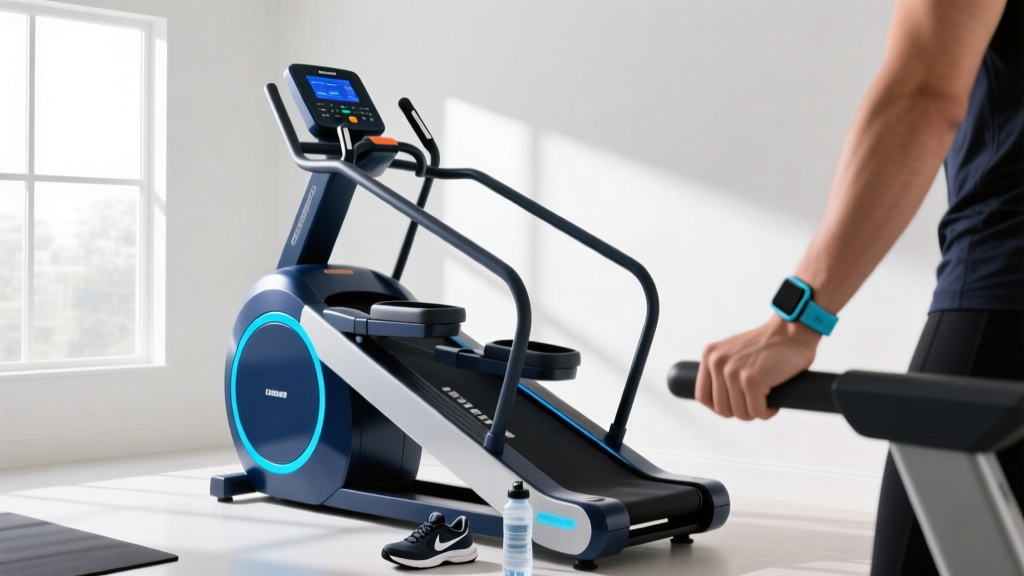
Stair Climber Machine for Home Use Guide: Treadmill Serial Number Fix

Treadmill Abuse Death Risks: Safety Features & Buying Guide

Treadmill Electricity Usage Mistakes: Feature Comparison Guide
