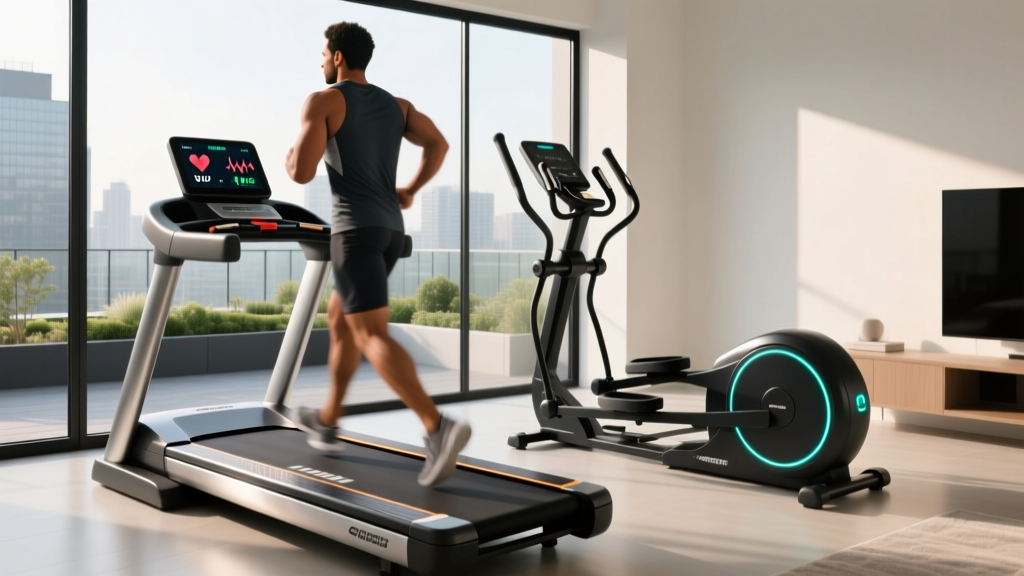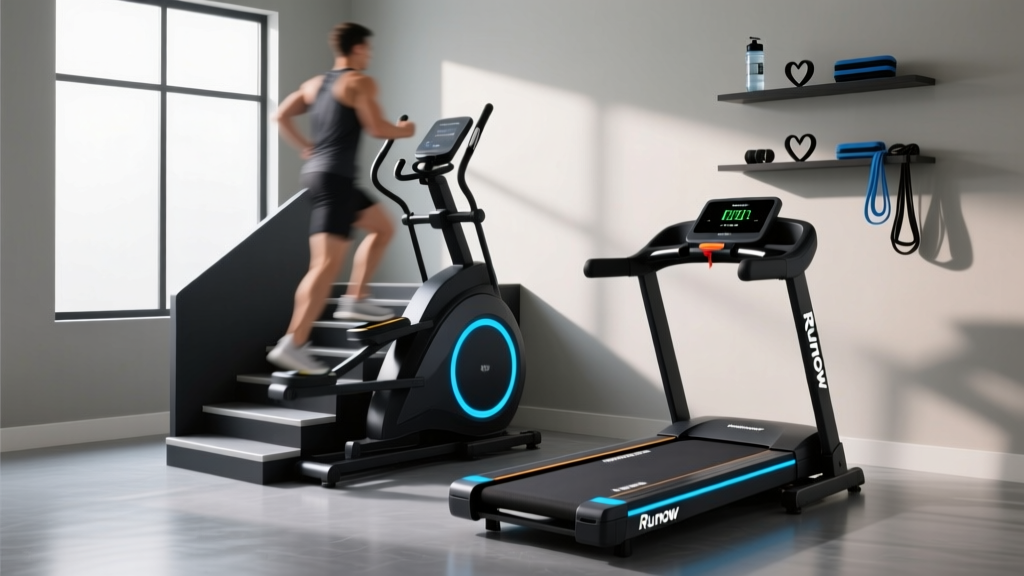
Stair Climber vs Runow Treadmill: Beginner Home Guide
Master your home cardio setup with our step-by-step stair climber guide. Compare vertical climbing to the budget Runow treadmill for 2026 fitness goals.

The Beginner's Dilemma: Vertical Climbing vs. Budget Walking
Setting up a home cardio station in 2026 often boils down to a battle between high-intensity vertical movement and low-impact horizontal walking. If you are reading this, you are likely caught between investing in a dedicated stair climber machine for home use or opting for a budget-friendly, space-saving walking pad like the popular Runow treadmill. Both serve distinct physiological purposes, but their spatial, mechanical, and biomechanical requirements are vastly different.
This step-by-step guide will walk you through the exact process of selecting, preparing, assembling, and mastering a home stair climber. Along the way, we will contrast these heavy-duty vertical machines with the lightweight Runow treadmill to help you make an informed, sweat-tested decision for your specific living space and fitness level.
Quick Equipment Snapshot (2026 Market Pricing)- Entry-Level Stair Climber: Sunny Health & Fitness SF-S73301 (Approx. $599) - Hydraulic resistance, 250 lb capacity.
- Premium Stair Climber: Bowflex Max Trainer M9 (Approx. $1,999) - Magnetic/eddy current resistance, interactive coaching.
- Budget Walking Pad: Runow 2.5HP Folding Treadmill (Approx. $239) - Basic LED display, 6.5 mph max speed, 265 lb capacity.
Step 1: Spatial Planning and Floor Prep (The 9-Foot Rule)
The most common failure point for home stair climber owners is ignoring vertical clearance. Unlike the Runow treadmill, which sits a mere 5 inches off the ground and easily fits under standard 8-foot ceilings, stair climbers elevate your body significantly during use.
Calculating Your Ceiling Clearance
To avoid striking your head or ceiling fan at the peak of your step, use this exact formula:
User Height + Machine Step-Up Height + 15 Inches = Minimum Ceiling Height
For example, if you are 6 feet tall (72 inches) and using a machine with a 12-inch step-up height, you need a minimum ceiling height of 99 inches (8 feet, 3 inches). If your home gym is in a basement with low-hanging ductwork, a stair climber may be physically impossible to use safely, making a low-profile Runow treadmill your only viable cardio option.
Subfloor Protection and Vibration Dampening
Stair climbers generate intense downward kinetic force. Do not place them directly on hardwood or laminate. Purchase a 6mm thick rubber horse stall mat (Shore A hardness rating of 60-70). This protects your subfloor from the machine's 120+ lb footprint and dampens the low-frequency vibration that travels through floor joists. The Runow treadmill, weighing roughly 60 lbs and lacking heavy vertical impact, only requires a standard 3mm PVC equipment mat.
Step 2: Unboxing, Assembly, and Belt Tensioning
Assembling a stair climber is a mechanical project, whereas the Runow treadmill is essentially a 'unfold and plug in' device. Here is how to approach the stair climber build to prevent long-term failure modes.
- Stage the Parts: Stair climbers rely on heavy hydraulic pistons or magnetic flywheels. Unbox near the final placement area. You will need a 3/16-inch and 5mm Allen wrench set, plus a rubber mallet.
- Mount the Drive Belt (Hydraulic Models): If your model uses a drive belt connecting the pedals to the tension cylinder, ensure the belt has exactly 1/2 inch of lateral play when pressed with your thumb. A belt that is too tight will burn out the pivot bearings within 50 hours of use; too loose, and you will experience the dreaded 'slipping step' mid-climb.
- Calibrate the Floor Levelers: Stair climbers have four adjustable footpads. Use a torpedo level on the main chassis. If the machine rocks even 2 millimeters during a heavy step, the hydraulic cylinder will absorb uneven torsion, leading to premature seal failure and fluid leaks.
Expert Note: The Runow treadmill requires zero assembly beyond attaching the vertical handrail uprights with four M8 bolts. However, you must immediately check the walking belt tension out of the box. If the belt drifts to the left during a test walk, use the included Allen wrench to turn the left rear roller bolt 1/4 turn clockwise. Never adjust while the motor is running.
Step 3: Biomechanics and Your First 15-Minute Session
According to the American Heart Association, adults need at least 150 minutes of moderate-intensity aerobic activity per week. Both machines can help you achieve this, but the muscle recruitment patterns are entirely different.
When using a stair climber, you are heavily targeting the gluteus maximus, quadriceps, and the soleus (calf muscle) through a closed-chain hip extension movement. Conversely, the Runow treadmill primarily engages the tibialis anterior and hamstrings through horizontal propulsion. Furthermore, the Mayo Clinic notes that weight-bearing aerobic exercises like stair climbing are superior for maintaining bone density compared to lower-impact or supported movements.
The 'No-Lean' Rule
The biggest beginner mistake on a stair climber is draping the torso over the handrails. Leaning on the rails reduces caloric expenditure by up to 20% and transfers dangerous shear force to your lumbar spine. Keep your torso upright, core braced, and use the rails only for light balance feedback.
Step 4: The 15-Minute Beginner Interval Protocol
Do not attempt a steady-state 30-minute climb on day one. Your cardiovascular system will adapt faster than your patellar tendons. Follow this exact 15-minute interval protocol for your first two weeks.
| Phase | Duration | Cadence (SPM) | Focus / Form Cue |
|---|---|---|---|
| Warm-Up | 3 Minutes | 40-50 SPM | Flat foot placement, push through the heel. |
| Work Interval | 1 Minute | 65-75 SPM | Drive down hard, do not bounce on the toes. |
| Active Recovery | 1 Minute | 45 SPM | Shake out legs, maintain upright posture. |
| Repeat Cycle | 4 Rounds | Variable | Focus on glute contraction at the bottom of the step. |
| Cool Down | 4 Minutes | 30-40 SPM | Slow steps, deep nasal breathing. |
Common Failure Modes and Edge Cases
Home cardio equipment requires specific maintenance to survive past the warranty period. Here are the edge cases you must monitor.
Stair Climber Pivot Squeaks
After about 40 hours of use, the main pedal pivot joints may develop a high-pitched squeak. Do not use standard WD-40. Petroleum-based solvents will degrade the nylon bushings. Instead, apply a 100% PTFE (Teflon) dry-film lubricant directly into the joint seam. Wipe away excess immediately to prevent dust accumulation.
Runow Treadmill Motor Overheating
The Runow treadmill features a 2.5 HP peak motor, but its continuous duty rating is much lower. If you weigh over 200 lbs and attempt to jog at 6.0 mph for more than 20 minutes, the motor controller will overheat and trigger an automatic thermal shutoff (Error Code E02). To prevent this, limit the Runow to brisk walking (3.5 mph) or use it strictly for zone-2 cardio, saving the high-intensity intervals for the stair climber.
Final Verdict: Which Machine Earns Your Floor Space?
If your primary goal is maximum caloric burn, glute development, and bone density improvement—and you have the vertical ceiling clearance to accommodate it—the stair climber is the undisputed champion of home cardio. It demands more from your body and offers a higher physiological ceiling.
However, if you live in an apartment with strict noise ordinances, low ceilings, or you simply need a low-impact way to hit your daily step count while working at a standing desk, the Runow treadmill is a highly practical, budget-friendly tool. For the ultimate 2026 home gym, many fitness enthusiasts use the stair climber for dedicated 20-minute workout sessions and keep a folding walking pad tucked under the sofa for passive daily movement.
Frequently Asked Questions
Can I use a stair climber if I have knee pain?
Stair climbers are generally low-impact because your feet never leave the pedals, eliminating the ground reaction forces associated with running. However, if you have acute patellofemoral pain syndrome, the deep knee flexion required may aggravate it. Consult a physical therapist before starting.
How often should I lubricate the Runow treadmill belt?
Under normal use (3 hours a week), apply 100% silicone treadmill lubricant under the belt every 3 months or every 150 miles. Failure to do so will cause excessive friction, drawing more amps through the motor and drastically shortening its lifespan.
More gear to consider
All reviews
12-3-30 Treadmill Setup: Noise Comparison & Installation Guide
Precor 9.33 Treadmill vs Assault Air Bike: 2026 Value Breakdown

CST 505 Treadmill vs Bikes: 2026 Budget Value Analysis

Umay Treadmill vs Motorized: 2026 Curved Manual Comparison

Planet Fitness New Treadmill Motors vs Home: A Beginner's HP Guide