
Stair Climber Mistakes & ProForm Premier 900 Treadmill Fixes
Master your home stair climber with our troubleshooting guide. Compare maintenance, form mistakes, and fixes against the ProForm Premier 900 treadmill.

The Shift to Vertical Cardio: Upgrading Your Home Gym
As home gym layouts continue to evolve in 2026, a significant trend has emerged: fitness enthusiasts are downsizing from traditional motorized decks to compact, vertical stepping machines. While a staple like the ProForm Premier 900 treadmill offers an excellent 20 x 55-inch running surface and a reliable 2.75 CHP motor for steady-state jogging, it demands a footprint of roughly 70 by 30 inches. In contrast, modern home stair climbers provide intense glute and quad activation in a fraction of the space. However, transitioning to a stair climber machine for home use introduces unique biomechanical and mechanical challenges. Whether you are troubleshooting a squeaky stepper or comparing its maintenance needs to your old ProForm Premier 900 treadmill, this comprehensive guide will help you optimize your equipment, fix common errors, and maximize your cardiovascular output.
Biomechanical Blunders: 3 Stair Climber Form Mistakes
Before diving into mechanical troubleshooting, we must address the most common point of failure in home cardio: user form. According to the American Council on Exercise (ACE), improper stair climber usage can reduce caloric expenditure by up to 20% and lead to lower back strain. Here are the critical mistakes to avoid.
1. The 'Death Grip' on Handrails
Leaning heavily on the side rails transfers your body weight from your lower body to your arms and shoulders. This not only cheats your glutes and hamstrings out of the workload but also forces your spine into an unnatural kyphotic (hunched) curve. The Fix: Rest your fingertips lightly on the rails purely for balance. If you cannot maintain the stepping cadence without gripping tightly, lower the resistance or slow the RPM.
2. Shallow Stepping and Half-Reps
Many users take rapid, shallow steps, barely depressing the pedals. This keeps the muscle under minimal tension and relies heavily on the hip flexors rather than the gluteus maximus. The Fix: Focus on a full range of motion. Drive through the heel and depress the pedal until it is near the bottom of the housing, ensuring a deep stretch in the hamstring at the top of the movement.
3. Ignoring the Core and Pelvic Tilt
When fatigue sets in, users often exhibit an anterior pelvic tilt, sticking their hips out backward. This places immense shear force on the lumbar spine. The Fix: Engage your core, brace your abdominals as if preparing for a punch, and keep your torso stacked directly over your hips. The Cleveland Clinic notes that maintaining a neutral spine during vertical climbing is essential for preventing chronic lower back pain.
Expert Insight: 'If you are transitioning from a treadmill to a stair climber, remember that the treadmill belt pulls your leg back, whereas the stair climber requires you to actively push your body weight against gravity. The neuromuscular demand is significantly higher on the vertical plane.'
Mechanical Troubleshooting: Stair Steppers vs. Motorized Treadmills
When your equipment starts making noise or throwing error codes, the troubleshooting steps vary wildly depending on the machine's drivetrain. Below is a comparison matrix highlighting how to approach mechanical failures on a standard home stair climber versus a traditional motorized unit like the ProForm Premier 900 treadmill.
| Symptom | Home Stair Climber Fix | ProForm Premier 900 Treadmill Fix |
|---|---|---|
| Squeaking / Grinding Noise | Apply white lithium grease to the pedal arm pivot points and check the alternator drive belt for fraying. | Inspect the walking belt for debris; apply 100% silicone lubricant under the deck; check motor hood bearings. |
| Pedal Slippage / Uneven Resistance | Tighten the magnetic resistance tension cable or inspect hydraulic cylinder seals for fluid leaks. | Adjust the rear roller tension bolts equally (quarter-turn increments) to re-center the walking belt. |
| Console Displays 'Error 1' or 'E1' | Usually indicates a speed sensor or RPM reed switch misalignment. Re-seat the magnetic sensor near the flywheel. | Often points to a communication error between the lower control board and the upper display. Check the data harness wire. |
| Sudden Power Shutdown | Check the home circuit breaker; vertical climbers draw high peak amps during heavy resistance intervals. | Reset the thermal circuit breaker located on the front of the motor hood; ensure the 2.75 CHP motor is not overheating. |
Step-by-Step: Fixing a Slipping Stair Climber Drive Belt
One of the most frustrating issues on cable-driven or alternator-driven home stair climbers is a slipping drive belt, which results in a sudden 'drop' or loss of tension mid-step. Unlike the ProForm Premier 900 treadmill, where you simply turn the rear roller bolts, a stair climber requires accessing the internal flywheel housing.
- Power Down and Unplug: Always disconnect the machine from the wall outlet to prevent accidental flywheel engagement.
- Remove the Side Shroud: Use a Phillips-head screwdriver to remove the 4 to 6 screws holding the plastic side casing. Set the shroud aside safely.
- Inspect the Belt: Check the ribbed drive belt connecting the main pedal crank to the magnetic flywheel. If it is glazed, cracked, or missing teeth, it must be replaced (typically a 300mm to 450mm multi-rib belt, depending on the exact model).
- Adjust the Tensioner Pulley: If the belt is in good condition but loose, locate the tensioner pulley bracket. Use a 10mm socket wrench to loosen the pivot bolt, push the pulley outward to increase tension, and retighten.
- Test the Calibration: Plug the machine back in and step on. The pedal should engage immediately without a 'dead zone' at the top of the stroke.
Space, Power, and Footprint Realities
Home Gym Footprint Comparison
ProForm Premier 900 Treadmill: Requires a dedicated space of at least 75' L x 35' W to account for the deck length and user clearance behind the machine. Requires a dedicated 15-amp or 20-amp circuit to handle the continuous draw of the 2.75 CHP motor without tripping breakers.
Standard Home Stair Climber: Occupies a compact footprint of roughly 40' L x 25' W. Because it utilizes magnetic resistance or user-generated alternator power, it can often be plugged into a standard shared household outlet, making it ideal for apartments or multi-use rooms.
Programming Errors: Why Your Workouts Aren't Yielding Results
Beyond mechanical and biomechanical errors, programming mistakes severely limit the efficacy of your stair climber sessions. Many users default to the machine's pre-programmed 'Fat Burn' mode, which typically keeps the heart rate in a low-intensity steady state (LISS) zone. While LISS has its place, the stair climber is uniquely suited for high-intensity interval training (HIIT) due to the rapid recruitment of large muscle groups.
The 2026 Protocol: Contrast Intervals
To maximize both cardiovascular conditioning and muscular endurance, implement contrast intervals. Warm up for 5 minutes at 40 SPM (steps per minute). Then, alternate between 60 seconds of maximal effort (80-90 SPM with high magnetic resistance) and 90 seconds of active recovery (40 SPM with low resistance). Repeat this cycle 8 times. This specific work-to-rest ratio forces the body to clear lactate efficiently, a benefit that is much harder to achieve on a standard treadmill without risking impact-related joint stress.
Preventative Maintenance Schedule
To ensure your equipment lasts well beyond its standard 2-year warranty, adhere to this strict maintenance schedule. Neglect is the primary reason home cardio machines end up in landfills.
- Weekly: Wipe down the console, handrails, and pedal surfaces with a non-corrosive, alcohol-free antibacterial wipe. Sweat contains salt, which rapidly corrodes the exposed metal pivot points on stair climbers and the motor hood vents on treadmills.
- Monthly: Inspect all visible fasteners. The vertical oscillation of stair climbers tends to vibrate hex bolts loose over time. Use an Allen key set to tighten the handlebar mounts and pedal arm connections.
- Bi-Annually: For treadmills like the ProForm Premier 900, lift the walking belt and apply a fresh coat of 100% pure silicone lubricant to the deck. For stair climbers, apply a drop of synthetic bearing oil to the pedal arm pivot joints and check the flywheel housing for dust accumulation, which can interfere with the magnetic resistance eddy currents.
Final Thoughts on Home Cardio Troubleshooting
Whether you are maintaining the robust motor of a ProForm Premier 900 treadmill or fine-tuning the magnetic resistance of a compact home stair climber, the key to longevity is proactive care and proper biomechanics. By eliminating the 'death grip' on the handrails, ensuring full range of motion in your stride, and keeping the internal drive belts properly tensioned, your home cardio equipment will deliver consistent, joint-friendly results for years to come. Always consult your specific manufacturer's service manual before opening electronic housings, and remember that a well-maintained machine is the foundation of any successful home fitness journey.
More gear to consider
All reviews
How to Disassemble Sole F63 Treadmill & 2026 Under Desk Office Picks
Stationary Bike Maintenance vs Treadmill Walk Workout Machine Care

Life Fitness Treadmill Cost vs Home Stair Climbers: 2026 Guide

Sole F60 Treadmill vs Rowers: Beginner Buying & Technique Guide
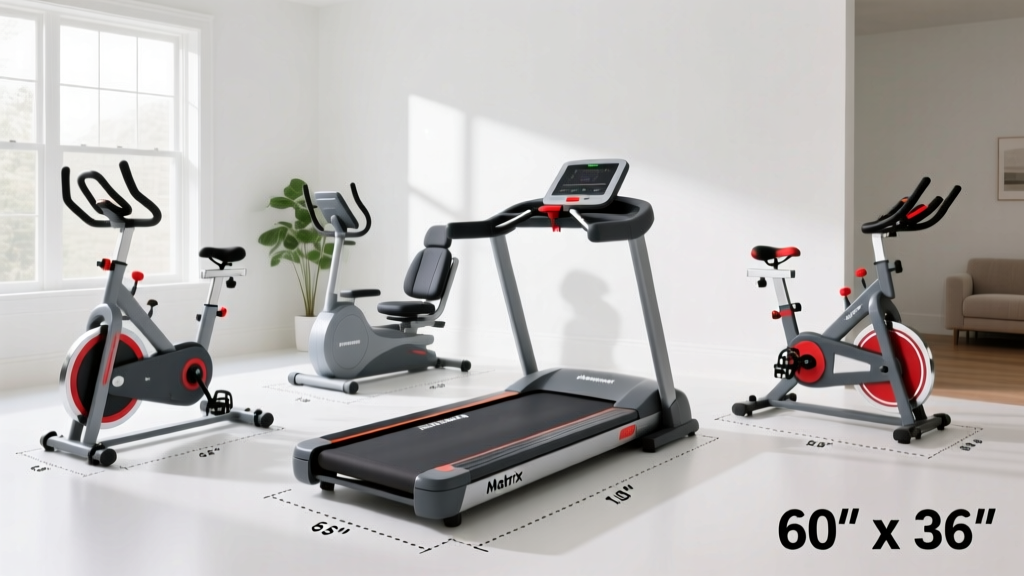
Space Planning: Bike Types vs the Matrix Treadmill Manual Footprint
