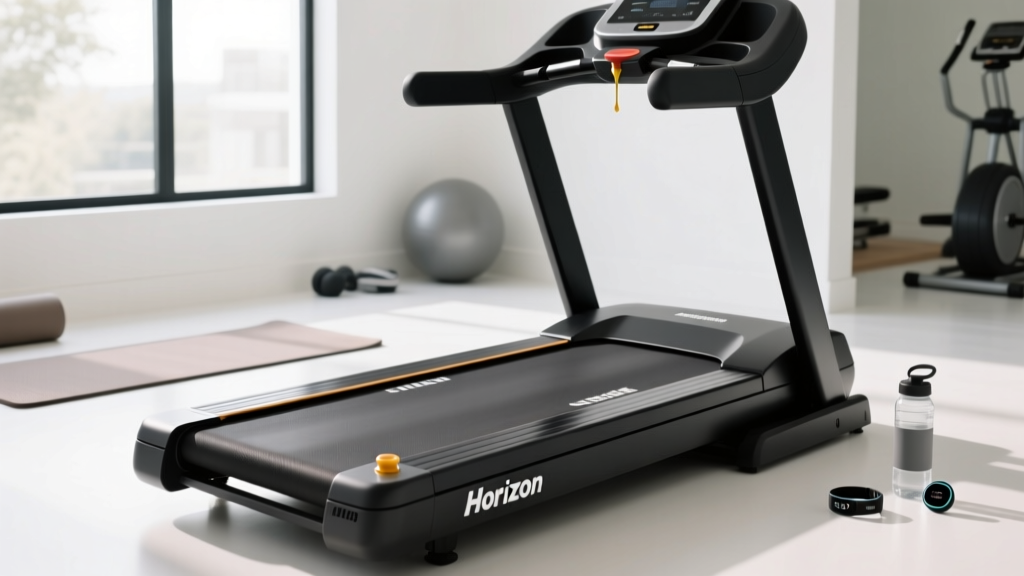
Horizon Fitness Treadmill 2.50 HP Ultra Quiet Motor Belt Lube Costs
Analyze the true costs and ROI of belt lubrication for your Horizon Fitness treadmill 2.50 HP ultra quiet motor to prevent costly repairs.

The Financial Impact of Belt Friction on Your 2.50 HP Motor
When you invest in a mid-range cardio machine, the primary selling point is often the drivetrain. The horizon fitness treadmill 2.50 hp ultra quiet motor is a staple in popular home models like the T101 and T202 series, engineered with precision-machined flywheels and high-grade bearings to minimize acoustic disruption in shared living spaces. However, this acoustic and mechanical engineering is entirely dependent on a single, easily overlooked variable: the friction coefficient between the walking belt and the deck.
From a budget and value analysis perspective, treating belt lubrication as an optional chore rather than a mandatory financial safeguard is a critical error. A dry belt does not just squeak; it fundamentally alters the electrical and mechanical load of your machine, turning a $15 maintenance task into a $400 catastrophic failure.
⚠️ The Amp Draw Danger Zone
A properly lubricated Horizon 2.50 HP motor draws between 2 to 4 amps under a 150 lb user load. When the belt dries out, kinetic resistance spikes. Amp draw can surge past 8 to 12 amps, generating excessive heat in the motor windings and forcing the Motor Control Board (MCB) to work in overdrive, drastically shortening the lifespan of both components.
Budget Breakdown: Preventative Maintenance vs. Catastrophic Failure
To understand the true ROI of treadmill belt maintenance, we must compare the annualized cost of lubrication against the replacement costs of the components that fail when friction goes unchecked. The data below illustrates why skipping a $12 bottle of silicone is a mathematically poor decision for home gym owners.
| Component / Service | Average Cost | Replacement Trigger | Annualized Cost |
|---|---|---|---|
| 100% Silicone Lubricant | $12 - $18 | Every 6 months (or 150 miles) | $24 - $36 |
| Replacement Walking Belt | $65 - $95 | Every 5-7 years (if maintained) | ~$13 |
| Motor Control Board (MCB) | $150 - $220 | Fried by high amp draw / heat | N/A (Failure Cost) |
| 2.50 HP Motor Replacement | $280 - $400 | Winding burnout / bearing seizure | N/A (Failure Cost) |
As outlined by fitness equipment repair authorities like Treadmill Doctor, the vast majority of premature motor and controller failures in home treadmills are directly traceable to belt-deck friction. By spending roughly $30 a year on lubricant, you are effectively insuring a $700+ drivetrain system.
Preserving the 'Ultra-Quiet' Acoustic Profile
The marketing promise of the horizon fitness treadmill 2.50 hp ultra quiet motor relies on tight mechanical tolerances. When the walking belt lacks a hydrodynamic layer of silicone, the kinetic resistance transfers backward through the motor drive belt. This causes two distinct acoustic failures:
- Low-Frequency Motor Whine: The motor strains to maintain RPMs under load, creating a noticeable hum (often between 60-120 Hz) that vibrates through the floor pan.
- High-Pitched Chirping: Microscopic slipping occurs between the motor pulley and the drive belt due to the sudden torque spikes required to overcome dry belt friction.
Applying 100% silicone restores the hydrodynamic glide, allowing the 2.50 HP motor to operate at its baseline acoustic profile.
Step-by-Step Value-Optimized Lubrication Guide
Do not use WD-40, petroleum-based oils, or household cleaners. These will chemically degrade the PVC walking belt and destroy the phenolic coating on the MDF deck. You must use 100% pure silicone liquid (available from Horizon OEM or reputable third-party brands like Impresa or Godora for about $12 per bottle).
- Power Down and Access: Unplug the treadmill. Locate the rear roller adjustment bolts at the very back of the machine.
- Loosen the Belt Tension: Using the provided Allen wrench, turn both the left and right rear roller bolts counter-clockwise exactly 3 full turns. This provides enough slack to lift the belt without stripping the bolt threads.
- Apply the Silicone: Lift the edge of the walking belt near the center of the deck. Squeeze approximately 0.5 ounces (half a bottle line) of silicone in a zigzag pattern from the center outward toward the front roller. Repeat on the opposite side.
- Retighten to Factory Spec: Turn both rear roller bolts clockwise exactly 3 full turns to restore the original tension.
- Distribute the Lubricant: Plug the machine in, set the speed to 2.0 MPH, and walk on the belt for 3 to 5 minutes, intentionally stepping near the left and right edges to spread the silicone evenly across the deck.
Diagnostic Framework: Is Your Belt Beyond Lubrication?
Lubrication is a maintenance task, not a repair. If your belt and deck are already damaged, adding silicone will not save your 2.50 HP motor. Use this three-point diagnostic framework to determine if you need to budget for a full belt and deck replacement (typically $120-$160 for parts).
1. The Dollar Bill Test
Slide a standard US dollar bill under the walking belt at the center of the deck. Pull it out. If you feel significant drag and the paper tears, your deck still has its factory wax coating. If the bill slides out with zero resistance, the phenolic coating is worn through to the raw MDF wood, which will act like sandpaper against your belt.
2. The Visual Glaze Test
Inspect the underside of the walking belt. A healthy belt has a matte, slightly textured fabric backing. If the backing is shiny, smooth, and glazed, the fabric has been heat-fused by friction. No amount of liquid silicone will penetrate a glazed backing.
3. The Clamp Meter Test (For Advanced Users)
Using a standard AC/DC clamp meter around the positive motor lead, measure the amp draw while walking at 3.0 MPH. If the draw consistently exceeds 8 amps immediately after a fresh lubrication, the motor bearings or the deck are physically compromised.
According to Horizon Fitness Support guidelines, many of their mid-range treadmills feature reversible decks. If your diagnostic tests show a worn deck, you can often unbolt the deck, flip it over to expose the unworn phenolic coating, and install a fresh belt, effectively doubling the lifespan of your machine's foundation for the cost of a $75 belt.
Final Value Verdict
Maintaining the horizon fitness treadmill 2.50 hp ultra quiet motor is not about preserving a warranty; it is about protecting a mechanical ecosystem. The financial mathematics are undeniable. An annual investment of $30 in 100% silicone lubricant and 10 minutes of labor prevents the cascading electrical failures that routinely destroy $200 motor control boards and $350 motors. For budget-conscious home gym owners, rigorous belt maintenance is the single highest-ROI activity you can perform on your cardio equipment. For further reading on extending the lifespan of your home fitness investments, Consumer Reports offers excellent baseline data on expected equipment longevity and maintenance schedules.
More gear to consider
All reviews
Under Desk Treadmill Review: Value for Garmin Treadmill Running

Air Bike Value: How Long Should I Walk on Treadmill for Weight Loss
Curved vs Motorized: Reviews on ProForm Pro 2000 Treadmill & Guide

Upright, Recumbent, Spin Care: Treadmill Walking Plan to Lose Weight

Air Bike vs Assault Bike Guide & Sole F63 Treadmill Space Layout
