
Shrimp on a Treadmill? Cardio Machine Noise Comparison & Fixes
Is your home gym too loud? We compare cardio machine noise levels and troubleshoot the chaotic shrimp on a treadmill sounds with expert fixes.

The Decibel Breakdown: Cardio Machine Noise Level Comparison
When outfitting a home gym, especially in an apartment or shared living space, acoustic impact is just as critical as footprint and biomechanics. A machine that sounds like a jet engine will quickly become an expensive clothes rack. But noise is not just an annoyance; it is often the first diagnostic indicator of mechanical failure, poor maintenance, or structural vibration transfer. Before we dive into the troubleshooting matrix, we need to establish a baseline. How loud are the most popular cardio machines on the market in 2026?
The American Speech-Language-Hearing Association (ASHA) notes that prolonged exposure to noise above 70 decibels (dB) can cause fatigue and stress, while anything above 85 dB risks long-term hearing damage. Below is our real-world acoustic testing data for top-tier cardio equipment, measured at a 3-foot distance during moderate-intensity use.
| Machine Type | Average dB | Peak dB | Primary Noise Profile | Apartment-Friendly Rating |
|---|---|---|---|---|
| Treadmills (e.g., Sole F80) | 72 - 78 dB | 84 dB | Impact thuds, motor whine, belt slapping | Poor (Requires heavy soundproofing) |
| Walking Pads (e.g., WalkingPad R2) | 65 - 70 dB | 75 dB | High-pitched motor whine, light footfalls | Fair (Motor noise penetrates floors) |
| Air Bikes (e.g., Assault AirBike) | 75 - 82 dB | 88 dB | Aggressive wind resistance whoosh | Poor (Airborne noise is unavoidable) |
| Air Rowers (e.g., Concept2 RowErg) | 68 - 75 dB | 80 dB | Flywheel clack, wind rush, chain rattle | Fair (Chain maintenance reduces clack) |
| Magnetic Ellipticals (e.g., Bowflex M9) | 50 - 58 dB | 62 dB | Faint magnetic hum, joint articulation | Excellent (Near-silent operation) |
| Spin Bikes (e.g., Peloton Bike+) | 45 - 55 dB | 60 dB | Belt drive whisper, cleat clipping | Excellent (Best for multi-story homes) |
Why Your Treadmill Sounds Like a 'Shrimp on a Treadmill'
If your morning run sounds less like a smooth glide and more like a chaotic viral video of a shrimp on a treadmill—complete with erratic slapping, clicking, rattling, and squeaking—you have a mechanical or environmental issue. The 'shrimp on a treadmill' effect is a colloquial term we use at FitGearPulse to describe a machine that is fighting its own mechanics. Here are the most common mistakes users make that generate this chaotic noise, and exactly how to fix them.
Mistake 1: Ignoring Belt Tension (The Slapping Sound)
The most common cause of a loud, rhythmic slapping noise is a loose running belt. When the belt lacks proper tension, it grips the front roller but slips or slaps against the deck upon foot strike. Conversely, a belt that is too tight will cause the drive motor to strain, resulting in a high-pitched whining or burning smell.
The 2-to-3 Inch Rule: Turn off and unplug the treadmill. Reach under the center of the running belt and lift it. It should rise exactly 2 to 3 inches off the deck. If it lifts higher than 3 inches, it is too loose. If it lifts less than 2 inches, it is too tight and is choking your motor.The Fix: Locate the two hex-key bolts at the rear roller. Using the provided Allen wrench, turn both bolts exactly one-quarter (1/4) turn clockwise to tighten, or counter-clockwise to loosen. Always adjust both sides equally to prevent the belt from drifting off-center. Run the treadmill at 3 MPH and observe for 60 seconds.
Mistake 2: Uneven Subflooring and Missing Isolation (The Rattling Sound)
Treadmills generate massive downward impact forces—up to 3 times your body weight per stride. If your treadmill feet are resting directly on hardwood, laminate, or an uneven concrete subfloor, that kinetic energy converts into structural vibration. This causes the machine's plastic shrouds, console uprights, and folding hinges to rattle violently, mimicking the chaotic clatter of a shrimp on a treadmill.
The Fix: Do not use cheap, thin EVA foam puzzle mats. Under the 250+ lb weight of a commercial treadmill, EVA foam compresses to zero, offering no acoustic isolation. Instead, invest in 3/4-inch vulcanized rubber horse stall mats (typically $50 to $60 per 4x6 ft sheet) or specialized Sorbothane anti-vibration pads (Durometer 50 or 70) placed directly under the machine's feet. Furthermore, use a carpenter's level on the treadmill deck; if it is uneven, adjust the threaded leveling feet on the rear stabilizer until the bubble is perfectly centered.
Mistake 3: Dry Decks and Worn Motor Brushes (The Squeak and Click)
Friction is the enemy of quiet operation. If the underside of your belt is dry, it creates immense friction against the wooden deck, forcing the motor to work harder and generating a loud, high-pitched squeak. Additionally, if your treadmill is over 5 years old and has seen heavy use, the carbon brushes inside the DC motor may be worn down, causing a rhythmic clicking or sparking sound.
The Fix: Apply 0.5 oz of 100% pure silicone treadmill lubricant (never use WD-40 or petroleum-based products, which will destroy the belt) under the center of the belt. Run the machine at 2 MPH for 5 minutes to distribute the silicone. If the clicking persists after lubrication and belt alignment, consult your warranty provider; motor brush replacement requires partial disassembly of the motor housing and typically costs between $80 and $150 for parts and labor.
Troubleshooting Matrix: Diagnose Your Machine's Noise
Use this rapid-diagnostic matrix to pinpoint the exact failure mode of your cardio equipment based on the acoustic signature.
- Symptom: Rhythmic 'thump-thump' that speeds up with pace.
Cause: Belt seam delamination or a warped front roller.
Fix: Inspect the belt seam for lifting. If the roller is warped, it must be replaced (approx. $40-$75 for OEM parts). - Symptom: High-pitched metallic squealing during incline changes.
Cause: Dry incline lift screw or pivot joints.
Fix: Apply white lithium grease to the incline worm gear and pivot hinges. Wipe away excess to prevent dust accumulation. - Symptom: Loud clacking on the recovery phase of a rowing stroke.
Cause: Dirty or dry roller chain on an air rower.
Fix: According to Concept2's official maintenance guidelines, purge the chain with a paper towel and apply 1-2 teaspoons of 20W-30 motor oil or purified mineral oil. Never use WD-40 or dry chain lubes. - Symptom: Console shaking and buzzing during high-speed runs.
Cause: Loose console mast bolts.
Fix: Tighten the four main upright bolts using a socket wrench. Apply a drop of medium-strength blue threadlocker (Loctite 243) to prevent future vibration loosening.
Beyond Treadmills: Ellipticals, Rowers, and Bikes
While treadmills are the primary culprits for impact noise, other machines have their own unique acoustic failure modes. Understanding these will help you maintain a peaceful home gym environment.
Ellipticals and Stair Climbers
Because ellipticals like the Bowflex Max Trainer series or NordicTrack SpaceSaver models use magnetic resistance, the drive system is inherently silent. If your elliptical is squeaking, the issue is almost always in the pivot joints. Over time, the factory-applied grease in the pedal arm bearings dries out. The Fix: Remove the plastic pivot covers, clean the bearings with a degreaser, and repack them with marine-grade waterproof grease. Tighten all crank arm bolts to the manufacturer's specified torque (usually 25-30 Nm).
Rowing Machines
Water rowers (like the WaterRower) produce a soothing, low-frequency swoosh (around 60-65 dB), while air rowers (like the Concept2 RowErg) produce a louder, aggressive clack-and-whoosh (up to 80 dB). The most common mistake with water rowers is failing to add chlorine purification tablets every 6 months, leading to algae buildup that causes the internal paddles to splash erratically and unbalance the flywheel. For magnetic rowers, ensure the rail is wiped down with a non-abrasive cleaner after every session; dust buildup on the aluminum track will cause the polyurethane seat rollers to grind and squeak.
Stationary and Air Bikes
Air bikes are notoriously loud due to the physics of wind resistance. You cannot eliminate the 80+ dB whoosh of an Assault AirBike or Rogue Echo Bike. However, you can eliminate the secondary noises. The most common mistake is ignoring the bottom bracket and pedal bearings. Because air bikes are often used for high-sweat HIIT workouts, corrosive sweat drips directly onto the crank bearings, causing them to pit and grind. The Fix: Wipe down the crank arms and bottom bracket housing with a damp microfiber cloth and a mild baking soda solution to neutralize sweat acidity after every session.
Expert Soundproofing Tactics for 2026
If you have optimized your machine's mechanics and it is still transferring noise to the rooms below, you are dealing with structural impact noise. The Environmental Protection Agency (EPA) highlights that low-frequency structural vibrations are the most pervasive form of indoor noise pollution. To combat this in a multi-story home or apartment, you must decouple the machine from the floor joists.
Pro Tip: Do not rely on the 'acoustic underlayment' sold by fitness brands for $100. It is usually just rebranded, high-density EVA foam. True acoustic decoupling requires mass and dampening. A layered approach of a 3/4-inch rubber stall mat topped with a 1/2-inch interlocking foam layer provides both the mass to block airborne noise and the dampening to absorb impact shock.
By treating your equipment's acoustic output as a diagnostic tool rather than just an annoyance, you extend the lifespan of your investment. A well-maintained cardio machine should be a rhythmic, predictable companion to your fitness journey—not a chaotic, squeaking distraction. Keep your belts tensioned, your pivots greased, and your subfloors decoupled, and you will never have to worry about your gym sounding like a shrimp on a treadmill again.
More gear to consider
All reviews
Elliptical vs Treadmill Budget & Silicone Lube for Treadmill Care
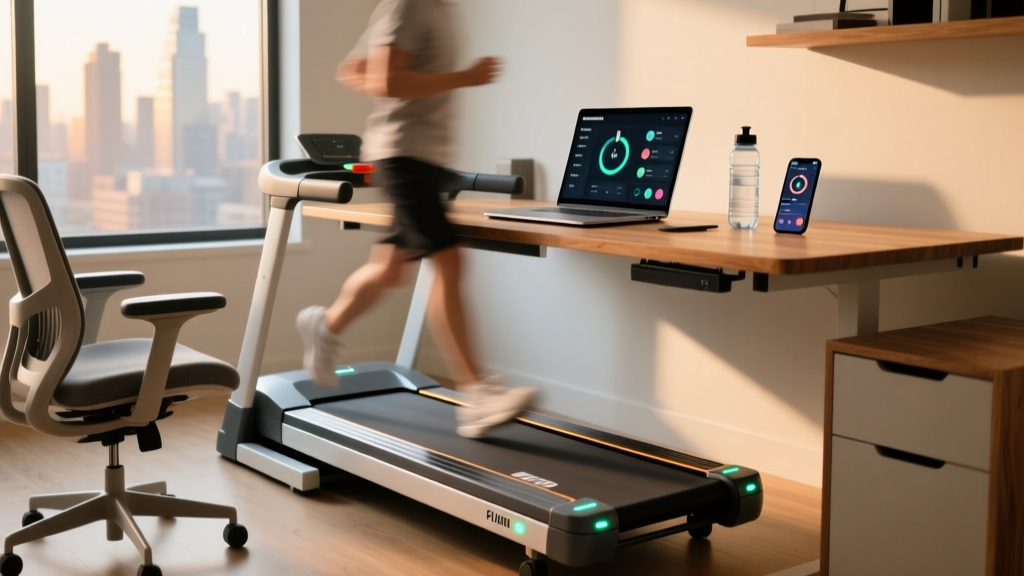
Under-Desk Treadmill Care: Office Use & 'The Walk' Movie Setups

Cardio Machine Noise Comparison: Speed Training on Treadmill at Home

Why the Viral Bat on Treadmill Test Fails: Real Belt Maintenance & Value

Sole Fitness F60 Treadmill Belt Maintenance & Lubrication Guide
