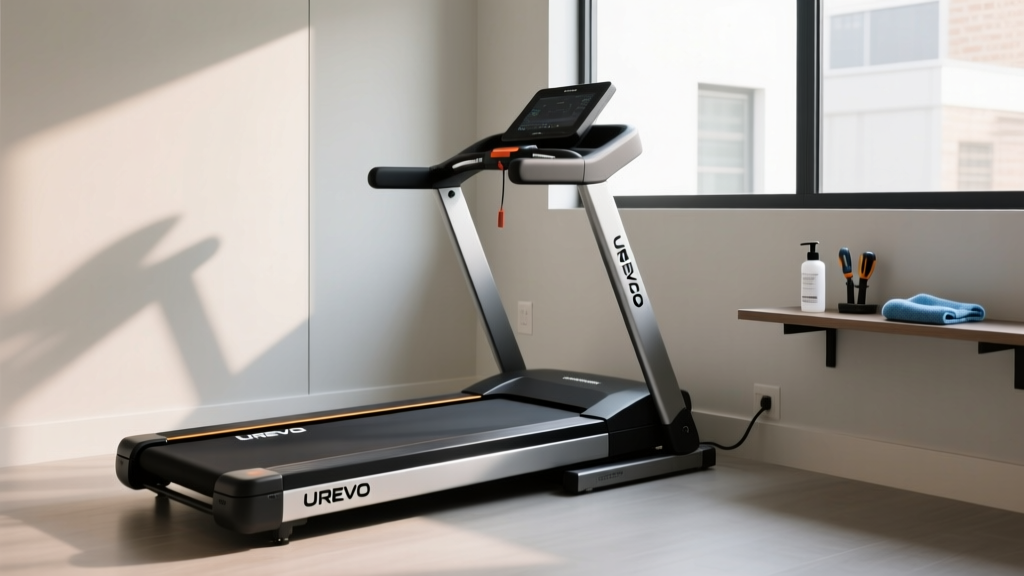
Rowing Machine vs Woodway 4 Front Treadmill: 2026 Guide
Compare the Woodway 4 Front treadmill with elite rowing machines. Our 2026 buying guide covers rowing technique, biomechanics, and home gym ROI.

The Premium Cardio Dilemma: Slats vs. Air and Water
When outfitting a high-performance home gym in 2026, fitness enthusiasts frequently hit a crossroads between two distinct cardio philosophies: the biomechanical perfection of a premium slat-belt runner and the full-body, zero-impact engagement of an elite rowing ergometer. On one side, we have the undisputed king of treadmills, the Woodway 4 Front treadmill, renowned for its shock-absorbing vulcanized rubber slats. On the other, we have the rowing machine—a staple of Olympic training rooms and CrossFit boxes alike. While the Woodway dominates the running space, does a high-end rower offer a better return on investment for the average home gym owner?
This comprehensive head-to-head comparison and rowing machine buying guide will break down the engineering, technique, and long-term physiological ROI of both modalities, helping you decide which engine belongs in your garage.
Head-to-Head: Rowing Ergs vs. the Woodway 4 Front Treadmill
To understand the value proposition of a rowing machine, we must first benchmark it against the gold standard of running. The Woodway 4 Front treadmill utilizes 101 individual vulcanized rubber slats riding on precision ball: 35, 10, 15)'>15
The Ultimate Rowing Machine Buying Guide
If you are pivoting from a treadmill to a rower, or adding one to your existing setup, understanding the nuances of rowing machine engineering is critical. Not all ergometers are created equal, and selecting the wrong resistance type or rail length can lead to frustration and stalled progress.
1. Resistance Mechanisms: Air vs. Water vs. Magnetic
The resistance mechanism dictates the feel, noise level, and maintenance requirements of your machine.
- Air Resistance (e.g., Concept2 RowErg): The industry standard. Air rowers use a flywheel with fan blades; the harder you pull, the more air is displaced, creating infinite, dynamic resistance. They are loud but offer the most accurate, reproducible data for competitive athletes.
- Water Resistance (e.g., WaterRower Natural): Utilizes a water-filled tank and paddles. The sound is a soothing 'whoosh,' and the catch feels incredibly smooth. However, water rowers generally lack the granular, to-the-watt telemetry required for serious interval programming.
- Magnetic/Electromagnetic (e.g., Hydrow, Echelon): Near-silent operation and sleek aesthetics. These rely on magnetic drag and are heavily integrated with live-streaming classes. They are excellent for beginners but can feel slightly 'disconnected' at the catch compared to air or water.
2. Ergonomics, Rail Length, and Footprint
Unlike the Woodway 4 Front treadmill, which requires a permanent 7-foot by 3-foot footprint, most rowing machines are designed for space efficiency. The Concept2 RowErg, for instance, separates into two pieces for closet storage. However, buyers must pay strict attention to inseam clearance. Standard rails accommodate up to a 38-inch inseam. If you are taller than 6'2", you must purchase an extended rail (adding roughly 4 inches of track length) to avoid 'bottoming out' the seat at the catch phase.
3. Monitor Telemetry and the PM5 Gold Standard
In 2026, data is everything. The Concept2 PM5 monitor remains the undisputed champion of rowing telemetry. It measures true work output (Watts) and pace (/500m) regardless of environmental conditions, allowing a user in New York to accurately race a user in London. When buying a rower, ensure the monitor supports Bluetooth and ANT+ heart rate broadcasting to integrate with your Apple Watch, Garmin, or Wahoo TICKR.
Mastering Rowing Technique: A Biomechanical Breakdown
Running on a Woodway 4 Front treadmill is largely instinctual; you simply walk or run, and the slat belt adapts to your stride. Rowing, however, is a highly technical, skill-based movement. Poor technique not only caps your power output but is the primary cause of lower back pain in novice rowers.
According to the official Concept2 technique guidelines, the rowing stroke is divided into four distinct phases. The power distribution should always follow the 60-20-20 rule: 60% legs, 20% core, 20% arms.
- The Catch: Shins are perfectly vertical (no compression past 90 degrees). Arms are straight, shoulders are relaxed, and the torso is hinged forward at roughly 11 o'clock. The lats are engaged, 'hanging' off the handle.
- The Drive: The sequence is critical: Legs, then 155w) is the primary driver. The arms act merely as hooks transferring that power to the handle.
Caloric Expenditure and Joint Impact Analysis
One of the main reasons athletes cross-train is to manage joint load. The Woodway 4 Front treadmill reduces impact forces by nearly 40% compared to outdoor asphalt running, thanks to its shock-absorbing slat belt. However, it remains a weight-bearing, repetitive-impact exercise.
Rowing is entirely zero-impact. The seated position removes ground reaction forces from the ankles, knees, and hips, making it the ultimate longevity tool for aging athletes or those recovering from lower-body injuries. Furthermore, the caloric ceiling of rowing is immense.
Did You Know? According to Harvard Health Publishing, a 185-pound individual can burn upwards of 377 calories during 30 minutes of vigorous rowing, rivaling the caloric expenditure of running at a 6-minute mile pace, but with a fraction of the joint degradation.
For those seeking the cardiovascular benefits outlined by the American College of Sports Medicine, rowing provides a highly efficient pathway to meet the 150 minutes of moderate-intensity aerobic activity per week, while simultaneously building posterior chain strength.
Final Verdict: Which Cardio Engine Belongs in Your Home?
If your primary goal is to train for marathons, improve running economy, or you simply prefer the meditative, upright nature of walking and jogging, the Woodway 4 Front treadmill is an unparalleled, lifetime investment. Its biomechanical feedback and slat-belt durability are unmatched in the running space.
However, if you are seeking a time-efficient, full-body conditioning tool that builds muscular endurance in the glutes, hamstrings, and lats while entirely sparing your joints, a premium air rower like the Concept2 RowErg is the superior choice. It costs a fraction of the price of a Woodway, requires zero electrical outlets, stores in a closet, and offers a technique-driven learning curve that keeps the mind engaged for years. For the ultimate 2026 home gym, the ideal scenario isn't choosing one over the other—it's utilizing the rower for high-intensity interval days and the treadmill for Zone 2 recovery miles.
More gear to consider
All reviews
Can You Run 10 mph on Treadmill Desks? Space Layout Guide

Under-Desk Treadmill Tail Porn & Maintenance Guide
NordicTrack X9i Incline Trainer Treadmill or Compact Portable Cardio?

Fuel FT94 Treadmill Motor Size & Horsepower Troubleshooting

Beyond 'Father Forces Son to Run on Treadmill': 2026 Compact Cardio