
Rowing Guide & Technique: Rower vs NordicTrack Treadmill Screen
Master rowing technique and compare smart rower displays against the NordicTrack treadmill screen in our comprehensive cardio buying guide.

The Interactive Display Showdown: Smart Rower vs. Treadmill
When outfitting a home gym in 2026, the battle for your living space often comes down to two flagship cardio categories: smart rowers and smart treadmills. While running remains a staple, the full-body engagement of rowing has surged in popularity. However, the modern buyer isn't just purchasing a mechanical resistance system; they are investing in an interactive digital ecosystem. This brings us to a critical head-to-head comparison: how do premium smart rower displays stack up against the gold standard of interactive running, the NordicTrack treadmill screen?
The NordicTrack Commercial 1750 features a renowned 14-inch HD pivoting touchscreen that allows users to swivel the display for off-equipment floor workouts guided by iFIT trainers. In contrast, the NordicTrack RW900 smart rower boasts a massive 22-inch HD touchscreen, offering a more immersive, theater-like experience during global rowing excursions. Let's break down how these flagship machines compare in hardware, footprint, and digital integration.
Head-to-Head Hardware Comparison Matrix
| Feature | NordicTrack RW900 (Rower) | Hydrow (Rower) | NordicTrack Commercial 1750 (Treadmill) |
|---|---|---|---|
| Display | 22" HD Pivoting Touchscreen | 22" Anti-Glare Touchscreen | 14" HD Pivoting Touchscreen |
| Resistance Type | Silent Magnetic (26 levels) | Electromagnetic | N/A (Incline/Decline Motor) |
| Approx. 2026 MSRP | $1,699 | $2,495 | $1,999 |
| Subscription Ecosystem | iFIT ($39/mo Family) | Hydrow Membership ($44/mo) | iFIT ($39/mo Family) |
| Footprint (In Use) | 86" L x 22" W | 86" L x 25" W | 80" L x 38" W |
Rowing Machine Buying Guide: What to Look for in 2026
If you are pivoting from a treadmill to a rower, or buying your first cardio machine, the screen is only one piece of the puzzle. The mechanical feel of the stroke dictates your long-term adherence to the workout. Here is what you must evaluate before dropping over $1,500 on a smart rower.
1. Resistance Mechanics: Air vs. Magnetic vs. Water
- Magnetic Resistance (e.g., NordicTrack RW900, Hydrow): Utilizes magnets to create drag. It is virtually silent, making it the undisputed champion for apartment dwellers or early-morning exercisers with sleeping partners. The trade-off is a slightly less "organic" feel compared to air.
- Air Resistance (e.g., Concept2 RowErg): The gold standard for competitive rowers. The harder you pull, the more resistance the flywheel generates. It is incredibly durable but generates a distinct "whoosh" noise that scales with your effort.
- Water Resistance (e.g., WaterRower): Offers a soothing, rhythmic splash and beautiful aesthetics, but lacks the integrated smart screens required for modern interactive programming.
2. Rail Length and User Height
Standard smart rowers accommodate inseams up to 38 inches. If you are taller than 6'3", you must verify the rail length. The Hydrow and RW900 both support users up to 6'6" with optional extended rail accessories, but failing to check this metric is a common edge-case failure for tall buyers.
Mastering Rowing Technique: The 4-Phase Stroke
Unlike walking on a treadmill, which is an innate human movement, rowing requires technical proficiency to avoid lower back injury and maximize caloric output. According to biomechanics experts at Concept2's official training portal, the stroke is not merely a "pull"; it is a highly coordinated push. The power distribution should be roughly 60% legs, 20% core, and 20% arms.
The Stroke Sequence
- The Catch: Shins are vertical, torso is hinged forward at a 1-o'clock position, and arms are completely straight. You should feel loaded like a coiled spring.
- The Drive: Initiate the movement by pushing explosively with your legs. Do not bend your arms until the handle has passed your knees. The sequence is: Legs, then Core hinge, then Arms pull to the sternum.
- The Finish: Legs are fully extended, torso is leaned back slightly to an 11-o'clock position, and the handle rests just below the chest. Core is braced.
- The Recovery: The exact reverse of the drive. Extend arms, hinge the torso forward past the knees, and finally bend the knees to slide back to the catch. The recovery should take twice as long as the drive.
If your hips shoot backward during the Drive phase before the handle moves, you are "shooting the slide." This disconnects your leg power from the handle and places immense shear stress on your lumbar spine. Fix: Focus on keeping your torso angle locked until the handle crosses your knees.
Decoding the Metrics: Split Times and Stroke Rates
Whether you are using the HD touchscreen on a smart rower or a basic LCD monitor on an air rower, understanding the data is crucial for progressive overload. The most critical metric is your Split Time per 500m. This represents your pace. A 2:00/500m split means you would complete 2,000 meters in 8 minutes. For beginners, a sustainable aerobic pace usually hovers between 2:15 and 2:45.
Another common trap is obsessing over Stroke Rate (s/m). Unlike cycling RPM, a higher stroke rate does not necessarily mean more power. Elite rowers often pull their most powerful watts at a low rate of 18-22 strokes per minute during steady-state cardio, reserving 30+ s/m for high-intensity interval sprints. Utilizing the interactive pacing graphics on the NordicTrack treadmill screen during a run is straightforward, but on a rower, you must learn to manipulate the digital drag factor to find your optimal power curve.
Biomechanics and Impact: Rower vs. Treadmill
Why choose a rower over a treadmill? The primary differentiator is joint impact and muscle recruitment. Running on a treadmill—even one with advanced cushioning like the NordicTrack Commercial series—generates ground reaction forces equivalent to 2.5 times your body weight per stride. Conversely, rowing is a closed-chain, zero-impact exercise.
Rowing recruits approximately 86% of the body's musculature, including the posterior chain (glutes, hamstrings, lats, and rhomboids), which are largely neglected during treadmill walking or running. If your goal is postural correction and full-body endurance, the rower wins the head-to-head matchup. However, if your primary goal is bone-density loading and marathon prep, the treadmill remains essential.
The True Cost of Ownership: Subscriptions and Maintenance
When comparing the NordicTrack treadmill screen ecosystem to smart rowers, you must factor in the long-term software costs. Both the RW900 and the Commercial 1750 treadmill are essentially locked out of their premium features without an active subscription, as detailed on the official iFIT membership portal.
- iFIT Family Plan: $39/month ($468/year). Unlocks global map routes, auto-adjusting resistance/incline, and multi-user profiles.
- Maintenance: Treadmills require periodic belt lubrication and deck inspection. Rowers require virtually zero mechanical maintenance beyond wiping down the monorail with a non-abrasive cloth to prevent roller wheel degradation.
Final Verdict: Which Machine Earns Your Floor Space?
If you prioritize an immersive, theater-sized display for scenic workouts and want a zero-impact, full-body stimulus, the NordicTrack RW900 is a phenomenal choice. Its 22-inch screen dwarfs the standard NordicTrack treadmill screen, making off-machine yoga and strength sessions much easier to follow from the floor. However, if you are training for road races, prefer weight-bearing cardio for bone health, or have multiple users who simply prefer walking/jogging, the NordicTrack Commercial 1750 remains the undisputed king of the home treadmill market. Choose based on your biomechanical needs first, and the screen experience second.
More gear to consider
All reviews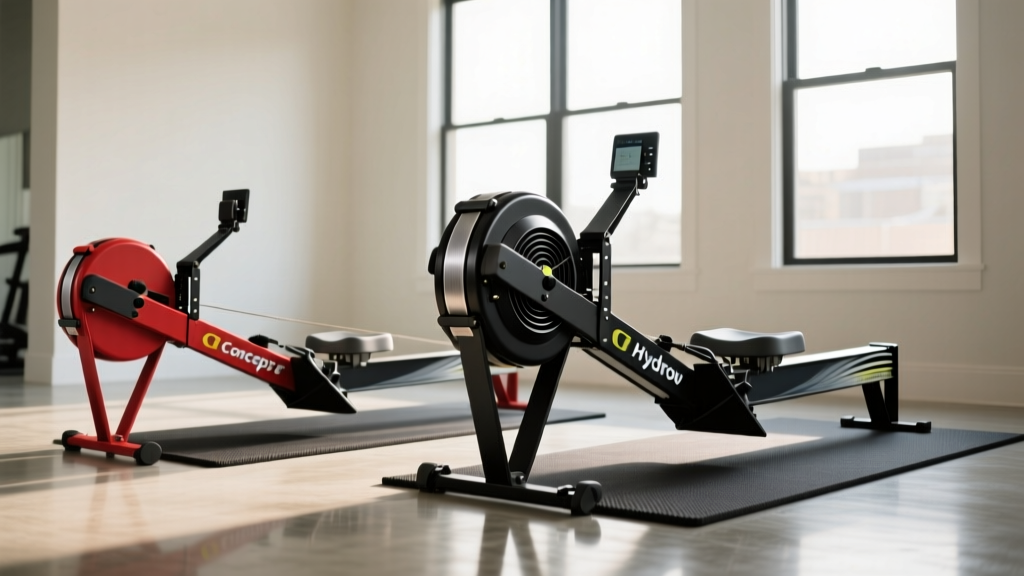
Treadmill Squeaking When Running? Concept2 vs Hydrow Rower Guide

Portable Cardio vs. The VO2 Max Treadmill Test: 2026 Market Trends

Air Bike vs Assault Bike Guide: Why 'Treadmill Donation Near Me' Searches Are Surging

Treadmill Belt Care & Layout: Is 8 incline good on treadmill setups?

Hedonic Treadmill Definition: Why Belt Maintenance Beats Upgrading
