Rowing Guide: NordicTrack Commercial 2450 Folding Treadmill Alternative
Master rowing technique and compare top 2026 rowing machines. Discover why full-body rowers rival the NordicTrack Commercial 2450 folding treadmill.

The Home Gym Cardio Dilemma: Treadmill vs. Rower
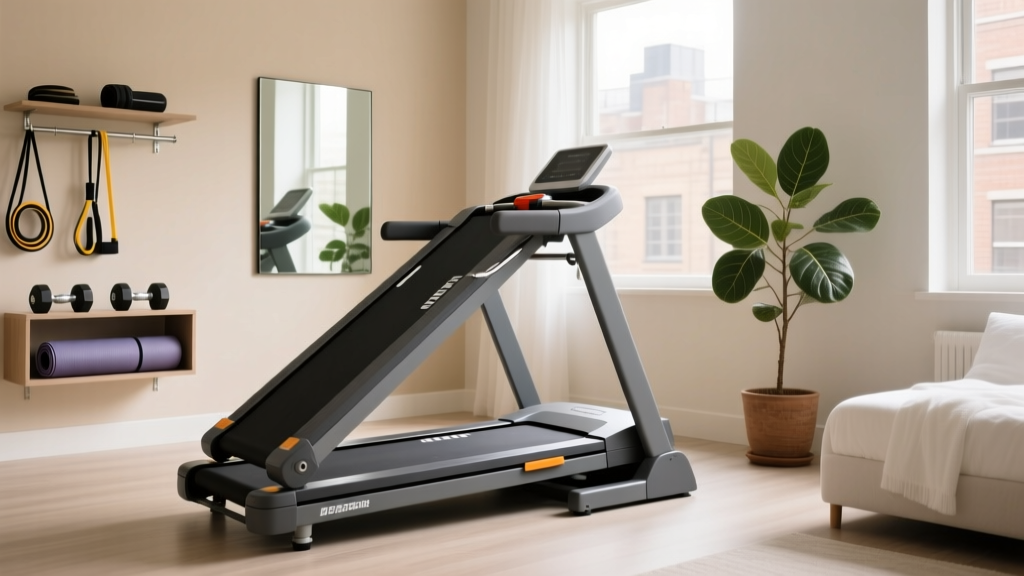
When outfitting a home gym, the NordicTrack Commercial 2450 folding treadmill frequently dominates the conversation. With its 20x60-inch commercial-grade belt, 14-inch HD touchscreen, and -3 to 40% incline capabilities, it is undeniably a titan of living room cardio. However, as fitness science evolves in 2026, many athletes and physical therapists are pivoting toward a more biomechanically balanced alternative: the rowing machine. While the NordicTrack Commercial 2450 folding treadmill excels at lower-body endurance and incline walking, it inherently neglects the posterior chain and upper body, while also subjecting joints to repetitive impact forces.
Rowing machines offer a zero-impact, full-body cardiovascular stimulus that engages approximately 86% of the body's musculature per stroke. According to the Mayo Clinic's guidelines on aerobic exercise, low-impact, high-yield cardiovascular training is paramount for longevity and joint preservation. This comprehensive buying guide and technique masterclass will help you determine if a rower is the right pivot for your home gym, how to execute the stroke flawlessly, and which models dominate the 2026 market.
Expert Insight: The Footprint Reality
The NordicTrack Commercial 2450 folding treadmill weighs approximately 350 lbs and requires a dedicated floor space of roughly 80x36 inches, plus ceiling clearance for its 40% incline. In contrast, a premium rowing machine like the Concept2 RowErg weighs just 57 lbs, stores vertically in a 25x33-inch footprint, and requires zero structural modifications or heavy-duty floor mats.
Mastering the 4-Phase Rowing Technique
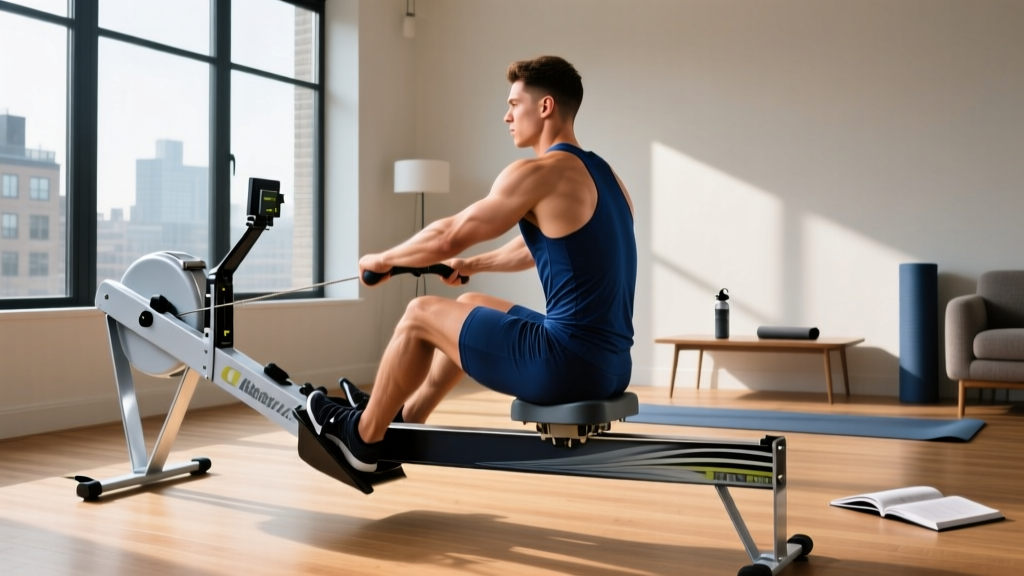
The most common failure mode for beginners transitioning from treadmills to rowers is treating the machine like an upper-body pull. Rowing is a power-endurance movement driven primarily by the lower body. The Concept2 official technique guide breaks the stroke into four distinct, sequential phases. Mastering this sequence is critical to avoiding lumbar strain and maximizing wattage output.
1. The Catch (The Setup)
The catch is the starting position. Your shins should be vertical (or as close to vertical as your ankle mobility allows), heels slightly lifted, and arms fully extended. Your torso should be hinged forward at roughly an 11 o'clock position. Crucial cue: Engage your lats and brace your core before initiating the movement. Do not let your shoulders shrug toward your ears.
2. The Drive (The Power Phase)
The drive is where the work happens, and it must follow a strict kinetic chain: Legs, Core, Arms.
- Legs (60% of power): Push explosively through the mid-foot and heel. Your arms remain straight, and your torso angle remains locked until the handle passes your knees.
- Core (30% of power): Once the legs are nearly extended, hinge the torso backward from the 11 o'clock to the 1 o'clock position.
- Arms (10% of power): Finally, draw the handle to your lower sternum, keeping the elbows tucked close to the ribs.
3. The Finish
At the finish, your legs are fully extended, torso is leaning back slightly (1 o'clock), and the handle is resting just below the pectoral line. Your wrists must remain perfectly flat. Bending the wrists at the finish is a primary cause of forearm tendonitis in novice rowers.
4. The Recovery (The Return)
The recovery is the exact reverse of the drive and should take roughly twice as long. The sequence is: Arms, Core, Legs. Extend the arms fully, hinge the torso forward past the knees, and only then allow the knees to bend and slide back to the catch. Rushing the recovery ruins your split time and spikes your heart rate inefficiently.
"The drive is a violent explosion of power; the recovery is a mindful, controlled reset. If you are rushing the slide, you are stealing time from your next stroke."
Demystifying the Damper and Drag Factor
A pervasive myth in home gyms is that setting the damper lever to 10 equates to a 'heavier' and therefore better workout. This is fundamentally incorrect. The damper simply controls how much air enters the flywheel housing. What actually dictates the feel of the water is the Drag Factor.
Most elite rowers and Olympic training programs set their drag factor between 110 and 130, which accurately simulates the glide of a sleek racing shell on water. On a standard Concept2 RowErg, a drag factor of 120 usually corresponds to a damper setting between 4 and 6. Setting the damper to 10 (often yielding a drag factor of 180+) mimics dragging a heavy wooden rowboat through mud, leading to premature muscular fatigue and lower back compensation before your cardiovascular system is truly taxed.
2026 Rowing Machine Buying Matrix
If you are looking to supplement or replace your NordicTrack Commercial 2450 folding treadmill, the current market offers three distinct tiers of rowing machines. Below is a comparative analysis of the top contenders for 2026.
| Model | Resistance Type | 2026 Price Range | Footprint & Storage | Best For |
|---|---|---|---|---|
| Concept2 RowErg | Air | $990 - $1,050 | 96" L x 24" W (Separates in two) | Purists, CrossFitters, Data Nerds |
| Hydrow Arc | Electromagnetic | $1,495 + Sub | 86" L x 22" W (Upright stand) | Tech enthusiasts, guided classes |
| NordicTrack RW900 | Magnetic / Silent | $1,199 + Sub | 102" L x 22" W (Folds up) | Shared living spaces, iFIT fans |
Deep Dive: Concept2 RowErg vs. Smart Rowers
The Concept2 RowErg remains the undisputed gold standard for performance tracking. Its PM5 monitor is universally accepted for competitive benchmarking (like the 2000m sprint). However, it lacks built-in interactive programming. If your household is accustomed to the immersive, trainer-led HD screen experience of the NordicTrack Commercial 2450 folding treadmill, transitioning to a bare-bones LCD monitor might feel like a downgrade. In that case, the Hydrow Arc or NordicTrack RW900 bridges the gap, offering electromagnetic resistance that is whisper-quiet (ideal for apartments) and integrated screens for live-on-water coaching.
Critical Maintenance and Failure Modes
Unlike treadmills, which require belt lubrication and deck alignment, rowing machines have a unique set of maintenance requirements. Ignoring these will lead to catastrophic failure modes.
Warning: The WD-40 Trap
Never use standard WD-40 on a rowing machine chain. WD-40 is a solvent, not a long-term lubricant. It will strip the chain of its factory grease and attract dust, creating a grinding paste that destroys the sprockets. Use only purified mineral oil or 3-in-One oil, applied via a paper towel every 50 hours of use.
- Bungee Cord Degradation: The elastic bungee cord inside the handle retractor loses tension over time. If your handle fails to return to the cage briskly, the cord needs replacing. Concept2 recommends replacing this every 2 to 3 years depending on usage volume.
- Monorail Pitting: Sweat is highly corrosive. If you do not wipe down the stainless steel monorail after every session, microscopic pitting will occur. This causes the seat rollers to catch and stutter during the recovery phase, ruining your stroke rhythm.
- Monitor Battery Drain: If using a machine with standard D-cell batteries (like the PM5), remove them if the machine will sit idle for more than a month to prevent acid leakage on the motherboard.
Programming: Integrating the Rower into Your Routine
To effectively replace the calorie burn of a 45-minute treadmill session, you must utilize interval programming. Steady-state rowing is excellent for base-building (UT2 heart rate zones), but intervals maximize the afterburn effect (EPOC).
The 5x500m Interval Protocol
- Warm-up: 10 minutes of easy paddling, incorporating pick-drills (legs only, then legs-and-core).
- Work Interval: 500 meters at an aggressive split time (e.g., 1:45 - 1:55 / 500m). Stroke rate should be between 28-32 spm.
- Rest Interval: 2 minutes of active recovery (very light paddling, do not stop completely).
- Repeat: Complete 5 total rounds.
- Cool-down: 5 minutes of easy, low-stroke-rate paddling.
This 35-minute session delivers a massive cardiovascular stimulus, heavily taxing the anaerobic threshold while entirely sparing the knee and ankle joints from the repetitive pounding associated with even the most advanced shock-absorption systems found on treadmills.
Final Verdict: Should You Make the Switch?
The NordicTrack Commercial 2450 folding treadmill is an exceptional piece of engineering for walkers, runners, and hikers who want to simulate alpine terrain from their living room. However, if your goals in 2026 include improving posterior chain strength, correcting anterior-dominant posture from desk work, and eliminating joint impact, a rowing machine is the superior physiological investment. By mastering the kinetic sequence and selecting a machine that fits your spatial and technological needs, you can build a resilient, high-performance cardiovascular engine that will serve you for decades.
More gear to consider
All reviews
Curved vs Motorized: The Real Cost of a Treadmill (2026)
Does Nike Run Club Work on Treadmill? Stationary Bike Budget Guide

Spin, Upright, Recumbent Bikes: How High is 12 Incline on Treadmill?

Rowing Machine Buying Guide: Pace vs Average Treadmill Speed by Age
Beyond the Treadmill Elevation Chart: Cardio Machine Noise Level Comparison