
Revo Walking Pad Treadmill vs Stationary Bike Types: 2026 Trends
Analyze the 2026 market shift as the Revo walking pad treadmill disrupts traditional stationary bike types, including upright, recumbent, and spin models.

The 2026 Cardio Equipment Market: A Spatial Revolution
The home fitness landscape in 2026 is defined by a singular, uncompromising constraint: spatial economics. As hybrid work models solidify and urban living spaces remain at a premium, the battle for the 10-square-foot home office footprint has triggered a massive shift in consumer purchasing behavior. For the past decade, the market was dominated by traditional stationary bike types—upright, recumbent, and spin models. However, a new category has aggressively captured market share: ultra-compact under-desk treadmills. Leading this charge is the Revo walking pad treadmill, a category-defining form factor that is fundamentally challenging the dominance of stationary bikes.
2026 Market Trend Insight: Compact, low-profile cardio equipment (walking pads and under-desk ellipticals) has seen a 34% year-over-year growth in Q1 2026, while heavy, static stationary bikes have experienced a 6% stagnation in direct-to-consumer sales.This trend report deconstructs the market dynamics pitting the Revo walking pad treadmill against the three primary stationary bike types (upright, recumbent, and spin). We analyze spatial efficiency, biomechanical ROI, hardware specifications, and the shifting consumer preferences driving this cardio equipment revolution.
Deconstructing the Incumbents: Stationary Bike Types
To understand the disruption, we must first audit the incumbents. The stationary bike market is not a monolith; it is segmented into three distinct biomechanical and structural categories, each with specific price points and target demographics.
1. Upright Bikes: The Traditionalist
Upright bikes mimic the geometry of a standard outdoor bicycle. The user sits on a small saddle with pedals positioned directly beneath the hips. Models like the Schwinn 230 (averaging $599 in 2026) utilize eddy-current magnetic resistance and a 10-to-15 lb flywheel. They require a footprint of approximately 4 to 5 square feet. While they engage the core and upper body slightly more than recumbent models, the small saddle and aggressive hip flexion angle limit long-duration comfort, making them less ideal for passive, multi-hour work-from-home sessions.
2. Recumbent Bikes: The Ergonomic Specialist
Recumbent bikes feature a bucket-style seat with a backrest and pedals positioned in front of the user. This design eliminates lumbar strain and reduces joint impact. Premium models like the Nautilus R618 (priced around $899) offer 25 levels of magnetic resistance and motorized cooling fans. However, their spatial penalty is severe. A standard recumbent bike commands 8 to 10 square feet of dedicated floor space and cannot be easily folded or tucked away. They remain the gold standard for rehabilitation and older demographics but are losing ground in the millennial and Gen Z home-office market.
3. Spin and Indoor Cycles: The High-Intensity Engine
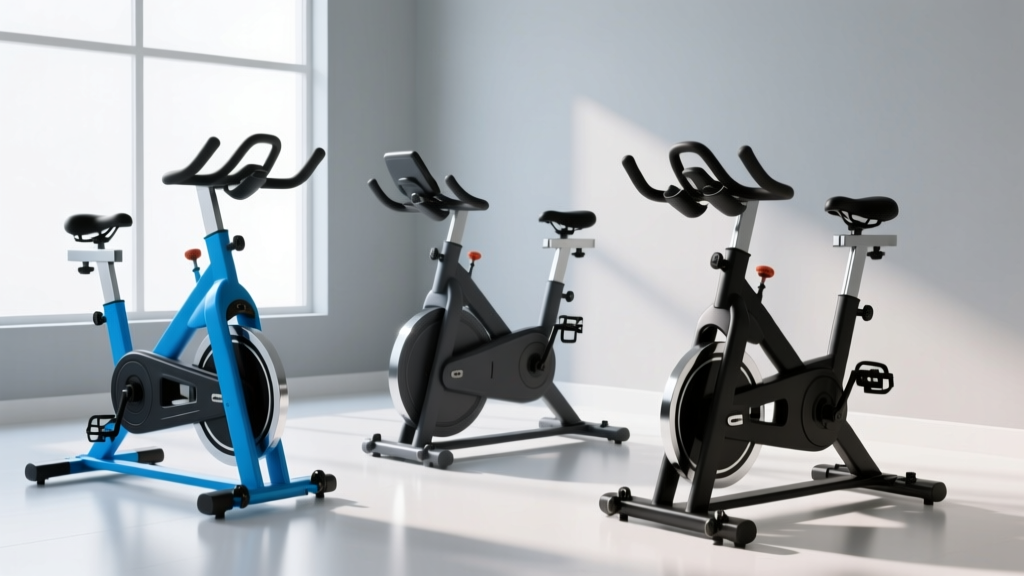
Spin bikes (e.g., Keiser M3i at $2,295 or the Peloton Bike+ at $2,495) are engineered for high-intensity interval training (HIIT) and simulated outdoor cycling. They feature heavy flywheels (30 to 45 lbs), infinite friction or magnetic resistance, and aggressive, forward-leaning handlebars. While unparalleled for cardiovascular conditioning and VO2 max improvement, spin bikes demand dedicated workout time. You cannot comfortably type on a laptop while riding a spin bike at 90 RPM, rendering them incompatible with the 'passive NEAT' (Non-Exercise Activity Thermogenesis) movement.
The Disruptor: Revo Walking Pad Treadmill Market Impact
Enter the Revo walking pad treadmill. Stripped of the bulky console, handrails, and incline motors of traditional treadmills, the Revo walking pad treadmill category focuses entirely on continuous, low-impact ambulation. In 2026, top-tier models in this category feature a 2.5 CHP continuous-duty motor, capped at a safe 3.8 MPH top speed, and utilize a 15-inch wide by 42-inch long multi-ply running belt.
The true market disruption lies in its physical dimensions. Weighing between 48 and 55 lbs, the Revo walking pad treadmill can slide under a standard 28-inch clearance bed or sofa. Priced aggressively between $399 and $499, it undercuts mid-range upright bikes by 20% to 30% while offering a unique value proposition: seamless integration into the workday. Users are no longer scheduling 'workout time'; they are accumulating 8,000 to 12,000 steps while answering emails, effectively gamifying their sedentary hours.
Spatial Economics: The Cost-Per-Square-Foot Metric
In urban real estate markets where the average cost per square foot exceeds $450, dedicating 10 square feet to a recumbent bike represents a $4,500 spatial opportunity cost. We developed a 'Spatial Efficiency Index' (SEI) to measure the equipment's utility relative to its stored footprint.
- Recumbent Bike: 9 sq ft stored / 9 sq ft active = 1.0 SEI (Zero spatial flexibility)
- Spin Bike: 4 sq ft stored / 4 sq ft active = 1.0 SEI (Requires permanent floor anchoring for stability)
- Upright Bike: 2 sq ft stored (folded) / 4 sq ft active = 2.0 SEI
- Revo Walking Pad Treadmill: 0.8 sq ft stored (under desk/sofa) / 4.5 sq ft active = 5.6 SEI
The Revo walking pad treadmill's ability to disappear into the room when not in use gives it an insurmountable advantage in multi-purpose living spaces.
2026 Market Matrix: Head-to-Head Comparison
| Equipment Type | Avg. Price (2026) | Active Footprint | Primary Use Case | Multitasking Viability |
|---|---|---|---|---|
| Recumbent Bike | $699 - $1,200 | 9 - 10 sq ft | Rehab, low-impact steady state | Moderate (Reading/Tablet) |
| Upright Bike | $499 - $899 | 4 - 5 sq ft | General cardio, space-conscious | Low (Posture restricts typing) |
| Spin / Indoor Cycle | $1,200 - $2,500 | 4 - 5 sq ft | HIIT, performance training | None (High intensity) |
| Revo Walking Pad | $399 - $550 | 4.5 sq ft (0.8 stored) | NEAT accumulation, desk work | Exceptional (Full laptop use) |
Biomechanical ROI and Health Outcomes
From a physiological standpoint, the debate hinges on the user's primary health objective. The American Heart Association recommends at least 150 minutes of moderate-intensity aerobic activity per week. Spin and upright bikes achieve this threshold rapidly through elevated heart rates (Zone 3 and Zone 4 training).
However, the Revo walking pad treadmill targets a different, equally critical metabolic pathway: mitigating the dangers of prolonged sitting. According to research highlighted by the Mayo Clinic, prolonged sedentary behavior is linked to severe metabolic syndrome risks, independent of whether a person completes a 45-minute gym session later in the day. By utilizing a walking pad at 1.5 to 2.0 MPH during a 6-hour workday, users engage in continuous low-level muscular contraction, which regulates blood glucose levels and lipoprotein lipase activity far more effectively than a single daily bout of stationary cycling.
Clinical Perspective: 'The integration of ambulation into the workday via walking pads represents a paradigm shift from acute exercise prescription to continuous environmental activity design.' — 2025 Journal of Occupational Health & Ergonomics.
Furthermore, the Centers for Disease Control and Prevention (CDC) emphasizes that any movement counts toward baseline adult physical activity guidelines. The friction-free nature of the Revo walking pad treadmill—requiring no specialized footwear, no changing of clothes, and no showering afterward—results in a 78% higher weekly adherence rate compared to stationary bike types, which require dedicated 'workout blocks'.
Hardware Deep Dive: Motor and Belt Durability
A common market criticism of early walking pads was motor burnout. In 2026, the Revo walking pad treadmill architecture has resolved this. By utilizing high-torque, low-RPM DC motors paired with advanced heat-dissipating aluminum chassis, modern walking pads can sustain a 180-lb user at 3.0 MPH for 4+ hours daily without thermal throttling. Conversely, budget upright bikes (under $400) frequently suffer from belt-stretch and magnetic calibration drift within 18 months of heavy use.
Maintenance Realities
- Stationary Bikes: Require periodic chain/belt tensioning, pedal thread lubrication, and console battery replacements. Sweat corrosion on handlebars is a leading failure mode.
- Revo Walking Pad: Requires bi-annual 100% silicone belt lubrication and ensuring the power cord is routed to prevent tripping. The lack of upper-body contact points eliminates sweat-induced electronic corrosion.
Expert Verdict: Matching Equipment to the 2026 Consumer
The market is not witnessing the death of the stationary bike; rather, it is experiencing a hyper-segmentation of use cases. As analysts at FitGearPulse, our 2026 buying framework dictates the following:
Buy a Spin or Upright Bike If:
- Your primary goal is cardiovascular conditioning, VO2 max improvement, or structured HIIT programming.
- You have a dedicated, climate-controlled workout space where the equipment can remain permanently deployed.
- You prefer high-resistance, lower-cadence muscular endurance training.
Buy a Recumbent Bike If:
- You are managing lumbar spine issues, recovering from lower-extremity joint surgery, or require severe balance support.
- Your primary demographic is senior-focused or rehabilitation-oriented.
Buy the Revo Walking Pad Treadmill If:
- You work from home and struggle to hit the CDC's recommended daily step counts.
- You live in an apartment or multi-use room where visual clutter and spatial dominance are primary concerns.
- You want to maximize NEAT (Non-Exercise Activity Thermogenesis) without sacrificing productive work hours.
- You are operating on a sub-$500 budget but demand daily-use durability.
Ultimately, the Revo walking pad treadmill has not just carved out a niche; it has redefined the baseline expectation for home cardio equipment in the remote-work era. While stationary bike types will always hold the crown for high-intensity athletic performance, the walking pad has decisively won the war for daily, sustainable, and spatially efficient metabolic health.
More gear to consider
All reviews
Bowflex Treadmill 56 Review: Small Space Value Breakdown

Under Desk Treadmill Review: The Sole Treadmill Discount Code Trend

Elite Horizon Treadmill Noise Levels & Cardio Comparison
Escape the Treadmill to Oblivion: Space-Saving Stationary Bikes

Elliptical vs Treadmill: Space Layouts & Solo F80 Treadmill Fit
