How to Train on a Treadmill for a 5K (Quiet Apartment Guide)
Learn how to train on a treadmill for a 5K without noise complaints. Compare cardio machine decibel levels and follow our beginner-friendly 8-week plan.

The Apartment Runner's Dilemma: You want to crush your first 5K, but your downstairs neighbors are light sleepers, and your bedroom shares a wall with the living room. Can you actually prep for a race indoors without triggering noise complaints?
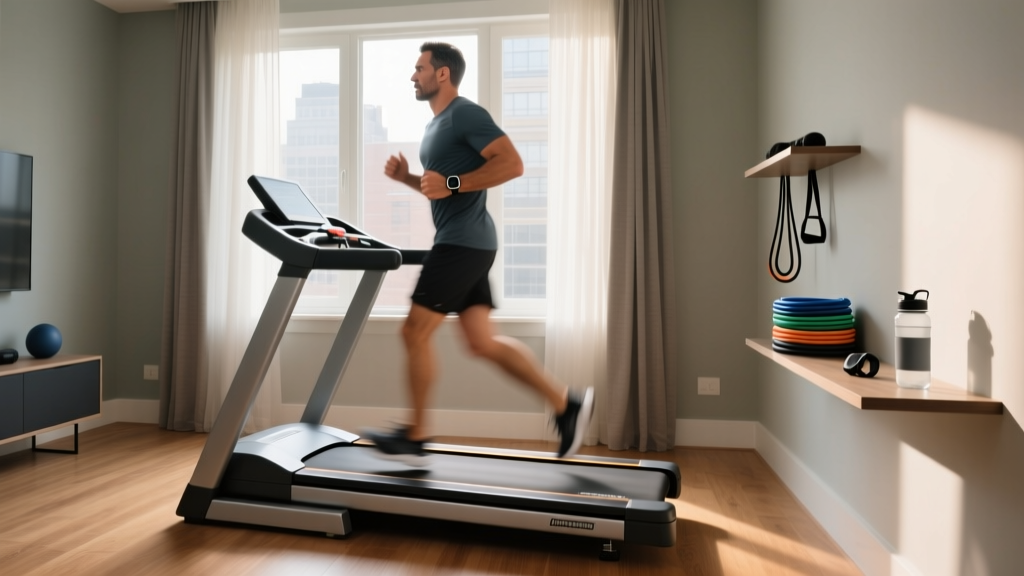
Training for a 3.1-mile race indoors is one of the most effective ways to build cardiovascular endurance, control your pacing, and avoid weather-related missed workouts. However, the rhythmic thudding of footfalls and the hum of a motor can quickly turn a productive workout into a household nuisance. If you are wondering how to train on a treadmill for a 5k while maintaining peace in a shared living space, you need to understand the acoustics of your equipment.
In this beginner-friendly guide, we will break down the exact decibel levels of popular cardio machines, identify the quietest treadmills on the 2026 market, and provide a step-by-step 8-week 5K training plan designed to minimize impact noise.
The Decibel Breakdown: Cardio Machine Noise Level Comparison
Before committing to a treadmill, it is crucial to understand how it compares to other cardio machines in terms of acoustic output. The Environmental Protection Agency (EPA) notes that sustained noise above 70 decibels (dB) can cause annoyance and disrupt sleep, while 50 dB is comparable to a quiet office or moderate rainfall.
When evaluating equipment, we must separate motor noise (the hum of the machine) from impact noise (the low-frequency thud of your feet hitting the deck, which travels easily through floor joists).
| Cardio Machine Type | Drive / Resistance System | Average dB (Moderate Pace) | Average dB (High Intensity) | Apartment Friendly? |
|---|---|---|---|---|
| Treadmill | DC Motor (Residential) | 55 - 65 dB | 70 - 82 dB (Running) | Conditional (Requires mat) |
| Treadmill | AC Motor (Commercial) | 65 - 75 dB | 80 - 90 dB (Running) | No (Too loud for multi-family) |
| Elliptical | Magnetic / Front Drive | 40 - 50 dB | 55 - 60 dB | Yes (Zero impact) |
| Stationary Bike | Belt Drive / Magnetic | 45 - 50 dB | 50 - 55 dB | Yes (Virtually silent) |
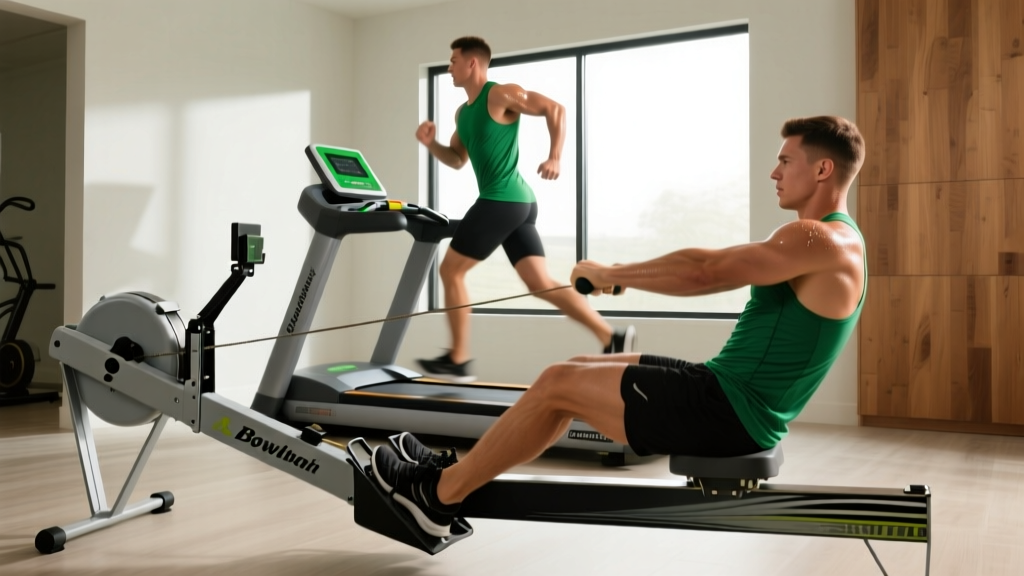
| Rowing Machine | Water Flywheel | 60 - 70 dB | 72 - 78 dB | Conditional (Whooshing sound) |
| Rowing Machine | Magnetic Resistance | 45 - 55 dB | 55 - 62 dB | Yes |
The Verdict: If your primary goal is running a 5K, a treadmill is non-negotiable for sport-specific training. However, you must opt for a Direct Current (DC) motor treadmill and implement impact-dampening strategies to keep the noise below the 70 dB annoyance threshold.
Top Quiet Treadmills for 5K Prep (2026 Market)
Not all treadmills are created equal when it comes to acoustic engineering. Based on current motor specs and deck shock-absorption technology, here are the top picks for quiet indoor running:
1. Horizon Fitness T101 (Best Overall for Quiet Jogging)
Priced around $599, the Horizon T101 features a 2.5 CHP DC motor that operates at roughly 62 dB at a 5.0 mph jogging pace. Its three-zone variable response cushioning doesn't just save your joints; it actively absorbs the low-frequency acoustic energy of your footstrike before it transfers to the floor.
2. NordicTrack T Series 5 (Best Budget / Walking-Jogging)
At approximately $349, this compact unit is ideal for beginners utilizing a walk-run 5K strategy. The smaller motor profile means less internal mechanical hum, though it maxes out at a quieter 65 dB during light jogs. It is not recommended for heavy sprinting, which will strain the motor and increase noise.
The Motor Myth: DC vs. AC
Many beginners assume a larger motor is always better. For apartment dwellers, an Alternating Current (AC) motor (found in $2,000+ commercial gym treadmills) is actually a detriment. AC motors require more power, generate a louder, higher-pitched whine, and produce more vibration. Always look for a Continuous Duty Horsepower (CHP) DC motor in the 2.25 to 3.0 range for the best balance of quiet operation and 5K training durability.
Step-by-Step: How to Train on a Treadmill for a 5K
Now that you have the right quiet equipment, it is time to build your endurance. According to the renowned Hal Higdon Novice 5K program, the secret to beginner success is gradual adaptation. We have adapted this methodology specifically for the treadmill, focusing on pacing and noise-conscious footstrikes.
Phase 1: The Walk-Run Foundation (Weeks 1-3)
Your goal here is time on feet, not speed. Keep the treadmill incline at 1% to simulate outdoor wind resistance and reduce the harshness of a perfectly flat belt.
- Warm-up: 5 minutes at 3.0 mph (brisk walk).
- The Interval: Jog at 4.5 to 5.0 mph for 60 seconds, then walk at 3.2 mph for 90 seconds.
- Repeat: 6 to 8 times.
- Cool-down: 5 minutes walking.
- Noise Tip: Focus on a mid-foot strike. Heel-striking creates a sharp 'slap' against the belt that echoes through walls. A mid-foot landing is naturally quieter and safer for your shins.
Phase 2: Extending the Run (Weeks 4-6)
As your cardiovascular system adapts, we reduce the walk breaks. This is where motor noise might increase slightly as you spend more time at higher speeds.
- Warm-up: 5 minutes walking.
- The Interval: Jog at 5.0 to 5.5 mph for 3 minutes, walk for 60 seconds.
- Repeat: 5 times.
- Weekend Long Session: One continuous 20-minute jog at a conversational pace (approx. 4.8 mph).
Phase 3: The 5K Push (Weeks 7-8)
You are now ready to string the miles together. The treadmill console is your best friend here for maintaining exact race pace.
- Week 7: Two 25-minute continuous runs during the week; one 2.5-mile continuous run on the weekend.
- Week 8 (Race Week): Two 15-minute easy jogs to keep the legs loose. On day 6, set the treadmill to your goal 5K pace (e.g., 5.5 mph for a ~34-minute 5K) and run the full 3.1 miles.
4 Engineering Hacks to Silence Your Treadmill
Even the quietest treadmill will transmit structural vibration if not properly isolated. Implement these four hardware and biomechanical adjustments to keep your training completely stealthy.
- Install a High-Density EVA Foam Mat: Do not use cheap yoga mats. You need a 3/8-inch thick, high-density EVA foam treadmill mat (like the Super Mats 30P). This specific thickness and Shore A hardness rating absorbs the low-frequency kinetic energy of your footfalls before it reaches the floor joists.
- Maintain a 170+ SPM Cadence: Biomechanics dictate noise. Over-striding with a slow cadence (140-150 steps per minute) results in heavy, loud impacts. Shorten your stride and increase your turnover to 170-180 steps per minute. Your feet will 'glide' over the belt rather than pound it.
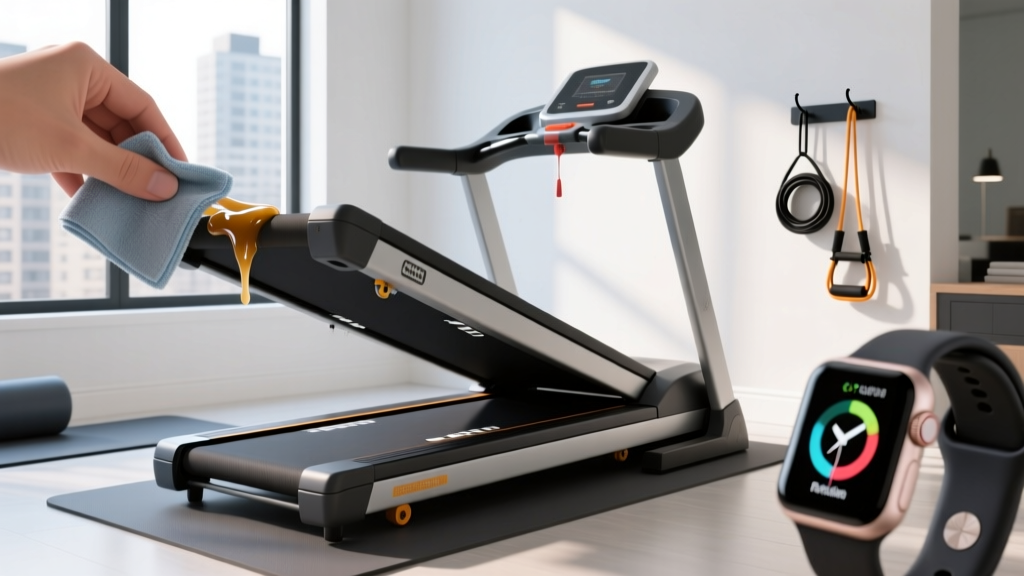
- Lubricate the Deck Monthly: Friction between the belt and the wooden deck forces the motor to work harder, increasing the mechanical hum. Lift the belt and apply 100% silicone treadmill lubricant (never use WD-40 or petroleum-based oils, which will destroy the belt). This can drop motor noise by 3 to 5 dB.
- Check the Leveling Feet: If your treadmill is even slightly unlevel, the frame will rock microscopically with every footstrike, creating a rhythmic clicking sound. Use a carpenter's level and adjust the twist-feet at the base until the machine is perfectly planted.
Frequently Asked Questions
Can I use an elliptical to train for a 5K instead?
While an elliptical (averaging just 45 dB) is fantastic for building baseline cardiovascular endurance without impact noise, it does not prepare your bones, tendons, and muscles for the specific pounding of running. If your goal is to actually run a 5K, you must use a treadmill. If your goal is simply to pass a 5K fitness test or complete the distance via walking/jogging without joint pain, an elliptical is a valid, ultra-quiet alternative.
What time of day is best for apartment treadmill running?
According to the Runner's World treadmill buyer guide and general acoustic best practices, low-frequency impact noise travels furthest when ambient building noise is lowest. Avoid running before 7:00 AM or after 9:00 PM. The mid-day ambient noise of traffic and plumbing will naturally mask the hum of your DC motor.
Will a manual (non-motorized) treadmill be quieter?
Manual treadmills eliminate motor noise entirely, but they are generally louder for apartment dwellers. Because you must forcefully push the belt with your feet, the impact force on the deck is significantly higher, resulting in massive low-frequency thuds that will easily penetrate floors and walls. Stick to a well-cushioned motorized treadmill for the quietest experience.
More gear to consider
All reviews
AFG Sport Treadmill & Stationary Bike Maintenance Guide
Can You Use FSA for Treadmill Belt Maintenance and Lubrication?

Rowing Technique: Low-Impact Cardio Like an Underwater Treadmill Cat
ProSoft Plus Treadmill Noise Level Comparison: A Beginner's Guide
Xebex Treadmill vs Rowing Machine: Buying Guide & Technique