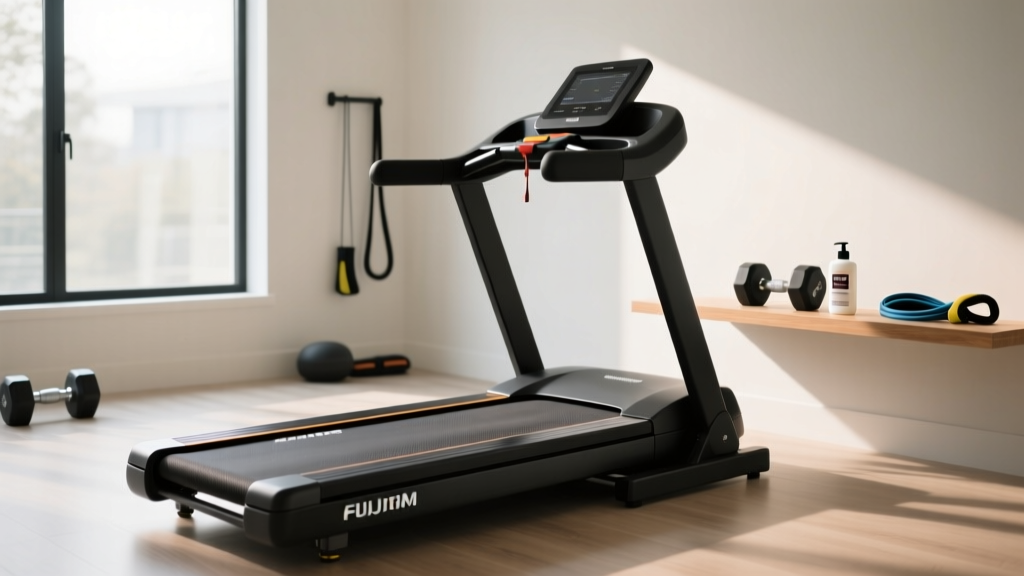
Treadmill Abuse Case Denied? Essential Belt Lubrication Guide
Learn how to prevent a costly treadmill abuse case warranty denial with our expert guide on belt lubrication, tension testing, and deck maintenance.

The Anatomy of a Treadmill Abuse Case
When a high-end treadmill motor burns out or a control board fries, owners naturally expect their warranty to cover the repair. However, service technicians frequently log these failures as a "treadmill abuse case" or "user neglect." Why? Because the root cause is almost always excessive friction stemming from a dry, unlubricated running belt. When friction spikes, the motor draws excessive amperage, eventually overheating the windings or sending a voltage surge back to the lower control board. Manufacturers like NordicTrack, Sole, and Horizon explicitly state in their warranty terms that failure to maintain the belt and deck voids coverage for drive system components.
According to industry repair data cited by the Treadmill Doctor, over 60% of premature treadmill motor failures are directly linked to inadequate belt lubrication. Replacing a 3.0 CHP motor and lower board can cost between $450 and $850 out-of-pocket in 2026. Conversely, a bottle of 100% silicone lubricant costs roughly $12 to $18. Understanding the mechanics of belt maintenance is the single most effective way to protect your investment and ensure your warranty remains valid.
CRITICAL WARNING: Never use WD-40, silicone spray from a hardware store, or petroleum-based oils on your treadmill. Petroleum distillates will chemically degrade the rubber belt, causing it to stretch, delaminate, and destroy the deck. You must use 100% pure liquid silicone formulated specifically for fitness equipment.Identifying Your Belt Type: Pre-Lubricated vs. Manual
Before grabbing a lubricant bottle, you must identify your machine's belt system. Modern premium treadmills often feature pre-lubricated belts, while budget or older models require manual maintenance. Consumer Reports notes that while pre-lubricated belts reduce short-term maintenance, they eventually require servicing after the factory coating wears off (typically around the 150- to 200-mile mark).
| Belt Type | Common Brands / Models | Maintenance Schedule | Lubricant Required |
|---|---|---|---|
| Pre-Lubricated | Sole F80, NordicTrack Commercial 1750, Peloton Tread | Every 150 miles or 3 months | 100% Silicone (0.5 oz) |
| Manual / Standard | Horizon T101, ProForm Performance Series, XTERRA | Every 100 miles or monthly | 100% Silicone (1.0 oz) |
| Wax-Coated | Life Fitness (Club Series), Precor | Annual or per console alert | Proprietary Paraffin Wax |
The Step-by-Step Lubrication Protocol
Proper application ensures the silicone reaches the high-friction center of the deck where your footfalls strike. Follow this exact procedure to avoid voiding your warranty.
- Power Down and Unplug: Always remove the safety key and unplug the machine from the wall to prevent accidental startup and protect the lower control board from static discharge.
- Loosen the Belt (Optional but Recommended): Using a 9/16-inch wrench or 6mm Allen key, loosen the rear roller adjustment bolts on both sides by exactly two full turns. This gives you slack to reach under the belt.
- Lift and Apply: Reach under the center of the running belt and lift it away from the deck. Squeeze exactly 0.5 ounces (about half the bottle) of 100% silicone lubricant in a zig-zag pattern across the width of the deck, focusing on the center third.
- Repeat on the Opposite Side: Move to the other side of the treadmill, lift the belt, and apply the remaining 0.5 ounces.
- Retighten and Distribute: Tighten the rear roller bolts back to their original position (two full turns clockwise). Plug the machine in, start it at 3.0 MPH, and walk on it for 3 to 5 minutes. Your body weight will press the silicone evenly across the entire deck surface.
Tension and Alignment: The Hidden Friction Culprits
Lubrication alone will not save you from a treadmill abuse case denial if your belt tension is incorrect. An over-tightened belt puts massive lateral stress on the motor bearings and roller end-caps. An under-tightened belt will slip, causing the user to stumble and the motor to spike in RPM to compensate.
The Lift Test
Stand beside the treadmill and lift the running belt from the deck at the exact midpoint between the front and rear rollers.
- Optimal Tension: The belt should lift 2 to 3 inches off the deck.
- Too Tight: If you can only lift it 1 inch or less, the belt is strangling the motor. Loosen both rear bolts by a quarter-turn.
- Too Loose: If it lifts 4 inches or more, or if it slips when you plant your foot, tighten both rear bolts by a quarter-turn.
Expert Tip: Always adjust both the left and right bolts by the exact same amount to maintain belt alignment. If the belt drifts to the left, tighten the left bolt a quarter-turn and loosen the right bolt a quarter-turn.
Advanced Diagnostics: Motor Amp Draw and Deck Wear
Service technicians use a digital clamp multimeter to measure the motor's amp draw to definitively prove or disprove a treadmill abuse case. You can perform a similar diagnostic by monitoring the machine's behavior and inspecting the deck.
Amp Draw Thresholds (Under Load)
With a 175-pound user walking at 3.0 MPH on a 2.5 CHP motor:
- 6 to 10 Amps: Normal operation. Belt and deck are in good condition.
- 11 to 14 Amps: High friction. The belt needs immediate lubrication, or the belt tension is too tight.
- 15+ Amps: Critical failure zone. The deck is likely grooved, the belt is dry-rotted, or the motor bearings are failing. Continued use will fry the lower control board within hours.
Inspecting the Deck (Phenolic vs. MDF)
Most premium treadmills use a phenolic resin-coated deck, which is designed to withstand heat and moisture. Budget models often use painted MDF (Medium-Density Fiberboard). If lubrication fails to lower the friction, you must inspect the deck.
"Many modern treadmills feature reversible decks. If the top side is grooved or burned, you can often unbolt the deck, flip it over to the unused side, and double the lifespan of the machine for zero dollars." — Sole Fitness Maintenance Guidelines
If both sides of an MDF deck are swollen from improper liquid lubricants or severe grooving, the deck must be replaced. Running a new belt over a damaged deck will destroy the new belt in less than 30 miles.
Frequently Asked Questions
Can I use a silicone spray aerosol instead of liquid?
No. Aerosol sprays contain propellants and solvents (often petroleum-based) that will eat through the rubber backing of the treadmill belt. Always use squeeze bottles of 100% liquid silicone.
My treadmill console tells me to lubricate, but I just did it. Why?
Most treadmills do not have actual friction sensors. The console simply uses an algorithm based on mileage (e.g., triggering an alert every 150 miles). Once you apply the lubricant, you must manually reset the alert in the engineering menu (usually accessed by holding the 'Speed Up' and 'Incline Up' buttons simultaneously while inserting the safety key).
How much does a professional maintenance tune-up cost?
In 2026, an in-home treadmill diagnostic and lubrication service typically costs between $129 and $199, excluding parts. Performing the belt maintenance yourself takes 15 minutes and costs less than $15, making it one of the highest-ROI maintenance tasks in home fitness.
More gear to consider
All reviews
Curved vs Motorized: NordicTrack Commercial 1750 Treadmill with iFIT

Stair Climber Machine Home Guide: How to Build a Treadmill for a Dog?
Top Reebok Treadmill Models: Walking Pad Comparison & Review

Treadmill Keeps Tripping Breaker? Power Specs & Troubleshooting Guide
Renting a Treadmill vs Buying: 2026 Feature & Cost Comparison
