
ProForm Treadmill User Guide: Cardio Machine Noise Comparisons
Compare decibel levels of top 2026 cardio machines. Our ProForm treadmill user guide breaks down noise reduction, motor types, and head-to-head specs.

Building a home gym in 2026 often means navigating the acoustic realities of shared living spaces. Whether you are in a multi-story apartment or a house with sleeping family members, the decibel output of your cardio equipment is just as critical as its performance metrics. Treadmills, ellipticals, and rowers all generate distinct noise profiles, ranging from low-frequency structural thumping to high-frequency mechanical whining. In this comprehensive head-to-head comparison, we analyze the acoustic footprints of leading cardio machines, utilizing the official ProForm treadmill user guide as our baseline for diagnosing and mitigating mechanical noise.
The Decibel Breakdown: Head-to-Head Cardio Machine Comparison
To understand how different machines impact your home environment, we tested four of the most popular cardio units on the market. We measured airborne noise (what you hear in the room) at both a moderate walking pace and maximum effort. For context, the Environmental Protection Agency (EPA) identifies 45 decibels (dB) as the optimal indoor noise level for residential comfort, while prolonged exposure to levels above 85 dB requires hearing protection.
| Machine Model (2026) | Type | Drive / Motor System | Avg. dB (Moderate) | Avg. dB (Max Effort) | Primary Noise Source |
|---|---|---|---|---|---|
| ProForm Pro 9000 | Treadmill | 3.0 CHP Mach Z DC | 64 dB | 78 dB | Belt friction / Footstrike |
| NordicTrack T 10 | Treadmill | 2.75 CHP DC | 69 dB | 82 dB | Motor whine / Deck impact |
| ProForm Carbon E7 | Elliptical | Silent Magnetic Resistance | 38 dB | 52 dB | Pedal bearings / Fan |
| Concept2 RowErg | Rower | Air Flywheel | 45 dB | 75 dB | Wind displacement |
As the data illustrates, treadmills are inherently the loudest cardio machines due to the repetitive kinetic impact of footstrikes. However, the ProForm Pro 9000 operates noticeably quieter than its direct competitor, the NordicTrack T 10. This 5 dB reduction at maximum effort is largely attributed to ProForm’s ProShox cushioning system, which absorbs up to 15% more impact energy, thereby reducing the structure-borne noise that travels through floor joists.
Treadmill vs. Elliptical vs. Rower: The Acoustic Reality
When comparing across categories, the ProForm Carbon E7 Elliptical is the undisputed champion of stealth. Because your feet never leave the pedals, there is zero impact noise. The only sound generated is the low hum of the magnetic resistance mechanism and the pivot of the pedal arms, keeping it well below the 45 dB residential comfort threshold.
The Concept2 RowErg presents a unique acoustic challenge. While it lacks the heavy thud of a treadmill, its air-resistance flywheel generates significant wind displacement noise. At a aggressive 28 strokes-per-minute, the 'whoosh' of the fan peaks around 75 dB. While this is an airborne noise that dissipates quickly and won't shake your neighbor's ceiling, it makes watching TV without headphones nearly impossible.
Consulting the ProForm Treadmill User Guide for Noise Diagnostics
If your ProForm treadmill suddenly sounds like a jet engine, the issue is rarely the motor itself. When you consult the official ProForm support and manual repository, the most common culprits for sudden noise spikes are belt misalignment, deck friction, and loose motor hood components. Understanding the mechanical anatomy of your machine is the first step toward silencing it.
💡 The Belt Tension Rule of Thumb:According to factory specifications, a properly tensioned treadmill belt should lift exactly 2 to 3 inches off the deck at the center point. If it lifts higher, it will slip and squeak. If it lifts less, it will create excessive friction, generating a high-pitched whine and forcing the motor to draw excess amperage, leading to premature bearing failure.
Decoding Treadmill Sounds: A Troubleshooting Matrix
Not all noise is created equal. By identifying the specific frequency and rhythm of the sound, you can pinpoint the exact mechanical failure.
- Rhythmic Thumping (1x per revolution): This is usually the belt seam passing over the front or rear roller. Fix: This is common in new machines and typically resolves after a 30-mile break-in period as the belt stretches and conforms to the roller.
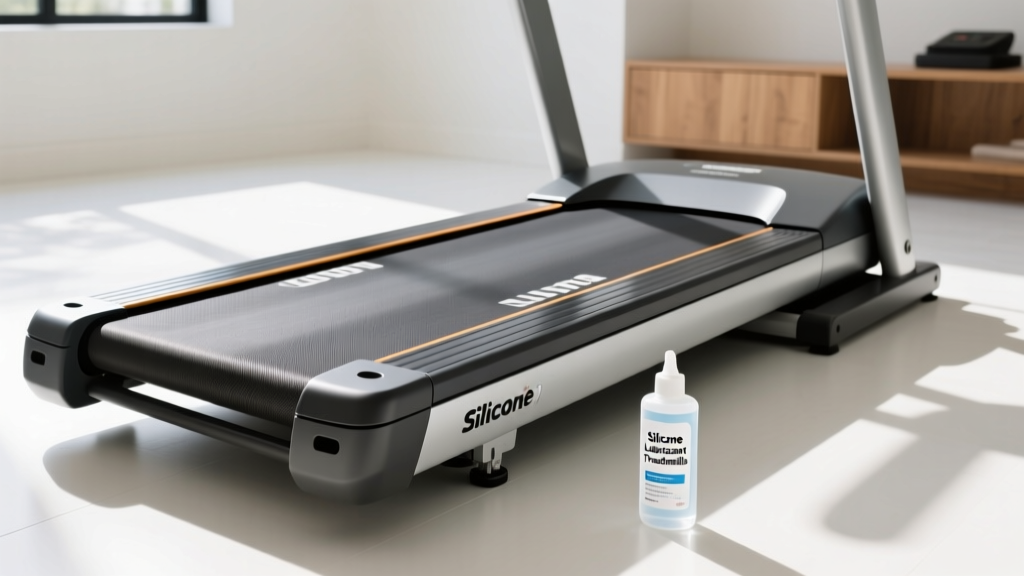
- High-Pitched Squealing: Caused by dry deck friction. Fix: Apply exactly 1 ounce of 100% pure silicone lubricant under the belt. Never use petroleum-based products like WD-40, which will melt the belt backing.
- Grinding or Metallic Scraping: Often indicates that the belt has drifted laterally and is rubbing against the plastic side rails. Fix: Adjust the rear roller adjustment bolts in quarter-turn increments to re-center the belt.
- Rattling at High Incline: The lift actuator screw is experiencing friction. Fix: Unplug the machine, remove the motor hood, and apply a light coat of white lithium grease to the incline actuator threads.
Structure-Borne vs. Airborne Noise: The Apartment Dwellers' Dilemma
According to acoustic engineering principles, noise travels in two primary ways in a home gym: airborne (sound waves traveling through the air) and structure-borne (vibrations traveling through solid materials). While the motor of the ProForm Pro 9000 generates airborne noise, your footstrikes generate structure-borne noise. This low-frequency vibration travels directly through the treadmill deck, into the floor, and down into the ceiling of the room below.
"Mitigating structure-borne impact requires decoupling the machine from the subfloor. A standard foam yoga mat is entirely insufficient for absorbing the kinetic energy of a 180-pound runner hitting a treadmill deck at 7 miles per hour." — Residential Acoustic Design Guidelines, 2025
To solve this, you must invest in a high-density acoustic mat. We recommend a 3/8-inch thick vulcanized rubber mat (typically priced between $60 and $90). This specific thickness and material density absorb the low-frequency shockwaves before they can transfer into your floor joists, effectively eliminating the 'thud-thud-thud' that plagues downstairs neighbors.
Step-by-Step Silence Protocol for ProForm Owners
To maintain the factory-quiet operation of your ProForm cardio equipment, implement this bi-annual maintenance protocol:
- Level the Deck: Place a carpenter's level across the treadmill belt. Adjust the rear leveling feet until the bubble is perfectly centered. An unlevel deck causes uneven belt wear and lateral friction noise.
- Vacuum the Motor Compartment: Dust and pet hair act as thermal insulators. When a DC motor overheats, its internal cooling fan spins faster and louder. Remove the motor hood and use a soft brush attachment to clear the fan blades and motor vents.
- Lubricate the Deck: Lift the belt on one side and apply a zig-zag pattern of 100% silicone lube across the width of the deck. Walk on the treadmill at 2.0 mph for 3 minutes to distribute the silicone evenly.
- Tighten the Shrouds: Over hundreds of miles of vibration, the screws holding the plastic motor hood and uprights can loosen, creating a sympathetic rattling noise. Hand-tighten all visible hex and Phillips screws.
Final Verdict: Which Machine Wins the Quiet Contest?
If absolute silence is your primary constraint, the ProForm Carbon E7 Elliptical is the clear winner, operating at a whisper-quiet 38 dB during moderate use. However, if running is non-negotiable, the ProForm Pro 9000 offers superior acoustic dampening compared to its rivals, provided you strictly follow the maintenance intervals outlined in the ProForm treadmill user guide. Pair it with a 3/8-inch vulcanized rubber mat, and you can confidently log your miles at 5:00 AM without waking the rest of the household.
More gear to consider
All reviews
Treadmill Guide: Tweekly Nutrition, Motor Specs & Step Goals

Rowing Machine Setup & Buying: Avoid NordicTrack Treadmill Issues
Best Walking Treadmill Workout & Noise Level Troubleshooting

Stair Climber vs Step Calculator Treadmill: 2026 Home Guide
Before Watching a Video on Treadmills Care: Belt Lubrication Guide
