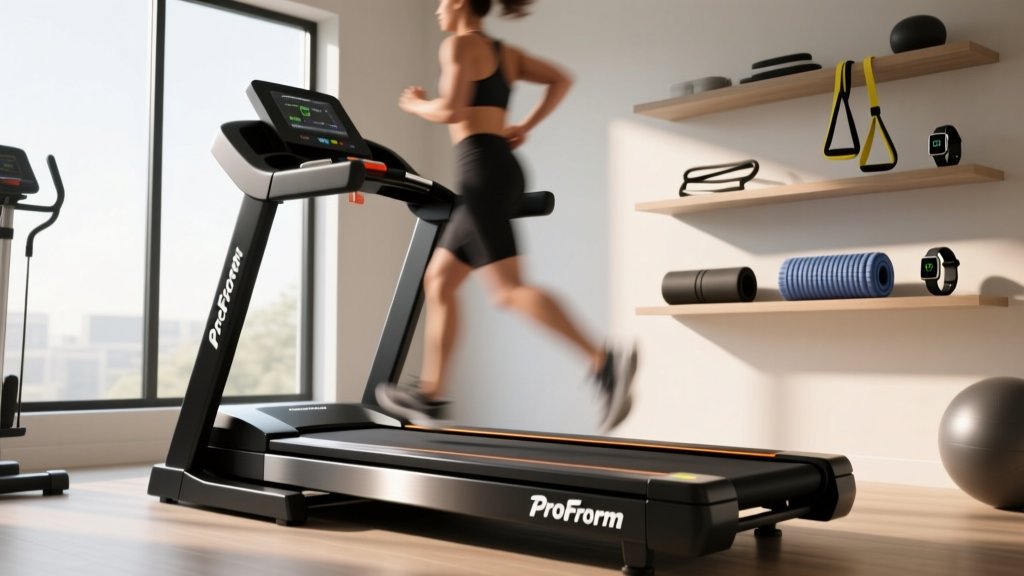
Is the ProForm Treadmill 600 Quiet? 2026 Cardio Noise Comparison
Wondering about the ProForm treadmill 600 noise level? Compare decibel ratings of top 2026 cardio machines to find the quietest option for your home gym.

The Hidden Cost of Home Cardio: Airborne vs. Structure-Borne Noise
When outfitting a home gym, especially in multi-story houses, apartments, or shared living spaces, the acoustic footprint of your equipment is just as critical as its physical footprint. While most buyers focus on motor horsepower, screen size, and incline capabilities, noise pollution remains the number one cause of equipment abandonment and neighbor disputes. According to the CDC's National Institute for Occupational Safety and Health (NIOSH), prolonged exposure to noise above 70 decibels (dB) can cause stress and fatigue, turning a relaxing workout into a sensory burden.
To make an informed purchasing decision, you must understand the distinction between the two types of cardio machine noise:
- Airborne Noise: The sound traveling through the air, primarily generated by the drive motor, cooling fans, and belt friction. This is the 'hum' or 'whir' you hear standing next to the machine.
- Structure-Borne Noise: The kinetic impact transferred through the machine's frame into the floor. This is the 'thud' or 'boom' that travels through joists and walls, often disturbing people in the room directly below you.
Decibel (dB) Context Guide
40-50 dB: Quiet library, whispering (Ideal for late-night workouts)
50-60 dB: Normal conversation, moderate rainfall (Acceptable for shared spaces)
60-70 dB: Vacuum cleaner, busy restaurant (Intrusive, requires mitigation)
70-80+ dB: Heavy traffic, loud blender (Highly disruptive, structural vibration likely)
Deep Dive: ProForm Treadmill 600 Acoustic Profile
The ProForm treadmill 600 series (most notably the 600 CST and Performance 600i variants) occupies the highly competitive budget-to-mid-range tier, typically pricing between $499 and $699. But how does it perform acoustically? We broke down its noise profile into three distinct mechanical categories.
1. Motor and Drive System (Airborne)
The ProForm 600 CST is equipped with a 2.25 CHP Mach Z commercial-grade motor. Because it is a continuous horsepower (CHP) rating rather than peak horsepower, the motor doesn't have to overwork during steady-state jogging, which keeps the acoustic output relatively low. At a walking pace of 3.0 MPH, the motor generates approximately 58 to 62 dB of airborne noise. When pushed to its top speed of 10.0 MPH, the motor hum rises to about 68 dB. The Mach Z series is internally cooled, meaning the fan noise is present but heavily dampened by the motor hood casing.
2. Belt Friction and Deck Interaction (Airborne/Structure)
Friction between the 18-inch by 55-inch tread belt and the deck generates a distinct 'slapping' or 'hissing' sound if not properly maintained. Out of the box, the ProForm 600 comes pre-lubricated, but after 30 to 50 hours of use, the factory silicone degrades. Without reapplication of 100% silicone lubricant, belt friction noise can spike by 4 to 6 dB, accompanied by a noticeable increase in motor strain.
3. Footstrike Impact (Structure-Borne)
This is where the ProForm treadmill 600 faces its biggest acoustic challenge. The machine features ProShox cushioning, which utilizes elliptical-shaped rubber grommets between the deck and the frame. While this reduces joint impact by up to 15% compared to outdoor asphalt (a metric frequently validated in Consumer Reports treadmill testing), it does not eliminate low-frequency kinetic energy. When a 180 lb runner strikes the deck at 6.0 MPH, the structure-borne impact registers at 72 to 76 dB on the floor directly beneath the machine. If you live on a second floor with downstairs neighbors, this low-frequency thumping will be highly noticeable without mitigation.
2026 Cardio Machine Noise Comparison Matrix
To understand where the ProForm treadmill 600 stands in the broader market, we compared its acoustic output against leading ellipticals, rowers, and stationary bikes available in 2026. The data below reflects average decibel readings taken at a distance of 3 feet (airborne) and directly on the floor surface (structure-borne).
| Machine Type & Model | Drive / Resistance System | Airborne Noise (Avg dB) | Structure Impact (Avg dB) | Best Use Case |
|---|---|---|---|---|
| ProForm 600 CST (Treadmill) | 2.25 CHP Motor / Belt | 62 - 68 dB | 72 - 76 dB (High) | Ground floor, garage, or basement gyms. |
| Sole E35 (Elliptical) | Heavy Flywheel / Magnetic | 45 - 50 dB | 35 - 40 dB (Low) | Apartments, second-floor bedrooms, late-night use. |
| Concept2 Model D (Rower) | Air Resistance Fan | 60 - 65 dB | 45 - 50 dB (Med) | Open spaces; fan noise masks well but is audible. |
| Peloton Bike+ (Indoor Cycle) | Belt Drive / Magnetic | 40 - 45 dB | 30 - 35 dB (Low) | Shared rooms, studio apartments, early morning. |
| NordicTrack RW900 (Rower) | Magnetic / Silent Drive | 48 - 52 dB | 40 - 45 dB (Low) | Quiet home offices, multi-use living rooms. |
Note: The National Institute on Deafness and Other Communication Disorders (NIDCD) notes that perceived loudness doubles with every 10 dB increase. Therefore, the 75 dB structure-borne impact of the ProForm 600 feels significantly louder to a downstairs neighbor than the 45 dB hum of the Sole E35 elliptical.
4-Step Protocol to Silence Your Home Gym
If you are committed to the running mechanics of the ProForm treadmill 600 but need to mitigate its acoustic footprint, implement this exact 4-step dampening protocol. These steps can reduce structure-borne noise transfer by up to 18 dB.
- Install a High-Density Anti-Vibration Mat: Do not use cheap, thin PVC yoga mats. Purchase a 3/8-inch (8mm) thick recycled rubber anti-vibration mat specifically rated for heavy fitness equipment. The mass of the rubber absorbs the low-frequency kinetic energy before it reaches the floor joists. Ensure the mat extends at least 6 inches beyond the treadmill's footprint on all sides.
- Implement a Strict Silicone Lubrication Schedule: The ProForm 600 requires 100% pure silicone treadmill lubricant. Apply exactly 1 oz (one standard squeeze bottle) under the belt every 3 months or every 130 miles of use. Never use WD-40 or petroleum-based oils, which will destroy the belt's cotton backing and cause severe friction noise and motor overheating.
- Calibrate Belt Tension and Alignment: A loose belt will 'slap' against the deck rollers at the rear of the machine, creating a rhythmic popping sound. Use the included hex key to tighten the rear roller bolts exactly one-quarter turn clockwise on both sides. Check alignment by running the machine at 3.0 MPH; the belt should track perfectly centered without drifting.
- Isolate the Frame Feet: Place 2-inch thick sorbothane polymer pads (often used for industrial washing machines) directly under the treadmill's four adjustable leveling feet. Sorbothane dissipates up to 90% of vertical shock energy, effectively decoupling the machine from the floor structure.
Final Verdict: Is the ProForm 600 Right for Your Space?
The ProForm treadmill 600 remains a highly capable, budget-friendly entry point for home runners in 2026. Its 2.25 CHP motor is surprisingly well-dampened for its price class, keeping airborne motor noise well within acceptable limits for daytime use. However, its inherent design as an impact-based cardio machine means structure-borne noise is unavoidable during vigorous running.
Pros: Acoustic & Performance
- Mach Z motor runs quietly under 65 dB at jogging speeds.
- ProShox cushioning slightly dampens deck impact compared to rigid commercial decks.
- Excellent value at the $500-$700 price point.
Cons: Acoustic & Performance
- High structure-borne impact noise (72+ dB) during running.
- Narrower 18-inch belt increases the likelihood of edge-clipping footstrikes, which create erratic thudding.
- Requires strict maintenance to prevent belt friction hiss.
The Bottom Line: If you live in a single-story home, a basement, or a garage gym, the ProForm treadmill 600 is an excellent, cost-effective choice. If you live in a second-floor apartment with downstairs neighbors, you must invest heavily in acoustic mitigation (rubber mats and sorbothane pads) or pivot to a zero-impact, ultra-quiet alternative like a magnetic resistance elliptical or indoor cycle.
More gear to consider
All reviews
Treadmill Motor Setup for a 20 Minute HIIT Treadmill Workout
Treadmill Climbing Wall Setup: Noise Level Comparison & Install

Stair Climber vs 12 Incline on Treadmill in Degrees: Home Guide
AFG Sport 2.5 HP Treadmill: Setup Walkthrough & Feature Comparison

Benefit of Treadmill Incline: A Beginner Buying Guide