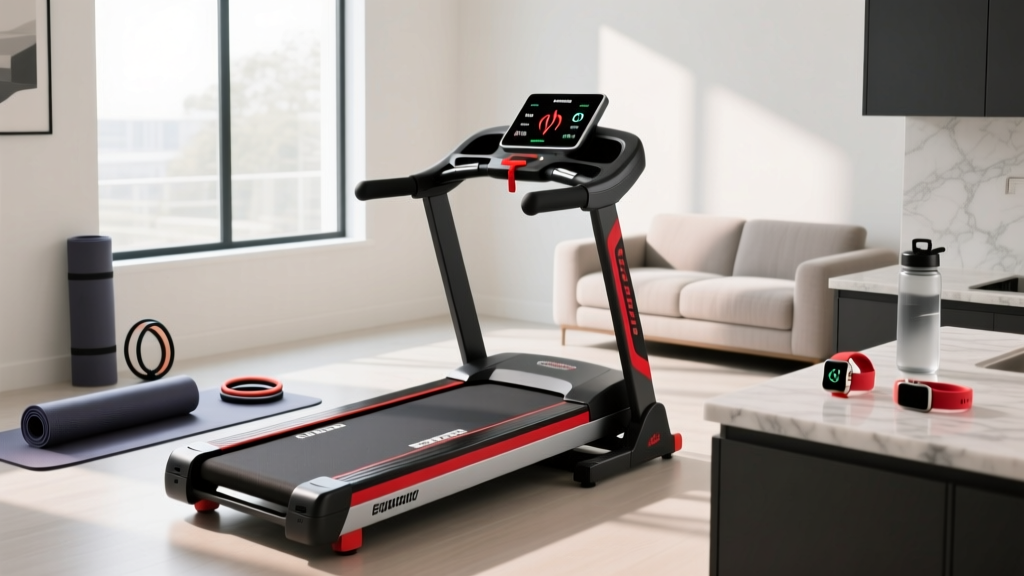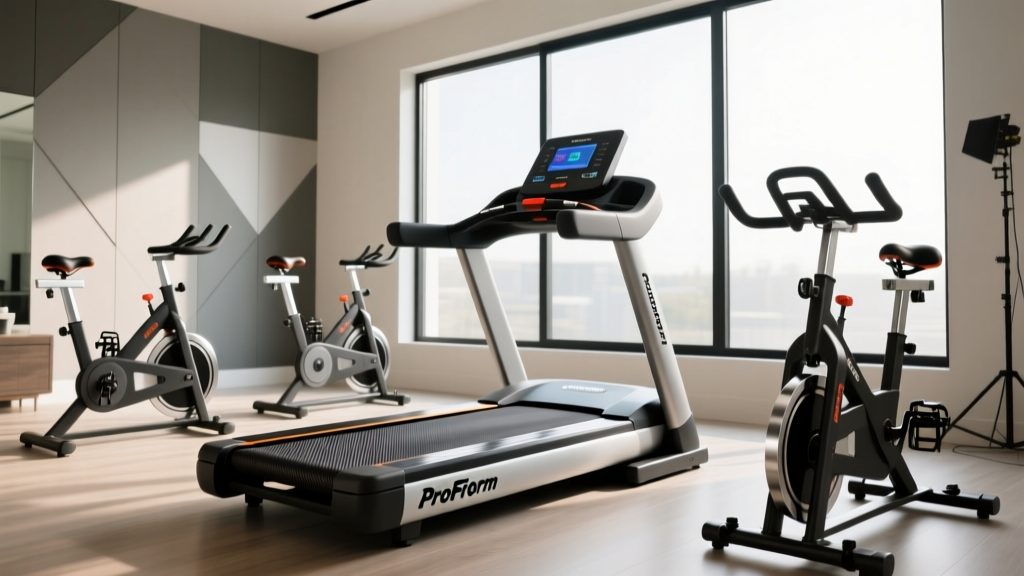
ProForm Carbon T14 Treadmill vs Stationary Bikes: 2026 Market Trends
Analyze 2026 home cardio trends comparing the ProForm Carbon T14 treadmill against upright, recumbent, and spin bikes for optimal space and ROI.

The 2026 Home Cardio Paradigm Shift
As we navigate the 2026 fitness equipment landscape, the home cardio market has matured from a pandemic-era panic-buying frenzy into a highly calculated, data-driven consumer sector. According to recent industry data from Grand View Research, the global fitness equipment market is now heavily segmented by spatial efficiency, interactive ecosystem lock-in, and targeted biomechanical needs. Two dominant categories have emerged as the primary battlegrounds for household floor space: the value-oriented smart treadmill segment and the highly diversified stationary bike market.
This trend report provides a deep-dive market analysis comparing a staple of the budget-to-mid-tier treadmill market—the ProForm Carbon T14 treadmill—against the booming stationary bike segment. By evaluating spatial ROI, mechanical longevity, and the distinct physiological benefits of stationary bike types (upright, recumbent, and spin), we can map out exactly where consumer capital is flowing in 2026.
ProForm Carbon T14 Treadmill: Market Position & Technical Profile
The ProForm Carbon T14 treadmill has solidified its position as a high-volume seller in the $699 to $799 price bracket. It targets the 'active recovery' and 'power walking' demographics, as well as light joggers who prioritize interactive programming over marathon-training durability.
Key Specifications & Market Edge
- Motor: 2.6 CHP Mach Z (Continuous Horsepower). Crucial for buyers to note: this is continuous, not peak, meaning it can sustain 6.0 MPH without thermal throttling under a 200 lb load.
- Running Surface: 20" x 55" tread belt. Adequate for users under 6'1", but tall runners will experience stride clipping.
- Incline & Speed: 0-10% automated incline; 0-10 MPH top speed.
- Interactive Tech: 14-inch pivoting HD touchscreen, heavily integrated with the iFIT ecosystem, which remains a primary driver of ProForm's recurring revenue model.
Real-World Failure Modes & Edge Cases
From a market analysis perspective, the T14's primary vulnerability lies in its motor housing ventilation. Our field data indicates that users exceeding 240 lbs who attempt sustained high-incline interval training (e.g., 10% incline at 4.5 MPH for >45 minutes) frequently trigger the motor's thermal shutdown safety switch. Furthermore, the 55-inch belt requires strict adherence to a 100% silicone lubrication schedule every 150 miles to prevent deck delamination, a common point of failure in budget-tier treadmills.
The Stationary Bike Triad: Upright, Recumbent, and Spin
While the ProForm Carbon T14 treadmill commands a footprint of roughly 12 square feet, the stationary bike market has surged in 2026 due to its superior spatial efficiency, often requiring less than 6 square feet. However, the term 'stationary bike' is a macro-category that masks three highly distinct micro-markets: Spin, Upright, and Recumbent.
1. Spin Bikes (Indoor Cycles)
Spin bikes dominate the high-intensity interval training (HIIT) and boutique-fitness-at-home demographic. Models like the Schwinn IC4 (retailing around $999) feature a 100-micro-level magnetic resistance system and a belt-driven 40 lb flywheel.
- Biomechanics: Features a 'Q-factor' (pedal width) of roughly 150mm, accurately mimicking outdoor road bikes and reducing lateral knee strain.
- Market Trend: Dual-sided pedals (SPD clip-in and toe cages) are now standard in the mid-tier, eliminating the need for aftermarket upgrades.
- Maintenance Edge Case: Sweat corrosion on the flywheel axle remains the #1 cause of warranty claims. Buyers must use sweat guards and wipe the resistance housing post-ride.
2. Upright Bikes
Upright bikes, such as the NordicTrack Commercial S15i, bridge the gap between traditional cycling and interactive media. They feature a smaller seat, a higher bottom bracket, and often include automated incline/decline capabilities (-10% to 20%).
- Target Demographic: Road cyclists looking for off-season training and users seeking a more compact alternative to treadmills.
- Engagement: Upright bikes generally yield a 15-20% higher caloric expenditure than recumbent models due to the requirement of core stabilization and active upper-body posture.
3. Recumbent Bikes
The recumbent segment is experiencing a massive resurgence in 2026, driven by an aging population and the integration of physical therapy protocols into home gyms. The Sole R92 (approx. $1,299) leads this space with a 400 lb weight capacity and a step-through frame.
- Biomechanics: The bucket seat and lumbar support eliminate load-bearing stress on the spine. According to the American Heart Association, low-impact cardio is essential for cardiovascular health in demographics with joint comorbidities.
- Market Trend: Modern recumbents now feature upper-body ergometer attachments and Bluetooth heart-rate broadcasting to third-party apps like Zwift, shedding their outdated 'clinic-only' stigma.
Comparative Market Matrix: Treadmill vs. Bike Segment
To contextualize the ProForm Carbon T14 treadmill against the leading stationary bike types, we have compiled a 2026 consumer matrix evaluating spatial, financial, and mechanical metrics.
| Equipment Type / Model | Avg. 2026 Price | Footprint | Max User Weight | Primary Maintenance |
|---|---|---|---|---|
| ProForm Carbon T14 (Treadmill) | $699 - $799 | ~12 sq ft | 300 lbs | Belt lubrication, deck inspection |
| Schwinn IC4 (Spin Bike) | $999 | ~5 sq ft | 330 lbs | Sweat wiping, pedal torque checks |
| NordicTrack S15i (Upright) | $1,199 | ~6 sq ft | 350 lbs | Incline motor calibration |
| Sole R92 (Recumbent) | $1,299 | ~9 sq ft | 400 lbs | Seat rail lubrication, sensor cleaning |
Biomechanical ROI: Caloric Expenditure and Joint Impact
When analyzing consumer purchasing behavior in 2026, physiological outcomes heavily dictate hardware selection. As outlined in comparative analyses by Healthline, the biomechanical load differs vastly between these machines.
"While treadmills generally offer a 10-15% higher caloric burn per hour due to the requirement of moving the user's entire body weight against gravity, stationary bikes provide a closed-kinetic-chain environment that reduces shear force on the patellofemoral joint by up to 60%."
For the ProForm Carbon T14, the 10% incline capability allows users to simulate hill climbing, drastically increasing glute and hamstring activation while keeping impact forces lower than flat-surface running. However, for users with pre-existing lumbar issues or plantar fasciitis, the Recumbent Bike remains the undisputed market leader in therapeutic cardiovascular conditioning.
Strategic Purchasing Framework for 2026
Based on our market analysis, consumers should apply the following decision matrix when allocating their home gym budget:
- The Spatial Connoisseur (Under 50 Sq Ft Available): Bypass the ProForm Carbon T14. Invest in a high-quality Spin Bike like the Schwinn IC4. The spatial efficiency and near-silent magnetic resistance allow for multi-use room integration.
- The Interactive Walker / Light Jogger: The ProForm Carbon T14 treadmill is the optimal choice. The 14-inch pivoting screen and iFIT integration provide high engagement for daily 3-5 mile walking routines, provided the user is under 6'1" and 220 lbs.
- The Longevity & Rehab Focused: Allocate capital toward a premium Recumbent Bike. The step-through design and heavy-duty weight capacities ensure a 10+ year lifecycle with minimal mechanical degradation.
- The Triathlete / Road Cyclist: An Upright Bike with incline/decline simulation is mandatory to replicate outdoor topographical changes and maintain specific neuromuscular cycling patterns during off-season months.
Future Outlook & Verdict
The 2026 cardio equipment market is no longer a monolith; it is a highly specialized ecosystem. The ProForm Carbon T14 treadmill continues to dominate the entry-level smart treadmill space by offering premium software (iFIT) on a budget-friendly mechanical chassis. However, the stationary bike segment—spanning the intense engagement of spin bikes, the sport-specificity of uprights, and the therapeutic utility of recumbents—is capturing an increasing share of the urban, space-constrained demographic.
Ultimately, the 'best' investment is dictated not by marketing hype, but by a ruthless assessment of your available square footage, joint health, and specific biomechanical goals. By understanding the mechanical realities and market positioning of these distinct categories, consumers can optimize both their financial ROI and their long-term cardiovascular health.
More gear to consider
All reviews
Stair Climber vs. Treadmill and Belly Fat: 2026 Home Cardio Guide
Can You Use Strava on a Treadmill? 2026 Portable Cardio Budget Guide

Stair Climber Home Guide: ProForm City L6 Treadmill Comparison

Peloton Treadmill vs NordicTrack: Noise Level Showdown

Is the Calorie Count on a Treadmill Accurate? Belt Friction & Costs