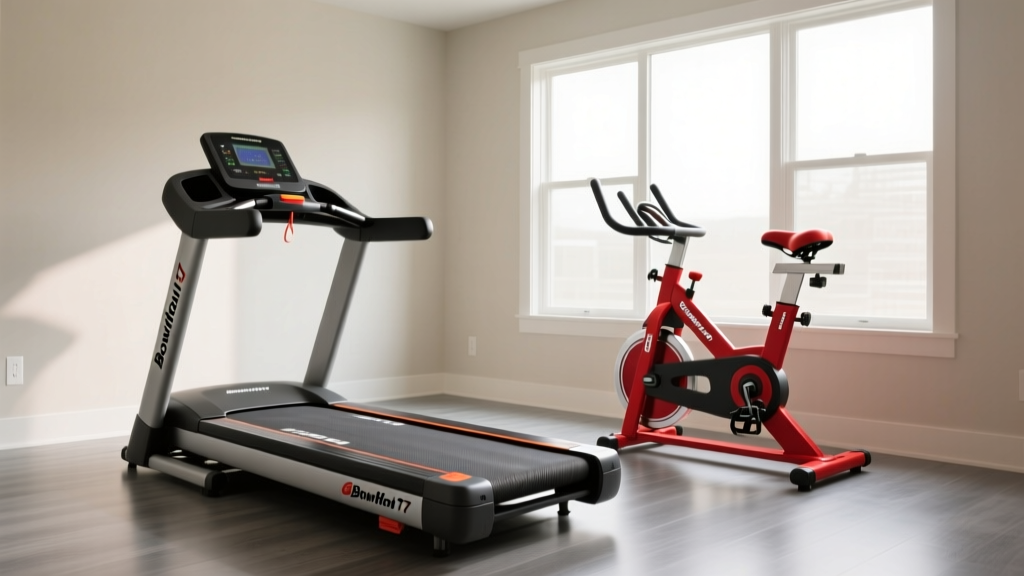
ProForm 750 CS Treadmill Belt Maintenance in Tight Spaces
Learn how to optimize your home gym layout for ProForm 750 CS treadmill belt maintenance, ensuring proper clearance for lubrication in small spaces.

The Spatial Paradox of Compact Treadmills
When designing a home gym in a limited footprint, the ProForm 750 CS treadmill is frequently pushed into corners or flush against walls to maximize usable floor space. While its SpaceSaver folding mechanism allows the deck to hinge upward—reducing the machine's storage profile to roughly 30 inches from the wall—this aggressive space optimization creates a hidden maintenance trap. Proper treadmill belt maintenance and lubrication require physical access to the deck perimeter, the motor hood ventilation, and the rear roller adjustment bolts.
If your layout design restricts this access, routine maintenance becomes nearly impossible. This leads to premature belt fraying, excessive motor amp draw, and eventual control board failure. According to ACE Fitness Home Gym Setup Guidelines, equipment must have adequate clearance not just for user safety during operation, but for routine servicing and mechanical access. This guide bridges the gap between space-saving layout design and the mechanical realities of maintaining the ProForm 750 CS belt system in 2026.
Clearance Matrix: Designing the Maintenance Arc
To properly lubricate the ProForm 750 CS belt, you must be able to lift the belt edge on both the left and right sides and insert an applicator tube toward the center of the deck. Furthermore, accessing the rear roller bolts requires standing directly behind the machine. Below is the required spatial matrix for optimal layout design in small rooms.
| Spatial Zone | Minimum Clearance | Maintenance Purpose | Layout Compromise Risk |
|---|---|---|---|
| Left Side | 12 inches | Arm maneuverability to lift belt edge and insert silicone applicator tube. | Flush wall placement prevents left-side lubrication, causing uneven belt wear. |
| Right Side | 12 inches | Access to the right belt edge and motor hood side-panel screws. | Blocked ventilation grilles lead to motor overheating during high-incline use. |
| Rear (Behind) | 24 inches | Standing room to access rear roller adjustment bolts with an Allen wrench. | Inability to tension the belt or center it if it drifts during operation. |
| Front | 36 inches | Safe mounting/dismounting and motor hood front-cover removal. | Tripping hazard and restricted airflow to the primary drive motor. |
Diagnosing Belt Friction Without Moving the Machine
In highly optimized, tight layouts, pulling a 140-pound treadmill away from the wall for inspection is physically taxing. Before attempting to move the ProForm 750 CS, you can diagnose belt friction and lubrication needs in place using the following methods:
- The Amp Draw Test: If you have access to a plug-in watt meter (like a Kill A Watt), monitor the treadmill's power draw. A properly lubricated ProForm 750 CS walking at 3.0 MPH with a 150 lb user should draw between 4 to 6 amps. If the draw spikes above 10 amps, the belt-deck friction is critically high, indicating immediate lubrication is required.
- The Thermal Hood Check: After a 20-minute run, carefully place your hand near the right-side motor hood ventilation grilles. If the air exiting is excessively hot (noticeably warmer than normal room temperature), the friction from a dry belt is transferring excess heat to the 1.75 CHP motor.
- The Slip Test: Stand on the side rails, start the belt at 2.0 MPH, and step on. If the belt hesitates or stutters under your initial foot strike while the front roller continues to spin smoothly, the belt is loose or the deck is bone-dry.
Step-by-Step Belt Lubrication in Restricted Zones
When your spatial layout limits your movement, precision becomes critical. Follow this adapted procedure for lubricating the ProForm 750 CS when side clearances are at the minimum 12-inch threshold.
1. Preparation and Safety
Always remove the safety key and unplug the treadmill from the wall outlet. In tight spaces, power cords can become pinched between the frame and the wall; ensure the cord is routed safely away from the folding hinge mechanism.
2. Accessing the Belt Edge
Kneel on the left side of the treadmill. Reach under the center of the belt and pull it upward. You should be able to lift the belt approximately 1.5 to 2 inches off the deck. If the 12-inch side clearance restricts your shoulder movement, use a flat-head screwdriver wrapped in a microfiber cloth to gently pry the belt edge up without damaging the PVC material.
3. Applying the Silicone
Use exactly 1 ounce (30 ml) of 100% pure liquid silicone lubricant. As of 2026, premium brands like Impresa or Spot On cost between $12 and $18 for a 4-ounce bottle, which is enough for four years of maintenance. Squeeze the applicator tube under the belt, aiming for the exact center of the deck, and dispense half the ounce in a zig-zag pattern. Repeat on the right side.
Critical Warning: Never use WD-40, petroleum-based oils, or household spray lubricants on your ProForm 750 CS. These chemicals will dissolve the urethane coating on the underside of the belt and destroy the deck's wax impregnation, resulting in a $150+ replacement cost.4. Distributing the Lubricant
Plug the machine back in. Start the treadmill at 3.0 MPH with no one standing on it. Let it run for 5 minutes. The rotation will naturally spread the silicone across the deck surface.
Thermal Dynamics: Airflow and Motor Hood Access
Space optimization isn't just about physical access for your hands; it is also about spatial access for air. The ProForm 750 CS utilizes a 1.75 Continuous Horsepower (CHP) motor that relies on passive and active airflow to cool the internal components. When a treadmill is shoved into an alcove or a tight corner, the ambient air temperature around the motor hood rises.
'A dry walking belt can increase the electrical load on a treadmill motor by up to 30%. In an enclosed spatial layout with poor ventilation, this combination of high electrical resistance and trapped ambient heat is the primary cause of thermal breaker trips and melted wiring harnesses.' — Treadmill Doctor's Belt Lubrication Guide
To mitigate this in a space-optimized layout, ensure that the wall directly behind and to the right of the motor hood is free of obstructions like curtains, heavy drapes, or stacked storage boxes. If your layout absolutely requires the right side to be within 6 inches of a wall, you must increase the frequency of your belt lubrication from every 6 months to every 3 months to compensate for the increased thermal strain on the motor.
The Folding Hinge and Deck Alignment
Finally, when operating the SpaceSaver folding mechanism in a tight room, be mindful of deck alignment. If the treadmill is folded down and the rear roller bumps against a baseboard or a wall due to insufficient rear clearance, the belt can be knocked off-center.
If you notice the belt drifting to the left or right after unfolding the machine, do not ignore it. Use a 3/16-inch Allen wrench to adjust the rear roller bolts. Turn the left bolt clockwise by one-quarter turn to shift the belt right, or counter-clockwise to shift it left. Always make micro-adjustments and let the belt run at 3.0 MPH to track the movement. Proper spatial planning ensures you have the 24 inches of rear clearance required to stand comfortably and make these precise adjustments without contorting your body against a drywall corner.
Summary Checklist for Small-Space Owners
- Verify 12-inch side clearances for arm maneuverability during silicone application.
- Maintain 24-inch rear clearance for rear roller bolt access.
- Use only 100% pure liquid silicone (1 oz per application).
- Monitor motor hood heat and amp draw to diagnose friction without moving the unit.
- Never use petroleum-based lubricants or aerosol sprays.
By respecting the mechanical clearances required for maintenance, you can enjoy the space-saving benefits of the ProForm 750 CS without sacrificing the longevity of its belt and motor systems. For further technical specifications and warranty details, always refer to ProForm Official Support and Maintenance documentation.
More gear to consider
All reviews
Treadmill in Garage: Cardio Machine Noise Comparison

Air Bike vs Assault Bike: Escaping the Hamster Treadmill Trap
Round Treadmill vs Rower: 2026 Buying & Technique Guide

DIY Underwater Treadmill for Dogs vs Walking Pads: Rehab Review

Horizon Fitness 101 Treadmill Maintenance: Belt Lubrication Guide