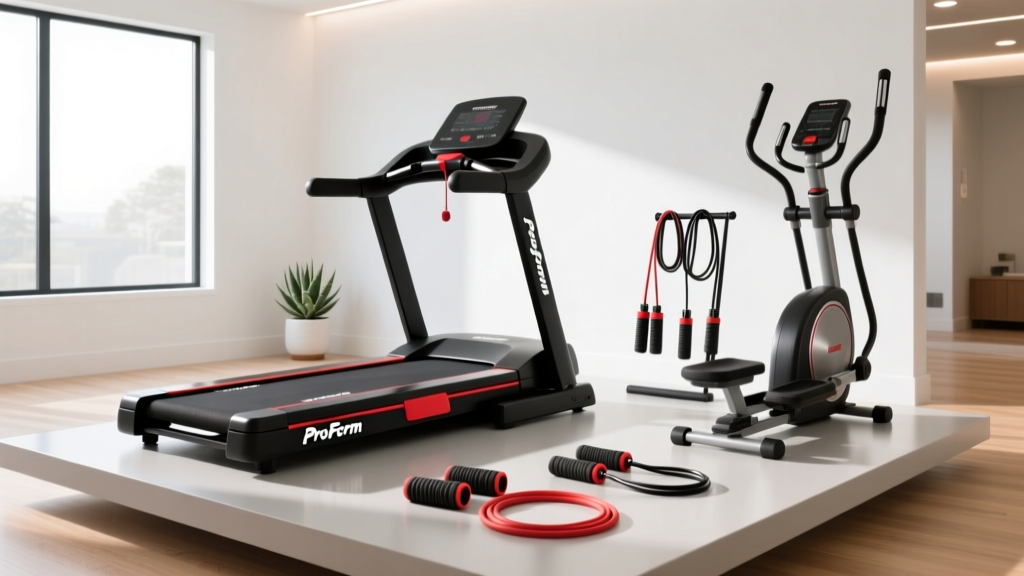
ProForm 495 PI Treadmill & Portable Cardio Maintenance Guide
Extend the life of your ProForm 495 PI treadmill and compact portable cardio gear with expert maintenance schedules, lubrication tips, and repair guides.

The shift toward micro-apartments, hybrid work setups, and multi-use living spaces has completely transformed the home fitness landscape in 2026. Today, compact portable cardio equipment options are no longer just secondary choices; they are the primary fitness solutions for millions of users. Folding treadmills, under-desk walking pads, and hinge-based stationary bikes dominate the market. However, the mechanical compromises required to make these machines fold, slide, and store away introduce unique wear-and-tear patterns that standard gym equipment simply does not face.
Among the most popular legacy folding models still heavily utilized and traded on the refurbished market is the ProForm 495 PI treadmill. While it offers an excellent entry-level footprint, its folding mechanics and compact motor shroud require a highly specific maintenance regimen. In this comprehensive guide, we will break down the exact maintenance protocols for the ProForm 495 PI, while providing a broader framework for caring for all your compact portable cardio equipment options to ensure they survive well past their warranty periods.
The Unique Wear-and-Tear of Compact Portable Cardio Equipment Options
When engineers design a machine to fold in half or slide under a bed, they must introduce hinges, locking pins, and smaller continuous-duty motors. According to Consumer Reports' treadmill buying and care guide, folding treadmills experience a higher rate of structural squeaking and deck misalignment compared to rigid-frame commercial models.
Furthermore, compact machines often utilize smaller motor shrouds to save space. This restricted airflow means that dust, pet hair, and carpet fibers are pulled directly into the motor compartment at a higher concentration, leading to premature overheating of the Motor Control Board (MCB). Portable equipment like walking pads also lack the structural handrails that absorb lateral impact, transferring the full torque of an off-center footstrike directly into the belt tracking system and the front roller bearings.
ProForm 495 PI Treadmill: Critical Maintenance Schedule
The ProForm 495 PI is a workhorse, but its 1.75 CHP motor and 18" x 50" running surface demand strict adherence to a maintenance calendar. Neglecting this specific model leads to the infamous "E1" speed sensor error or a burnt-out drive motor.
Belt and Deck Lubrication Protocol
Friction is the enemy of compact treadmill motors. The ProForm 495 PI requires 100% pure silicone lubricant applied every 150 miles or every 3 months, whichever comes first.
CRITICAL WARNING: Never use WD-40, petroleum-based oils, or generic household lubricants on your ProForm 495 PI. These substances will degrade the factory-applied silicone coating on the deck, causing the belt to delaminate and forcing a complete $80-$120 deck replacement.As detailed in the Treadmill Doctor's lubrication guidelines, the correct application involves loosening the rear roller bolts by exactly two full turns, lifting the belt, and applying the silicone in a zig-zag pattern across the center third of the deck before retensioning.
Motor Shroud and MCB Care
Because the 495 PI sits low to the ground, it acts as a vacuum for floor debris. Every 90 days, you must unplug the machine, remove the 3 to 4 Phillips-head screws securing the front motor shroud, and use a can of compressed air and a soft brush to clear the motor fins and the MCB heat sink. Failure to do this restricts airflow, causing the thermal cutoff switch to trip during runs longer than 20 minutes.
Portable Cardio Care Matrix: Treadmills vs. Walking Pads vs. Bikes
To understand how the ProForm 495 PI stacks up against other compact portable cardio equipment options, review the failure-point matrix below. This data is synthesized from independent repair technician logs and OEM part replacement frequencies.
| Equipment Type | Primary Failure Point | Maintenance Interval | Estimated Repair Cost |
|---|---|---|---|
| Folding Treadmill (ProForm 495 PI) | Hydraulic lift cylinder leak / Hinge pin shear | Grease hinges every 6 months | $45 - $85 (Parts) |
| Under-Desk Walking Pad | Belt tracking drift / MCB overheating | Track adjustment every 30 days | $60 - $110 (MCB) |
| Folding Stationary Bike | Seat post hinge wobble / Resistance pad wear | Tighten hinge bolts monthly | $20 - $40 (Pads) |
| Compact Rowing Machine | Bungee cord snap / Rail wheel flat-spotting | Clean rail weekly; check cord yearly | $35 - $75 (Bungee) |
Step-by-Step Folding Mechanism & Hinge Restoration
The most dangerous point of failure on any folding treadmill is the locking pin and hydraulic lift system. If the ProForm 495 PI folding hinge seizes, the deck can drop unexpectedly. Follow this exact procedure every six months to maintain the structural integrity of the folding joint.
- Secure the Deck: Fold the treadmill into the upright position and ensure the safety latch clicks audibly into the receiver bracket. Never work on the hinges while the deck is unsupported.
- Clean the Locking Pin: Pull the spring-loaded locking pin out and wipe the metal shaft with a microfiber cloth dampened with isopropyl alcohol to remove oxidized metal shavings and old grease.
- Apply White Lithium Grease: Coat the pin shaft with a thin layer of white lithium grease. Do not use silicone spray here; you need the high-viscosity, load-bearing properties of lithium grease to prevent metal-on-metal shear.
- Inspect the Hydraulic Cylinder: Wipe down the hydraulic shock cylinder. Look for any signs of oily residue on the piston rod. If you see fluid weeping, the internal seals have failed, and the $35 replacement cylinder must be ordered immediately.
- Torque the Hinge Bolts: Using a socket wrench, check the two main pivot bolts connecting the deck to the uprights. These should be tightened to approximately 25-30 ft-lbs. Over-tightening will crush the nylon spacer sleeves, causing the deck to bind when folding.
Troubleshooting Common Compact Cardio Failure Modes
When dealing with compact portable cardio equipment options, space-saving designs often lead to specific, diagnosable quirks. Here is how to troubleshoot the most common edge cases encountered with the ProForm 495 PI and similar folding machines.
The "Slipping Belt" Illusion
Users frequently report that their belt is slipping when they plant their foot, leading them to aggressively tighten the rear roller bolts. On the ProForm 495 PI, the drive belt (connecting the motor to the front roller) is often the actual culprit, not the walking belt. If the walking belt is properly tensioned (you should be able to lift it 2-3 inches off the deck in the center), but you still experience a "hesitation" or slip, you must remove the motor shroud and check the V-belt. If the V-belt is glazed or frayed, it requires a $15 replacement part rather than a tension adjustment.
Lateral Drift on Walking Pads
Unlike the ProForm 495 PI, which has heavy steel rails to keep the belt centered, ultra-compact walking pads rely entirely on roller tension. If a walking pad belt drifts to the left, the right side is too loose. The golden rule of belt tracking is: always adjust in quarter-turn increments. Turn the right rear adjustment bolt clockwise by exactly 90 degrees, run the machine at 2.0 MPH for two minutes, and observe. Over-adjusting is the leading cause of snapped walking pad belts.
Console Blackouts During High-Incline Use
When utilizing the manual or motorized incline features on folding treadmills, the amp draw spikes significantly. If your console dims or reboots when the incline engages, the issue is rarely the console itself. It is almost always a voltage drop caused by a degraded motor or excessive deck friction. Before replacing the console, perform a deep deck lubrication and check your wall outlet. Compact cardio machines should never be plugged into an extension cord or a power strip shared with other high-draw appliances, as this starves the MCB of the 15 amps it requires during incline transitions.
Pro-Tip for 2026 Smart Connectivity: If your ProForm 495 PI or modern portable cardio machine utilizes Bluetooth or Wi-Fi for app integration, keep the machine at least 3 feet away from your primary Wi-Fi router. The dense metal frames and electromagnetic interference from the DC treadmill motor can cause severe packet loss, leading to dropped workout logs and firmware update failures.Final Thoughts on Longevity
Investing in compact portable cardio equipment options is a brilliant strategy for maintaining cardiovascular health without sacrificing your living space. However, the trade-off for a smaller footprint is a higher demand on the user to maintain the mechanical joints and compact electronics. By treating your ProForm 495 PI treadmill—and any folding or portable gear—with the rigorous, scheduled care outlined above, you can easily double the lifespan of your equipment, turning a budget-friendly purchase into a decade-long fitness staple. For further OEM documentation and parts diagrams, always refer directly to the official ProForm support portal to ensure you are ordering the exact replacement components for your specific serial number.
More gear to consider
All reviews
Troubleshoot Noise: A Good Treadmill Workout to Lose Weight at Home
Stationary Bike Types vs Horizon T401 Treadmill: 2026 Trends

NordicTrack T Series Treadmill vs Curved Manual: Mistakes & Fixes

Elliptical vs Treadmill: 3G Cardio Pro Runner X Treadmill Tested
Air Bike vs Assault Bike: 1.5 Miles in 12 Minutes Treadmill Speed
