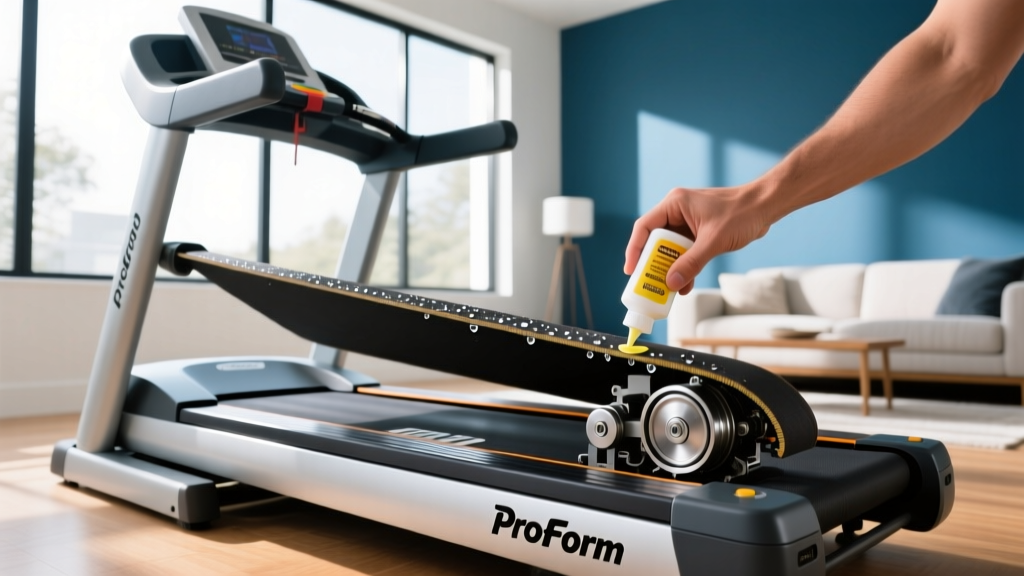
How to Maintain and Lubricate Your ProForm 350 Treadmill Belt
Extend your ProForm 350 treadmill's lifespan with our expert belt maintenance and lubrication guide. Learn exact steps, silicone types, and tension fixes.

The ProForm 350 treadmill has long been a staple in home gyms, offering a reliable, budget-friendly platform for daily walking and light jogging. However, like all motorized cardio equipment, its longevity is entirely dependent on how well you manage friction. The walking belt and deck interface is the highest-wear area on the machine. When neglected, excessive friction doesn't just ruin the belt—it forces the drive motor to overwork, leading to blown control boards and burned-out motors. In 2026, replacing a ProForm 350 drive motor and control board can easily exceed $250 in parts and labor, whereas a $10 bottle of silicone and 15 minutes of maintenance can keep the machine running for years.
The Anatomy of the ProForm 350 Belt and Deck System
Before grabbing a wrench, it is crucial to understand what you are working on. The ProForm 350 series typically utilizes a medium-density fiberboard (MDF) deck coated with a low-friction phenolic resin. Over this deck sits a 1-ply or 2-ply PVC walking belt. According to OEM specifications from ProForm Customer Support, the factory pre-lubrication is designed to last for a specific number of hours, but environmental factors like ambient humidity, dust, and user weight drastically alter this timeline.
⚠️ CRITICAL WARNING: Never Use Petroleum-Based LubricantsNever use WD-40, 3-in-One oil, or any petroleum-based spray on your ProForm 350 treadmill. Petroleum products will instantly break down the PVC backing of the walking belt and strip the phenolic coating off the MDF deck, resulting in catastrophic failure that requires a full belt and deck replacement.
The 3-Point Diagnostic Checklist
How do you know if your ProForm 350 needs lubrication, tensioning, or a total replacement? Equipment specialists at Treadmill Doctor recommend performing these three physical tests before applying any chemicals.
1. The Slip Test (Tension Diagnostic)
Stand on the side rails and start the treadmill at 2.0 MPH. Step onto the belt and plant your feet firmly, attempting to stop the belt with your weight while the front roller continues to turn. If the belt stops but the motor keeps humming, your belt is too loose and needs tensioning. If the belt stops and the motor also stops immediately, your tension is likely adequate.
2. The Lift Test (Lubrication Diagnostic)
Turn the machine off and unplug it. Reach under the center of the walking belt and lift it away from the deck. You should be able to lift the belt about 2 to 3 inches in the center. Feel the underside of the belt and the top of the deck. If it feels completely dry to the touch, or if you notice a buildup of black rubber dust, it is time to lubricate.
3. The Visual Edge Inspection (Replacement Diagnostic)
Inspect the left and right edges of the belt. Minor fraying is normal on older machines, but if you see exposed fabric cords, deep grooves worn into the deck, or a distinct "burning rubber" smell during use, lubrication will not save it. You will need to order a replacement belt (typically 18" x 50" for this class, though measuring your specific serial number's belt is mandatory).
Step-by-Step Lubrication Protocol
For the ProForm 350, you must use 100% pure silicone lubricant. You can source the official ICON Health & Fitness part #219168 or any high-quality 100% silicone treadmill lube from verified distributors like Fitness Repair Parts. You will need approximately 0.5 oz (half a bottle) per application.
- Prep the Machine: Unplug the treadmill from the wall. Safety is non-negotiable when working near the motor hood and pinch points.
- Loosen the Belt: Using a 3/16" Allen wrench, turn the left and right rear roller adjustment bolts counter-clockwise by exactly two full turns. This creates enough slack to slide your hand under the belt.
- Apply the Silicone: Lift the edge of the belt and squeeze the applicator tube, drawing a single, continuous zig-zag line of silicone across the center third of the deck. Do not over-apply; excess silicone will sling off the edges and ruin your flooring.
- Distribute the Lube: Pull the belt back down. Plug the machine in, set the speed to 1.5 MPH, and let it run for 3 to 5 minutes. Walk lightly on the belt to help spread the silicone evenly across the entire deck surface.
- Re-Tension the Belt: Unplug the machine again. Turn both rear roller bolts clockwise by the exact same amount you loosened them (two full turns) to return to the baseline tension.
Belt Tension and Alignment Troubleshooting Matrix
After lubricating, you may need to fine-tune the tension. The golden rule of treadmill maintenance is to make adjustments in quarter-turn increments. Never tighten a belt more than necessary to prevent slipping, as over-tensioning is the number one cause of premature motor bearing failure.
| Symptom | Probable Cause | Corrective Action |
|---|---|---|
| Belt slips when stepping on it | Insufficient tension | Tighten both L/R rear bolts 1/4 turn clockwise |
| Belt drifts to the left side | Right side is tighter than left | Tighten left bolt 1/4 turn OR loosen right 1/4 turn |
| Motor struggles to start / hesitates | Over-tensioned belt or dry deck | Loosen both bolts 1/2 turn and apply silicone |
| High-pitched squealing from rear | Roller bearing wear or extreme tension | Loosen tension; if noise persists, replace roller |
Advanced Longevity: Motor Amp Draw and Deck Wear
For the technically inclined home gym owner, the ultimate test of belt maintenance isn't how the machine feels, but how much electricity it consumes. When a ProForm 350 treadmill belt dries out, the friction coefficient between the belt and the MDF deck spikes. This forces the drive motor to pull higher amperage to maintain the user's speed.
Technician's Insight: If you have access to a digital clamp meter, measure the amp draw on the red motor wire while a 175 lb user walks at 3.0 MPH. A healthy, well-lubricated ProForm 350 belt system should pull between 2.5 and 4.5 amps. If your reading consistently exceeds 6.5 to 8.0 amps, your deck is likely worn through the phenolic coating, creating raw wood friction that no amount of silicone can fix. At this stage, a belt and deck combo replacement is mandatory to save the control board.
Establishing a 2026 Maintenance Calendar
To keep your ProForm 350 out of the repair shop, tie your maintenance to your usage volume rather than arbitrary calendar dates:
- Light Use (Under 3 hours/week): Inspect and lubricate every 6 months.
- Moderate Use (3 to 5 hours/week): Inspect and lubricate every 3 months.
- Heavy Use (5+ hours/week or multiple users): Inspect monthly; lubricate every 6 to 8 weeks.
By adhering to these specific diagnostic tests, using the correct 100% silicone compounds, and respecting the quarter-turn tensioning rule, your ProForm 350 treadmill will continue to deliver reliable, quiet, and safe cardio workouts for years to come. Proper maintenance is the cheapest insurance policy your home gym equipment will ever have.
More gear to consider
All reviews
Air Bike vs Assault Bike Care: Beyond the No Gravity Treadmill

Ultra Fitness Treadmill Review: 2026 Under-Desk Office Trends

Under Desk Treadmill Review: Space Layouts vs Bowflex T9 Treadmill

Elliptical vs Treadmill: How to Use a Treadmill to Lose Belly Fat

Rowing Machine Buying Guide & Technique vs ProForm LM Treadmill
