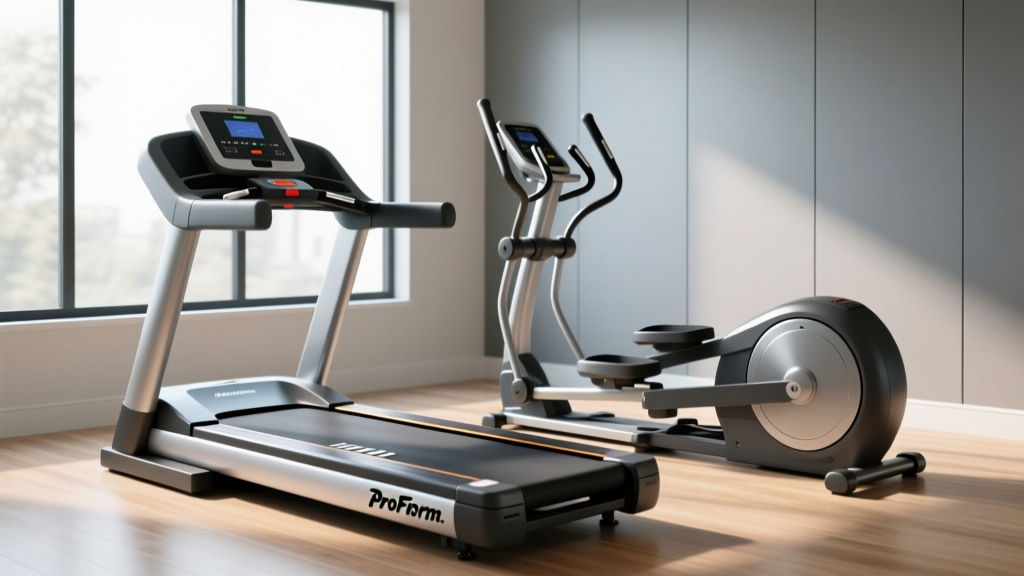
ProForm 12.0 Treadmill vs Elliptical: Maintenance & Longevity Guide
Compare elliptical vs treadmill maintenance. Learn expert care tips, belt lubrication, and longevity hacks for the ProForm 12.0 Treadmill and top ellipticals.

The Home Cardio Dilemma: Treadmill vs. Elliptical Wear and Tear
When outfitting a home gym, the debate between an elliptical and a treadmill usually centers on joint impact, calorie burn, and spatial footprint. According to the Mayo Clinic, ellipticals offer a low-impact cardiovascular workout that mimics running without the severe ground-reaction forces associated with treadmills. However, from a mechanical and maintenance perspective, these two machines age very differently. Understanding the distinct wear patterns of each is critical to protecting your investment.
Treadmills are high-friction, high-draw electrical machines. The continuous rubbing of the belt against the deck generates immense heat and places a heavy load on the motor. Ellipticals, conversely, are low-friction but high-mechanical-stress machines, relying on a complex network of pivot bearings, crank arms, and rails. In this guide, we will break down the exact maintenance protocols required to maximize the lifespan of your equipment, using the highly popular ProForm 12.0 treadmill as our benchmark for treadmill care, alongside premium front-drive ellipticals.
Deep Dive: ProForm 12.0 Treadmill Maintenance Protocol
The ProForm 12.0 treadmill is a staple in home fitness, typically featuring a robust 3.25 CHP motor and a 20-inch by 60-inch tread belt. While the motor is built for endurance, the belt-deck interface is the primary failure point for all treadmills. According to Consumer Reports, inadequate belt lubrication is the number one cause of premature motor and motor control board (MCB) failure in home treadmills.
The Belt Lubrication and Tensioning Procedure
To maintain the ProForm 12.0 treadmill, you must adhere to a strict lubrication schedule. Friction increases amperage draw; if the motor has to work harder to pull the belt, it overheats, eventually frying the MCB—a repair that can cost upwards of $200 in parts and labor.
- Lubricant Type: Use only 100% pure silicone treadmill lubricant. Never use WD-40, household oils, or petroleum-based products, as these will degrade the rubber belt and ruin the phenolic deck coating.
- Application Frequency: Every 150 miles or every three months, whichever comes first.
- Application Method: Loosen the belt, lift it from the center of the deck, and apply a zig-zag pattern of silicone across the width. Run the treadmill at 3 MPH for five minutes to distribute the lubricant evenly.
- Tension Check: You should be able to lift the center of the belt approximately 2 to 3 inches off the deck. If it is too tight, it strains the motor bearings; if too loose, it will slip underfoot. Adjust the rear roller bolts using an 8mm Allen wrench, turning clockwise exactly one-quarter turn on both sides to maintain alignment.
Elliptical Machine Longevity: Pivot Points and Drive Systems
Unlike the ProForm 12.0 treadmill, an elliptical machine does not have a wear-prone belt or deck. Instead, longevity depends entirely on the integrity of its moving joints. Ellipticals utilize either a front-drive or rear-drive system, and both are highly susceptible to environmental contaminants like sweat, dust, and pet hair.
Rail and Wheel Maintenance (Front-Drive Models)
Front-drive ellipticals (such as those in the Sole or NordicTrack SE series) feature pedals that glide along metal rails via polyurethane wheels. Human sweat is highly saline and corrosive. If left on the rails, it will pit the metal, causing the wheels to degrade and the machine to develop a grinding sensation.
- Weekly Wipe-Down: Use a microfiber cloth dampened with a 50/50 mix of isopropyl alcohol and water to clean the rails. Do not use bleach or ammonia-based cleaners, which can strip the factory protective coating.
- Wheel Inspection: Every six months, inspect the track wheels for flat spots. If the wheels develop flat spots from heavy use or debris, they must be replaced to prevent permanent damage to the aluminum rails.
Pivot Joint and Bearing Care
The pivot points connecting the pedal arms to the crank and the upright handles house sealed bearings. While these are technically 'sealed,' the external bushings and linkage bolts require attention. Annually, check all linkage bolts with a socket wrench. The vibration of daily use can loosen these bolts, leading to the infamous 'elliptical squeak.' If a squeak develops, apply a small amount of PTFE (Teflon) spray or white lithium grease to the pivot joints—avoiding the rails entirely.
Maintenance Matrix: Treadmill vs. Elliptical
To help you budget your time and resources, we have compiled a comparative maintenance matrix. This table highlights the specific care requirements and the financial risks of neglect for both machine types.
| Component | Equipment | Maintenance Action | Frequency | Cost if Neglected |
|---|---|---|---|---|
| Belt / Deck | Treadmill | 100% Silicone Lubrication | Every 150 miles | $250+ (MCB / Motor) |
| Drive Rails | Elliptical | Isopropyl Alcohol Wipe | Weekly | $120 (Track Wheels) |
| Pivot Joints | Elliptical | PTFE Grease / Bolt Check | Bi-Annually | $150 (Labor / Bearings) |
| Motor Vents | Treadmill | Vacuum Dust (Soft Brush) | Monthly | $200 (Overheat Failure) |
| Power Supply | Both | Surge Protector Check | Annually | $300+ (Console Board) |
The 2026 Smart Console Factor: Protecting the Brains
Modern cardio equipment is essentially a heavy-duty appliance paired with a high-end tablet. The interactive touchscreens and WiFi modules found on current models are incredibly sensitive to voltage fluctuations. Whether you are running a high-incline interval session on your ProForm 12.0 treadmill or streaming a live scenic route on an elliptical, the machine draws fluctuating amperage.
Crucial Power Protocol: Never plug a treadmill or elliptical directly into a standard wall outlet or a cheap power strip. You must use a dedicated surge protector rated for a minimum of 2500 Joules with a clamping voltage of 400V or less. If your home experiences frequent micro-outages or brownouts, investing in a UPS (Uninterruptible Power Supply) for your home gym can prevent the catastrophic corruption of the machine's internal EPROM chips.
Troubleshooting Common Failure Modes
Even with meticulous care, mechanical issues can arise. Here is how to diagnose the most common problems specific to these machine types.
Why is my ProForm 12.0 treadmill belt slipping?
Belt slippage usually occurs during high-impact foot strikes. First, verify that the belt is properly lubricated. Paradoxically, a dry belt can sometimes slip because the motor bogs down, causing a momentary halt in the front roller while the belt continues to move. If lubrication does not solve the issue, use your Allen wrench to tighten the rear roller bolts by one-quarter turn. If the belt still slips, the drive belt (the ribbed belt connecting the motor to the front roller inside the hood) may have stretched and requires replacement.
How do I fix a squeaking elliptical pivot arm?
A rhythmic squeak that matches your stride is almost always caused by a loose linkage bolt or dry bushing. Unplug the machine. Locate the pivot joints where the moving arms connect to the main upright post and the pedal arms. Use a socket set to ensure all bolts are torqued to the manufacturer's specifications. Apply a light coat of white lithium grease to the bolt threads and the exterior of the bushing. Wipe away any excess grease to prevent dust accumulation.
Can I use WD-40 on my cardio machine?
No. Standard WD-40 is a solvent and water-displacer, not a long-term lubricant. It will strip away existing factory lubricants, attract dust, and eventually degrade rubber belts and plastic bushings. Always use manufacturer-approved 100% silicone for treadmills and PTFE/lithium grease for elliptical joints.
Final Thoughts on Equipment Longevity
Choosing between an elliptical and a treadmill for home cardio ultimately comes down to your biomechanical needs and your willingness to perform routine maintenance. The ProForm 12.0 treadmill offers an unparalleled running experience but demands strict adherence to belt lubrication and dust mitigation to protect its high-draw motor. Ellipticals spare your joints and the electrical grid but require vigilant cleaning of rails and tightening of mechanical linkages. For more detailed schematics and warranty information, always refer to the ProForm Support portal or your specific manufacturer's user manual. By treating your equipment with the care of a commercial gym technician, you can easily extend the lifespan of your home cardio gear well past the standard warranty period.
More gear to consider
All reviews
SereneLife Folding Treadmill Noise Test: Head-to-Head Review
Treadmill Stopped Working? Noise Diagnostics & Cardio Comparisons

Assault Runner Pro Treadmill vs Walking Pads: Review & Mistakes

What Is a Good Walking Speed on Treadmill to Reduce Noise?
Under Desk Treadmill Review: Care and NordicTrack Comparison Chart
