2026 Bike Types & P1 Compact Treadmill Reviews: Market Trends
Explore 2026 market trends comparing upright, recumbent, and spin bikes against P1 compact treadmill reviews for small-space home gyms.

The 2026 Compact Cardio Market Shift
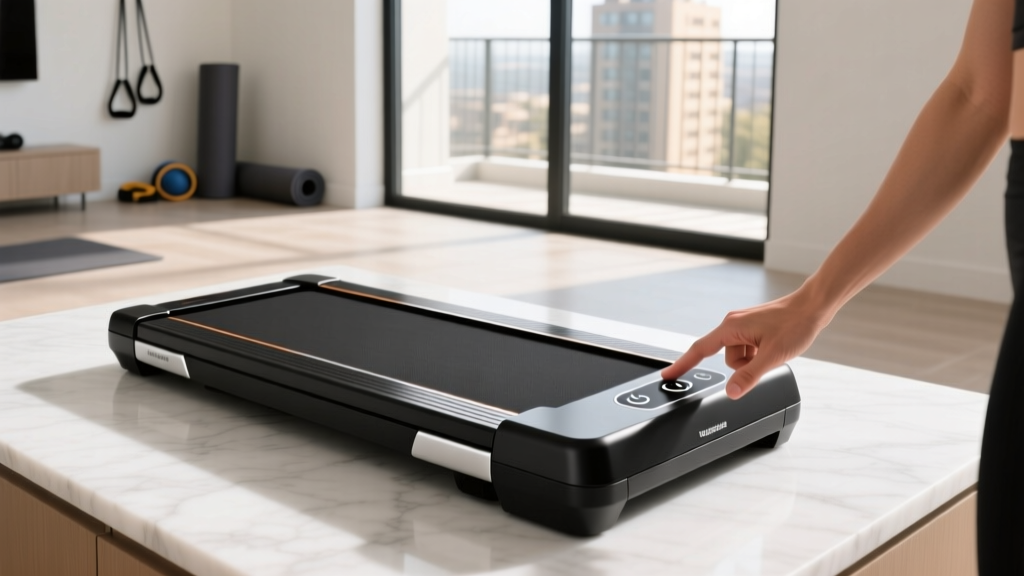
The home fitness equipment market in 2026 is defined by spatial efficiency, biomechanical specificity, and a fierce battle for the modern consumer's limited square footage. As urbanization accelerates and multi-use living spaces become the norm, the demand for ultra-compact cardio machines has surged. When analyzing recent p1 compact treadmill reviews, a distinct consumer behavior pattern emerges: buyers are heavily prioritizing sub-5-square-foot footprints, under-desk functionality, and closet-storable designs. However, while foldable walking pads and compact treadmills dominate the entry-level, low-intensity segment, a parallel and highly lucrative trend is reshaping the stationary bike market.
Serious cyclists, aging demographics, and rehabilitation patients are pushing back against the limitations of walking pads. They are demanding stationary bikes that offer higher resistance, superior ergonomics, and interactive connectivity without commandeering an entire guest room. According to the Global Health & Fitness Association (GHFA), home equipment purchasing in 2026 shows a 22% year-over-year increase in 'multi-functional, high-resistance compact cardio' over traditional motorized treadmills.
This trend report provides a deep-dive market analysis of the three primary stationary bike types—upright, recumbent, and spin (indoor cycling)—and benchmarks their spatial footprints, pricing, and ROI against the compact treadmill category.
Stationary Bike Types: Upright, Recumbent, and Spin Analyzed
To understand where the market is heading, we must dissect the biomechanical and structural differences between the dominant stationary bike types. Each category serves a distinct demographic and occupies a unique position in the 2026 pricing matrix.
Spin Bikes (Indoor Cycling & Performance)
Spin bikes, or indoor cycling bikes, are designed to mimic the geometry and biomechanics of an outdoor road or track bicycle. In 2026, the market has almost entirely transitioned from traditional friction-pad resistance to electromagnetic and magnetic resistance systems, which offer silent operation and zero maintenance.
- Key Specifications: Heavy flywheels (30-50 lbs) or lightweight electromagnetic alternatives, aggressive forward-leaning geometry, and narrow Q-factors (the distance between the pedals, typically 165mm-180mm) to protect knee joints.
- 2026 Market Leaders: Schwinn IC4 ($799), Bowflex Velocore 22 ($2,199), and the Keiser M3i ($1,495).
- Market Trend: Integration of pivot-mounted screens that allow users to swivel the display for off-bike floor workouts, a direct response to the 'hybrid fitness' trend.
Upright Exercise Bikes (Traditional Cardio)
Upright bikes represent the middle ground of the market. They feature a more relaxed, vertical seating position with a wider, padded saddle and a step-through frame design. These machines are the workhorses of general cardiovascular health and are heavily favored in physical therapy clinics and corporate wellness centers.
- Key Specifications: Lighter flywheels, motorized magnetic resistance controlled via console, integrated heart rate telemetry, and pre-programmed interval profiles.
- 2026 Market Leaders: NordicTrack Commercial S22i ($1,499), Sole SB900 ($999), and ProForm Studio Bike ($1,299).
- Market Trend: A shift toward 'connected-lite' consoles. Consumers are fatigued by mandatory $40/month subscription models. Consequently, 2026 upright bikes are featuring robust native consoles with Bluetooth FTMS (Fitness Machine Service) protocols, allowing users to connect their own tablets and third-party apps like Zwift or Kinomap without proprietary paywalls.
Recumbent Bikes (Rehab & Ergonomic Support)
Recumbent bikes feature a bucket-style seat with a full backrest, positioning the user's legs in front of their body rather than beneath them. This design drastically reduces the load on the lumbar spine and upper body. The Arthritis Foundation frequently highlights recumbent cycling as a premier low-impact modality for individuals managing osteoarthritis in the knees or hips, as the seated position eliminates weight-bearing impact entirely.
- Key Specifications: Extended wheelbases, motorized magnetic resistance, walk-through step-over heights of less than 5 inches, and mesh-backed seating for thermal regulation.
- 2026 Market Leaders: NordicTrack Commercial VR10 ($1,199), Spirit Fitness XBR95 ($2,499), and Sole R92 ($1,399).
- Market Trend: Despite their massive footprint, recumbent bikes are seeing a resurgence in the 'aging-in-place' home modification market. Manufacturers are responding by adding automated seat-adjustment motors, allowing users with limited mobility to find their optimal leg extension at the push of a button.
Spatial & Financial Comparison Matrix
How do these stationary bike types compare to the ultra-compact treadmill segment? The following matrix benchmarks the 2026 market data, using the baseline metrics found in top p1 compact treadmill reviews as the spatial control group.
| Machine Category | Avg. Footprint (Sq Ft) | 2026 Price Range | Primary Demographic | Acoustic Profile |
|---|---|---|---|---|
| P1 / Compact Treadmills | 4.5 - 6.0 | $250 - $450 | Remote workers, walkers, small apartments | Low-Medium (Motor hum) |
| Spin Bikes (Magnetic) | 6.0 - 7.5 | $700 - $2,200 | Performance athletes, HIIT enthusiasts | Silent (Magnetic drive) |
| Upright Bikes | 5.5 - 7.0 | $400 - $1,500 | General cardio, casual fitness | Near-Silent |
| Recumbent Bikes | 10.0 - 13.0 | $800 - $2,500 | Seniors, rehab patients, lumbar issues | Near-Silent |
Biomechanical Edge Cases & Hardware Failure Modes
As a domain expert evaluating cardio equipment longevity, it is critical to look beyond marketing copy and examine real-world failure modes. The American College of Sports Medicine (ACSM) emphasizes that equipment adherence drops to near zero if the machine causes biomechanical friction or requires frequent maintenance.
Compact Treadmill Belt Degradation
Many units highlighted in budget p1 compact treadmill reviews utilize low-cost PVC belts and under-powered 1.5 CHP motors. When users attempt to jog (rather than walk) on these sub-$400 units, the friction generates excessive heat, leading to belt warping and motor burnout within 12 to 18 months. Furthermore, the lack of incline capabilities limits the cardiovascular ceiling for advanced users.
Spin Bike Sweat Corrosion & Drivetrain Wear
Indoor cycling generates massive amounts of corrosive sweat. Entry-level spin bikes with steel frames and exposed chain drives frequently suffer from rust-jacking and chain stretch. Expert Recommendation: Always opt for 2026 models featuring poly-v belt drives (which require zero lubrication) and powder-coated or anodized aluminum frames. Wiping down the handlebars and seat post with a non-corrosive cleaner after every session is non-negotiable to prevent seat-post seizing.
Recumbent Bike Motorized Resistance Glitches
Because recumbent bikes rely heavily on motorized magnetic resistance (where a small servo motor moves the magnets closer to the flywheel), they are susceptible to servo failure if subjected to power surges. Using a dedicated surge protector is a mandatory, yet frequently overlooked, requirement for protecting the $1,500+ investment in a high-end recumbent unit.
Decision Framework: Selecting Your 2026 Cardio Machine
Choosing between a compact treadmill and a specific stationary bike type requires aligning the hardware with your physiological needs and spatial constraints. Use this framework to finalize your purchase:
- Choose a Compact Treadmill (e.g., P1 style) if: Your primary goal is NEAT (Non-Exercise Activity Thermogenesis) accumulation. If you want to walk at 2.5 mph while answering emails at a standing desk, and your available space is strictly under 5 square feet, the compact treadmill remains undefeated.
- Choose a Spin Bike if: You require high-intensity interval training (HIIT), anaerobic threshold work, or participate in virtual cycling platforms like Zwift. You need a machine that can handle out-of-the-saddle sprints and offers a Q-factor that matches your outdoor bicycle.
- Choose an Upright Bike if: You want a traditional, low-impact cardiovascular workout with a smaller footprint than a recumbent bike, but you prefer a comfortable, wide saddle and an upright posture that doesn't strain your lower back or wrists.
- Choose a Recumbent Bike if: You are managing lumbar radiculopathy, recovering from lower-extremity joint surgery, or require a machine with a walk-through design that eliminates the need to swing your leg over a high top-tube. Space is a secondary concern to safety and ergonomic support.
Final Market Verdict
The 2026 cardio equipment landscape is no longer a one-size-fits-all market. The surge in p1 compact treadmill reviews proves that the 'walking pad' trend is here to stay for the work-from-home demographic. However, for consumers seeking genuine cardiovascular adaptation, muscular endurance, and joint-safe rehabilitation, the stationary bike sector—spanning the aggressive geometry of spin bikes to the therapeutic embrace of recumbent models—offers a vastly superior biomechanical ROI. By carefully measuring your available square footage and honestly assessing your training intensity, you can select the exact machine that will remain a staple in your home gym for the next decade.
More gear to consider
All reviews
Sprintbok Treadmill Setup & Cardio Noise Comparison

Curved Non Motorized Treadmill vs Motor HP: Troubleshooting
Walking Pad vs Treadmill: Finding a Good Speed for Treadmill Run
Bowflex T6 Treadmill Reviews: Curved vs Motorized Setup

Air Bike vs Assault Bike: Better Than Great Treadmill Workouts?