ProForm 995 Treadmill Setup & Noise Level Comparison Guide
Master your ProForm 995 treadmill setup with our installation guide. Compare cardio machine noise levels and learn soundproofing tips for quiet home workouts.

Acoustic Engineering Your Home Gym: The ProForm 995 Treadmill
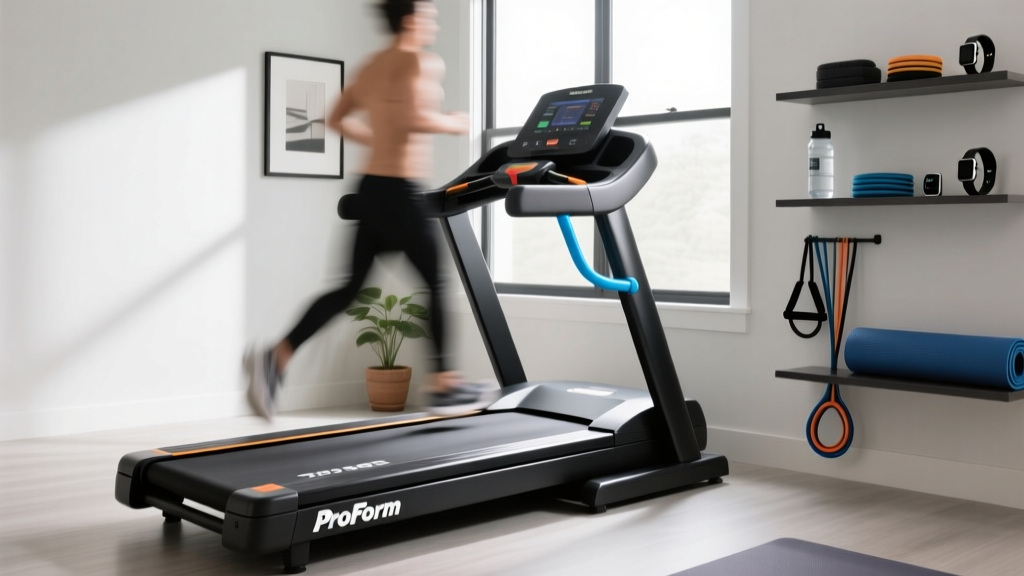
When outfitting a home gym, especially in shared living spaces or multi-story houses, acoustic impact is just as critical as footprint and performance. The ProForm 995 treadmill, a highly popular budget-to-mid-tier option retailing between $499 and $549 in 2026, features a 2.5 CHP Mach Z motor and an 18-inch by 55-inch running belt. While it offers excellent value for daily walkers and light joggers, its out-of-the-box acoustic profile can be problematic if assembled or placed incorrectly. Improper setup can elevate operational noise from a manageable hum to a room-shaking rattle.
This comprehensive walkthrough merges a complete installation guide with a rigorous cardio machine noise level comparison. By following these precise assembly tolerances and placement frameworks, you will minimize structural vibration, eliminate mechanical squeaks, and optimize the ProForm 995 for the quietest possible operation.
Baseline Noise Profile: ProForm 995 Treadmill
Motor Output: 2.5 Continuous Horsepower (CHP)
Idle/Startup Noise: ~52 dB (Quiet hum, comparable to a modern refrigerator)
Walking (3.0 mph): 62 - 66 dB (Normal conversation level)
Running (6.0 mph): 68 - 74 dB (Vacuum cleaner equivalent, heavily dependent on deck lubrication and user strike force)
Primary Noise Vectors: Belt friction, motor fan displacement, and impact vibration transferred through the uprights.
Cardio Machine Noise Level Comparison Matrix
To understand where the ProForm 995 treadmill sits in the broader fitness ecosystem, we must compare its acoustic output to other popular home cardio machines. The decibel (dB) scale is logarithmic; a 10 dB increase represents a perceived doubling of loudness. According to the CDC's National Institute for Occupational Safety and Health (NIOSH), prolonged exposure to noise above 70 dB can cause auditory fatigue and stress, making sub-70 dB operation a key target for home gyms.
| Cardio Machine | Drive / Resistance Type | Avg. Noise Output (dB) | Acoustic Footprint |
|---|---|---|---|
| ProForm 995 Treadmill | 2.5 CHP DC Motor & Belt | 62 - 74 dB | Moderate-High (Impact + Motor) |
| Peloton Tread | 3.25 HP DC Motor & Slats | 58 - 69 dB | Moderate (Slat impact dampening) |
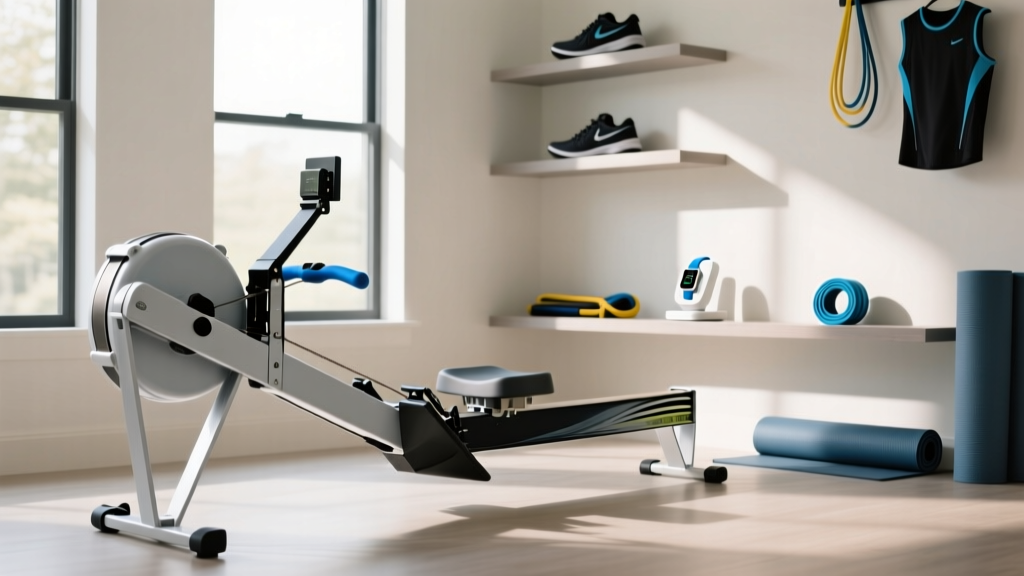
| Concept2 Model D Rower | Air Resistance Flywheel | 55 - 72 dB | Variable (Scales with stroke rate) |
| Sunny Health SF-E905 Elliptical | Magnetic / Belt Drive | 45 - 52 dB | Ultra-Quiet (Zero impact) |
Analysis: The ProForm 995 is inherently louder than magnetic ellipticals due to the physical impact of foot strikes on the phenolic deck. However, when compared to air rowers or premium treadmills, its 2.5 CHP motor is relatively quiet at idle. The primary culprit for excessive noise on the ProForm 995 is rarely the motor itself; it is almost always assembly-induced friction and structural resonance.
Step-by-Step Installation Walkthrough for Minimal Vibration
Factory manuals provide basic assembly, but they rarely address acoustic optimization. Follow this enhanced setup protocol to ensure your ProForm 995 treadmill operates at the lowest possible decibel level. Always refer to the official ProForm support documentation for model-specific wiring diagrams and safety warnings before beginning.
- Base Frame Assembly & Torque Calibration:
When attaching the front and rear uprights to the main base frame, do not use an impact driver. Overtightening these specific 3/8-inch carriage bolts warps the steel chassis, creating microscopic gaps that result in metallic clicking when the deck flexes under a 180-lb runner. Hand-tighten all frame bolts, then use a torque wrench set to approximately 15-18 Nm to secure them evenly. This ensures the frame absorbs shock uniformly.
- Console Wiring & Rattle Prevention:
Before securing the console to the uprights, route the internal data cables through the provided foam sleeves or wrap them in a small piece of adhesive felt tape. A loose wire slapping against the inside of the hollow steel upright during a run generates a high-frequency rattle that amplifies through the metal tubing, easily adding 5-8 dB of perceived annoyance to your workout environment.
- Drive Motor Belt Tensioning:
Remove the plastic motor hood (usually secured by four Phillips-head screws). Locate the motor mount plate. The drive belt connecting the motor pulley to the front roller should have exactly 1/2 inch of vertical deflection when pressed with moderate thumb pressure. If it is too tight, the motor bearings will whine; if too loose, the belt will slap the housing. Adjust the tensioner bolt in 1/4 turn increments until the deflection is perfect.
- Deck Alignment & Edge Friction Elimination:
A misaligned running belt rubbing against the plastic side rail guards is the number one cause of high-pitched squealing on the ProForm 995. Turn the machine on to 2.0 mph. Observe the belt tracking. If it drifts left, turn the left rear roller adjustment bolt clockwise by exactly 1/4 turn, and the right bolt counter-clockwise by 1/4 turn. Wait 30 seconds for the belt to settle. Repeat until the belt tracks perfectly dead-center, eliminating all edge friction.
- Proactive Deck Lubrication:
Even if the manual states the deck is "pre-lubricated," transit and warehouse storage can cause the factory silicone to dry or pool unevenly. Lift the edge of the running belt and apply exactly 0.5 oz of 100% pure silicone treadmill lubricant in a zig-zag pattern across the center of the phenolic deck on both sides. Run the treadmill at 3.0 mph for 3 minutes to distribute the fluid. This reduces the coefficient of friction, lowering the amp-draw on the motor and decreasing the "thudding" sound of foot strikes.
Strategic Placement & Sound Mitigation Framework
How you place the ProForm 995 treadmill in your room dictates how much noise transfers to the rest of the house. According to structural acoustic guidelines highlighted by experts at Bob Vila's home improvement network, decoupling the machine from the floor is essential to stop impact noise from traveling through joists.
"Impact noise, such as footfalls on a treadmill deck, travels through solid structures as vibration. To stop it, you must introduce a resilient, high-mass barrier between the source and the structure."
- The Mat Specification: Do not use cheap, thin PVC mats. Invest in a 3/8-inch thick, high-density vulcanized rubber mat (minimum 60 Shore A hardness). This specific density absorbs the kinetic energy of foot strikes without bottoming out. A standard EVA foam puzzle mat will compress entirely under the weight of the machine and user, offering zero acoustic isolation.
- Isolation Pucks: For second-floor installations, place 2-inch thick neoprene or Sorbothane isolation pucks under the four leveling feet of the treadmill. This creates a secondary decoupling layer that specifically targets low-frequency motor hum.
- Clearance for Airflow: Maintain at least 24 inches of clearance on both sides and 36 inches behind the treadmill. The ProForm 995's motor relies on ambient air drawn through the hood vents. Restricting this airflow causes the motor to overheat, triggering the internal cooling fan to spin at maximum RPM, drastically increasing ambient noise.
Troubleshooting Common Setup Noises
Even with meticulous assembly, edge cases occur. Use this diagnostic framework to identify and resolve abnormal sounds:
- Rhythmic Thumping (Belt Seam): If you hear a rhythmic thump-thump-thump that matches the speed of the belt, this is the belt seam passing over the deck rollers. This is normal for new belts and will dissipate after 30 to 50 miles of use as the polyester layers stretch and conform to the rollers.
- Chirping or Squeaking (Upright Pivot): If the noise originates near the folding hinge mechanism, apply a small amount of white lithium grease to the pivot pin. Avoid WD-40, which attracts dust and dries out, worsening the squeak over time.
- Electrical Humming (Console Transformer): A faint, high-pitched electrical buzz from the console when the machine is off but plugged in is typical of the AC-to-DC step-down transformer. To eliminate this, plug the treadmill into a smart switch or a master power strip and cut power completely when not in use.
Expert Verdict
The ProForm 995 treadmill remains a formidable choice for home cardio in 2026, provided the user respects the physics of acoustic transfer. By treating the setup process not just as mechanical assembly, but as acoustic engineering—calibrating torque, managing belt friction, and decoupling the unit from your home's subfloor—you can easily keep operational noise below the 70 dB fatigue threshold. When compared to the broader cardio market, a properly tuned ProForm 995 bridges the gap between the ultra-quiet magnetic resistance machines and the high-impact, high-noise commercial treadmills, offering a highly effective, acoustically responsible workout experience.
More gear to consider
All reviews
Stair Climber Troubleshooting: Why There Is No Treadmill Safety Clip

Side by Side Treadmill Feature Comparison & Buying Mistakes

If I Walk on the Treadmill Will I Lose Weight? Walking Pad Value Guide

Reebok i Treadmill Maintenance & Folding Deck Guide

Why Is My Watch and Treadmill Don't Match? Cardio Troubleshooting & Rowing Guide