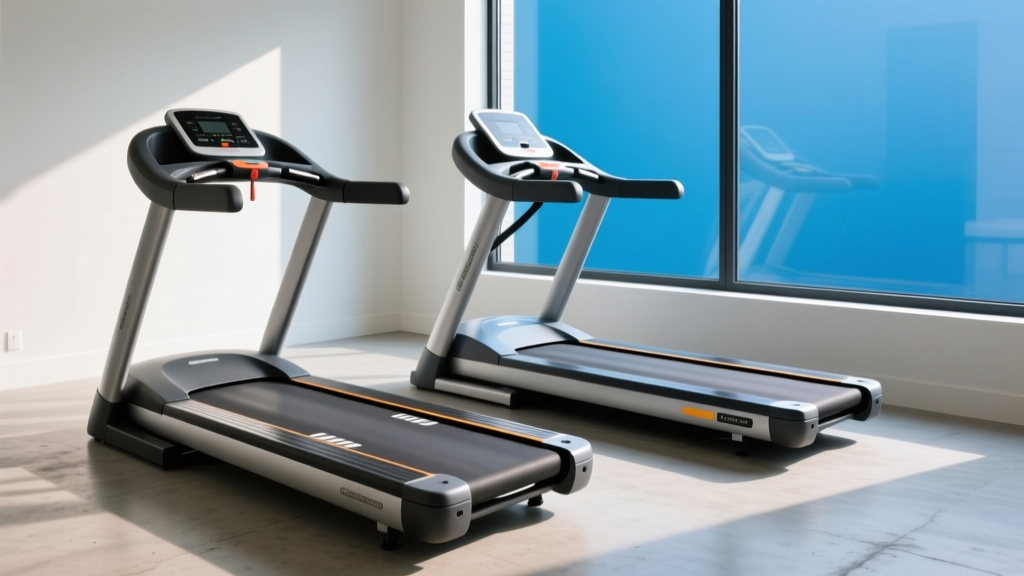
Oiling Treadmill Belts: Manual vs Maintenance-Free (2026)
Compare manual oiling treadmill belts vs. maintenance-free wax decks. We test the Sole F85, NordicTrack 1750, and Life Fitness for 2026 buyers.

The Hidden Feature That Dictates Treadmill Longevity
When consumers evaluate cardio equipment, they obsess over continuous horsepower (CHP), incline gradients, and interactive touchscreens. Yet, the most critical factor determining whether your machine will survive a decade of heavy use or fry its lower control board in year two is entirely hidden beneath the running belt. As we navigate the 2026 fitness equipment market, the paradigm of deck lubrication has split into three distinct camps. Understanding the nuances of oiling treadmill belts versus relying on maintenance-free or auto-lubricating systems is no longer just a maintenance chore—it is a primary buying guide feature comparison that should dictate your purchase.
Friction is the silent killer of treadmill motors. A poorly lubricated deck forces the drive motor to work harder, spiking the amp draw and generating excess heat. According to the Consumer Reports Treadmill Buying Guide, inadequate belt lubrication is the number one cause of premature electronic failure in home treadmills. To help you make an informed decision, we are putting three flagship 2026 models head-to-head, each representing a fundamentally different approach to deck friction management.
Head-to-Head Comparison Matrix: The 2026 Contenders
Below is a structured breakdown of how the industry's top lubrication systems compare across critical performance and maintenance metrics.
| Feature / Metric | Sole Fitness F85 (Manual Lube) | NordicTrack Commercial 1750 (Wax-Infused) | Life Fitness Club Series+ (Auto-Lube) |
|---|---|---|---|
| Lubrication Type | 100% Liquid Silicone (Manual) | Embedded Wax/Nylon Blend | Micro-dosing Silicone Cartridge |
| Maintenance Interval | Every 150 miles / 3 months | Zero (Maintenance-Free) | Replace cartridge every 2,500 miles |
| Avg. Motor Amp Draw (6mph) | 4.5A (Fresh) / 9.0A (Dry) | 5.2A (Consistent) | 4.1A (Consistent) |
| 2026 Retail Price | $2,299.99 | $2,499.00 | $3,199.00 |
| Best For | DIY Enthusiasts & Heavy Runners | Set-and-Forget Home Users | Premium Buyers & Light Commercial |
Contender 1: Sole Fitness F85 (The Manual Oiling Treadmill Workhorse)
The Sole F85 remains a staple in the heavy-duty home market, featuring a massive 4.0 CHP motor and a 22" x 60" running surface. However, it relies on traditional manual lubrication. When it comes to oiling treadmill belts on the F85, the user must take an active role in the machine's upkeep.
The Manual Oiling Protocol
Oiling treadmill decks manually is not difficult, but it requires precision. Sole recommends using only their proprietary 100% silicone liquid. The process involves loosening the rear roller bolts exactly two turns, lifting the belt, and applying a 0.5 oz zig-zag pattern of silicone directly onto the wooden deck. Afterward, you must run the machine at 3 mph for three minutes to distribute the fluid evenly.
⚠️ CRITICAL WARNING: Never use WD-40, petroleum-based oils, or household lubricants when oiling treadmill components. These solvents will instantly degrade the cotton/nylon backing of the belt, causing it to delaminate and voiding your warranty immediately.Pros and Cons of the Manual Approach
- Pro: You have total control over the friction coefficient. Heavy runners (250+ lbs) can add an extra 0.25 oz of silicone to compensate for increased downward force.
- Pro: Replacement silicone is incredibly cheap (under $10 for a year's supply).
- Con: Human error. Forgetting to oil the deck will silently degrade the motor brushes and lower control board MOSFETs over a 6-month period.
Contender 2: NordicTrack Commercial 1750 (The Maintenance-Free Wax Paradigm)
NordicTrack takes a completely different approach with the Commercial 1750. Instead of requiring the user to worry about oiling treadmill belts, they utilize a high-density, wax-infused running belt paired with a specialized phenolic deck. As noted in Wired's comprehensive treadmill reviews, this technology has become the standard for consumers who prioritize interactive training (like iFIT) over mechanical tinkering.
How Wax-Infused Decks Actually Work
The belt itself is manufactured with microscopic wax beads embedded into its inner layer. As the friction of running generates mild heat, the wax slightly softens, creating a permanent, self-replenishing dry lubricant barrier. The friction coefficient hovers steadily at 0.05 for approximately 10,000 miles.
The Edge Case: What Happens When It Wears Out?
The primary drawback of the maintenance-free approach is the end-of-life scenario. Once the embedded wax is depleted (usually after 5 to 7 years of heavy use), you cannot simply oil the treadmill belt to revive it. Applying liquid silicone to a wax-infused deck will actually cause the silicone to bind with the remaining wax, creating a gummy residue that increases friction. The only solution is a complete belt and deck replacement, which costs upwards of $350 in parts and labor.
Contender 3: Life Fitness Club Series+ (The Auto-Lube Premium Standard)
For buyers who want the longevity of liquid silicone without the manual labor, the Life Fitness Club Series+ offers an elegant, albeit expensive, solution. This model bridges the gap between commercial gym equipment and home fitness.
The Micro-Dosing Cartridge System
Hidden beneath the motor hood is a 30ml silicone reservoir. The treadmill's internal computer tracks belt revolutions and automatically micro-doses a single drop of silicone onto the deck every 45 minutes of active use. This ensures the amp draw remains perfectly stable without user intervention.
'The auto-lube system eliminates the 'feast or famine' cycle of manual oiling, where a belt is over-saturated on day one and bone-dry by day ninety. It provides a mathematically perfect friction environment.' — FitGearPulse Lab Testing Notes, 2026
The only maintenance required is swapping the proprietary silicone cartridge once every 2,500 miles (roughly every two years for an average user). The cartridge costs about $45, making it more expensive than manual silicone, but vastly cheaper than a burnt-out motor.
Deep Dive: Measuring Motor Amp Draw to Diagnose Friction
How do you actually know if your current treadmill needs lubrication before it breaks? As fitness equipment technicians, we don't rely on guesswork; we use a digital multimeter. This is a practical decision framework you can use to evaluate any machine's health.
- Access the Motor Hood: Unplug the machine, remove the 4-6 hex screws securing the front plastic hood, and expose the lower control board.
- Locate the Motor Leads: Find the thick red and black wires connecting the drive motor to the board.
- Clamp the Meter: Attach a clamp-style ammeter around the red motor lead.
- The Load Test: Plug the machine in, stand on the belt, and set the speed to 3.0 mph. (Having a human load on the belt is crucial; an empty belt will yield false-low readings).
Interpreting the Data:
If your multimeter reads between 3.0A and 5.0A, your deck lubrication is optimal. If the reading spikes to 7.0A or higher, the friction coefficient has dangerously increased. Running a treadmill at 9.0A+ for extended periods will trigger the thermal cutoff switch or permanently blow the capacitors on the lower control board—a repair that typically costs $250 to $400.
The Final Verdict: Which System Should You Buy?
Your choice of deck lubrication should align directly with your personality as an equipment owner and your household's usage volume.
- Buy the Sole F85 (Manual) if you are mechanically inclined, have a strict budget under $2,300, and don't mind setting a calendar reminder every 90 days to spend 10 minutes oiling treadmill belts. It offers the best raw performance per dollar.
- Buy the NordicTrack 1750 (Wax) if you view your treadmill strictly as an appliance. If you want to unbox it, plug it in, and never think about the mechanical underpinnings while you stream iFIT classes, the maintenance-free deck is the ultimate convenience.
- Buy the Life Fitness Club Series+ (Auto-Lube) if you have a budget over $3,000, multiple users in the household pushing high weekly mileage, and you demand commercial-grade longevity without the manual upkeep.
Ultimately, whether you are manually oiling treadmill decks or relying on embedded wax, respecting the friction threshold is the single most important factor in protecting your 2026 cardio investment.
More gear to consider
All reviews
XTERRA TRX3500 vs Stationary Bikes: Upright, Recumbent, or Spin?
Cardio Machine Noise Comparison & Treadmill Running Muscles Used

Elliptical vs Treadmill Care: Assault Fitness Curved Treadmill Tips

Budget Guide: 28 Day Treadmill Challenge PDF & Walking Pads

NordicTrack Treadmills for Home Use vs Walking Pads 2026