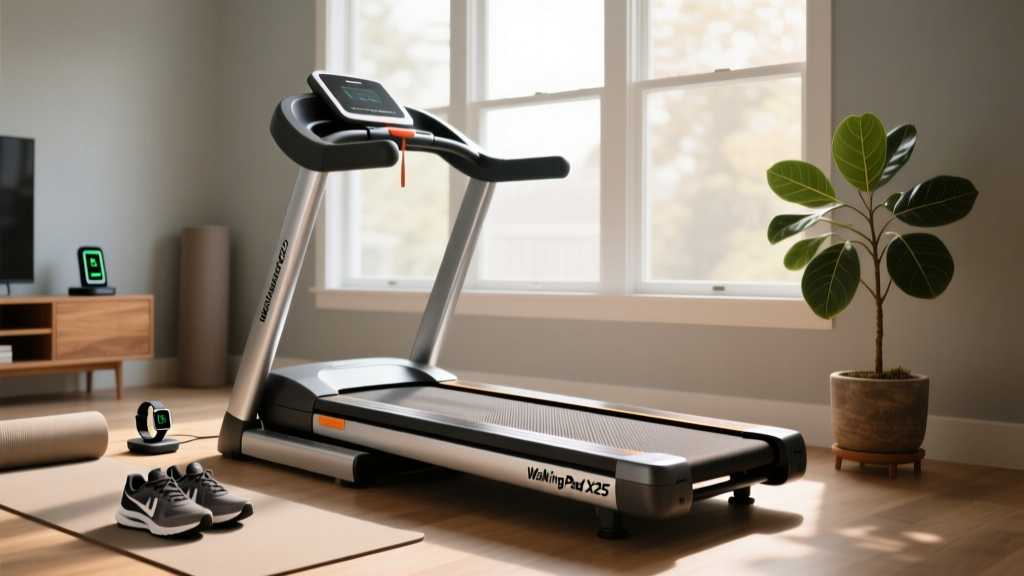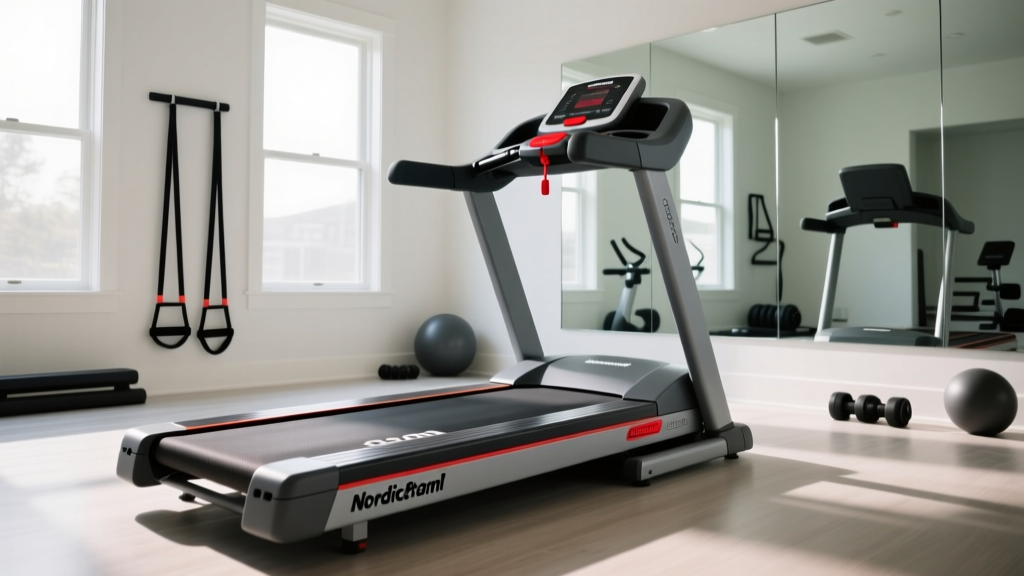
Cardio Machine Noise Guide: NordicTrack C2100 Treadmill Comparisons
Discover how to measure home gym noise. Our step-by-step guide compares NordicTrack C2100 treadmill decibel levels against modern quiet cardio machines.

Why Cardio Machine Noise Matters in Shared Spaces
Building a home gym is one of the best investments you can make for your health, but acoustic disruption is a frequently overlooked hurdle. If you share a home with family members, roommates, or live in an apartment with thin floors, the acoustic footprint of your equipment is just as important as its performance specs. This beginner-friendly, step-by-step guide will teach you how to measure, compare, and mitigate cardio machine noise. To provide a real-world baseline, we will use the legacy NordicTrack C2100 treadmill as our primary case study, comparing its acoustic profile against the ultra-quiet cardio machines dominating the market in 2026.
Step 1: Understanding the Decibel (dB) Scale
Before testing your equipment, you must understand how sound is measured. The decibel (dB) scale is logarithmic, meaning a 10 dB increase represents a tenfold increase in sound intensity and is perceived by the human ear as roughly twice as loud. When evaluating fitness equipment, we use the A-weighted decibel scale (dBA), which adjusts frequencies to match human hearing sensitivity.
Acoustic Baseline Reference:• 30 dBA: Quiet library
• 50 dBA: Moderate rainfall
• 60 dBA: Normal conversational speech
• 75 dBA: Vacuum cleaner / Heavy traffic
• 85 dBA: Prolonged exposure threshold for hearing damage
According to the National Institute for Occupational Safety and Health (NIOSH), prolonged exposure to noise levels above 85 dBA can cause permanent hearing damage. While most home cardio machines do not reach this threshold, the low-frequency rumble of a treadmill can easily transmit through floor joists and disturb sleeping household members.
Step 2: Baseline Testing Your NordicTrack C2100 Treadmill
The NordicTrack C2100 treadmill is a classic, heavy-duty workhorse featuring a 2.5 Continuous Horsepower (CHP) motor. Because it utilizes an older generation brushed DC motor and a traditional roller-belt system, it provides an excellent baseline for understanding mechanical and impact noise.
How to Conduct a Proper Acoustic Test
- Download a Calibrated App: Use a free, scientifically validated tool like the NIOSH Sound Level Meter app on your smartphone.
- Position the Microphone: Place your phone on a tripod or stack of books exactly 3 feet away from the motor hood, at a 45-degree angle, and 4 feet off the ground (simulating ear level for someone walking nearby).
- Test at Incremental Speeds: Record the ambient room noise first. Then, start the treadmill at 2.0 mph, 4.0 mph, and 6.0 mph. Allow the motor to stabilize for 30 seconds at each speed before recording the peak and average dBA.
Typical C2100 Results: At 3.0 mph (walking), you can expect readings between 68 and 72 dBA. At 6.0 mph (jogging), impact noise and motor whine typically push the meter to 74–78 dBA. The primary noise culprits here are the mechanical friction of the belt on the deck and the acoustic whine of the motor's internal cooling fan and carbon brushes.
Step 3: The Great Cardio Noise Comparison Matrix
How does a legacy machine like the NordicTrack C2100 treadmill compare to modern alternatives? As of 2026, the fitness industry has heavily integrated Brushless Direct Current (BLDC) motors and magnetic resistance systems, drastically altering the acoustic landscape of home gyms.
| Machine Category | Specific Model / Type | Avg. Noise (6 mph / Moderate Effort) | Primary Noise Source |
|---|---|---|---|
| Legacy Treadmill | NordicTrack C2100 (2.5 CHP Brushed) | 74 - 78 dBA | Motor whine, belt friction, footfall impact |
| 2026 Smart Treadmill | Modern BLDC Motor Treadmills | 62 - 66 dBA | Footfall impact (motor is nearly silent) |
| Elliptical Cross-Trainer | Front-Drive Magnetic Elliptical | 45 - 52 dBA | Minor joint squeaks, pedal bearing hum |
| Rowing Machine | Water Resistance Rower | 55 - 65 dBA | Water swoosh, chain/slack mechanism |
| Stationary Bike | Belt-Drive Magnetic Spin Bike | 40 - 48 dBA | Flywheel air displacement, chain/belt hum |
Expert Insight: The American Speech-Language-Hearing Association (ASHA) notes that background noise above 60 dBA can severely disrupt speech intelligibility and concentration. If your home gym is in a shared living space, transitioning from a legacy treadmill to a magnetic elliptical or belt-drive bike will drop your acoustic footprint below the threshold of conversational disruption.
Step 4: Diagnosing and Fixing C2100 Noise Culprits
If you own a NordicTrack C2100 treadmill and want to bring its decibel output closer to modern standards, you must address mechanical degradation. Older treadmills get louder over time due to three specific failure modes.
1. Belt and Deck Friction
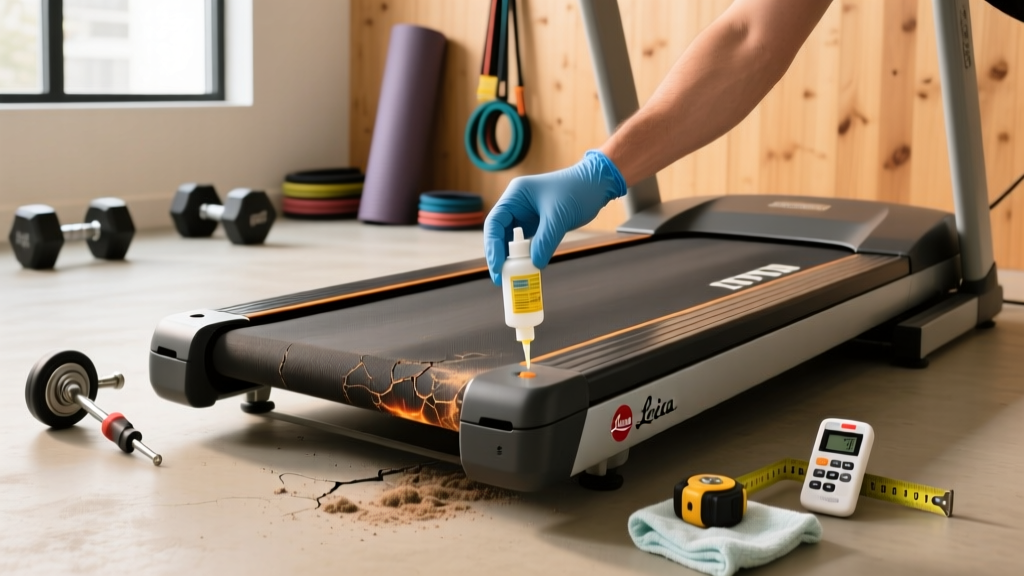
The most common cause of a loud, whining motor is a dry running belt. When the belt lacks lubrication, the friction coefficient spikes, forcing the 2.5 CHP motor to draw more amperage and spin louder to maintain speed. The Fix: Lift the edge of the belt. If the deck feels dry or dusty, apply exactly 1 ounce of 100% silicone treadmill lubricant in a zigzag pattern across the deck. Walk on the treadmill at 2.0 mph for 5 minutes to distribute the silicone. This single step can reduce motor strain noise by up to 4 dBA.
2. Drive Belt Tension and Wear
The C2100 uses a ribbed drive belt to connect the motor to the front roller. Over years of use, this belt stretches. A loose belt will slip and create a high-pitched squealing sound during foot strike. The Fix: Unplug the machine, remove the motor hood, and check the tension. You should only be able to deflect the belt about half an inch with moderate thumb pressure. If it is looser, adjust the motor mount bolts to increase tension. If the belt shows glazing or cracking, replace it (Part #184614 or equivalent).
3. Roller Bearing Degradation
If you hear a rhythmic 'grinding' or 'rumbling' sound that correlates with the speed of the belt rather than the motor pitch, your front or rear roller bearings are failing. The Fix: Remove the belt and spin the rollers by hand. They should spin freely and silently. Any gritty resistance means the sealed bearings are shot, and the roller assembly must be replaced.
Step 5: Implementing Structural Soundproofing
Even a perfectly maintained NordicTrack C2100 treadmill will generate impact noise (the sound of your feet striking the deck). This low-frequency energy travels through the floor as structure-borne vibration. To stop this, you must decouple the machine from the building's architecture.
- Upgrade Your Mat: Standard PVC gym mats do nothing for low-frequency impact. Invest in a high-density rubber mat (at least 3/8-inch thick) with a Shore A durometer rating of 60 or higher.
- Use Isolation Pads: Place specialized acoustic isolation pads (like those made by Sorbothane or heavy-duty washing machine anti-vibration pucks) directly under the treadmill's four leveling feet. This creates a micro-suspension system that absorbs the kinetic energy of footfalls before it transfers into the subfloor.
- Check the Levelers: If even one of the treadmill's rear transport wheels or front levelers is slightly hovering above the mat, the machine will 'slap' the floor with every footstrike. Ensure all four points of contact are firmly planted and bearing equal weight.
Frequently Asked Questions
Can I use WD-40 to quiet down my NordicTrack C2100?
Absolutely not. WD-40 is a solvent and light penetrant, not a high-friction lubricant. It will strip away any remaining factory lubrication, degrade the PVC backing of your running belt, and eventually cause the belt to delaminate and snap. Only use 100% silicone-based lubricants designed specifically for fitness equipment decks.
Is it worth upgrading to a 2026 treadmill just for the noise reduction?
If you live in an apartment with downstairs neighbors or have a bedroom adjacent to your gym, yes. Modern 2026 treadmills utilizing BLDC motors and polyurethane shock-absorption decks operate at roughly 62 dBA during a jog. That is a massive 12-15 dBA drop compared to the C2100, which translates to a perceived noise reduction of over 60% to the human ear.
Do ellipticals really make zero noise?
No machine is truly silent, but magnetic ellipticals come very close. Because your feet never leave the pedals, there is zero impact noise. The only sound is the displacement of air by the flywheel and minor mechanical hum from the pedal arm bearings, usually hovering around a whisper-quiet 45 dBA.
More gear to consider
All reviews
Office Treadmill Review & Troubleshooting ProForm Treadmill Problems
How Dry Belts Cause Treadmill Burns: Expert Maintenance & Lube Guide
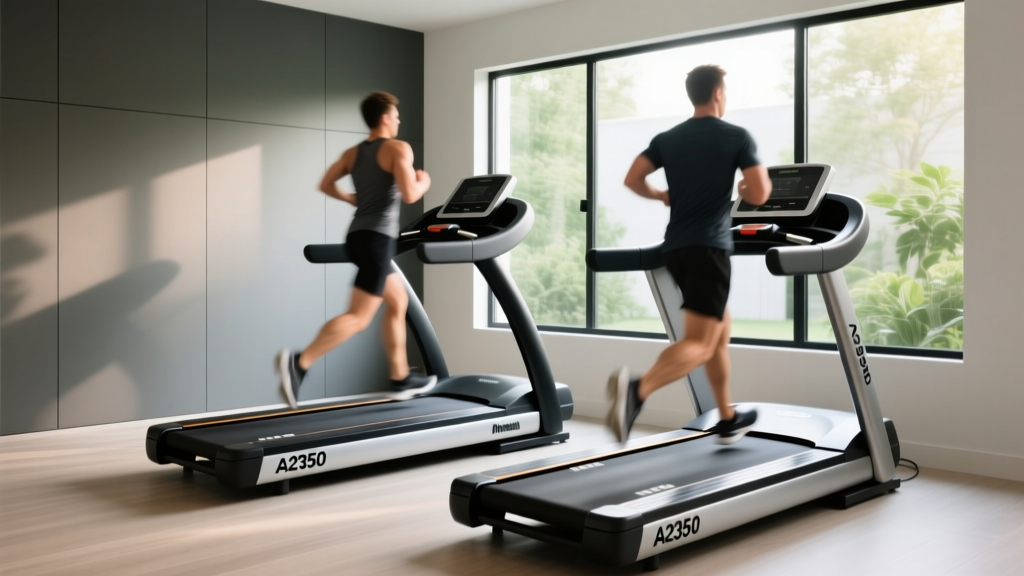
Curved Manual vs Motorized: Is the A2350 Treadmill Worth It?

Treadmill in Garage: Cardio Machine Noise Comparison

Air Bike vs Assault Bike Comparison: 7.5 Speed on Treadmill Value