
Training for Half Marathon on Treadmill? Under-Desk Reviews
Discover the best under-desk treadmills for office use, essential maintenance tips for longevity, and how they fit into half-marathon training.

The Biomechanical Reality: Under-Desk vs. Standard Treadmills
As remote work and endurance sports continue to intersect in 2026, many runners are asking a critical question: Is training for half marathon on treadmill setups beneath your desk actually viable? The short answer is no—not for your primary long runs. The long answer requires a deep dive into biomechanics, motor limitations, and the specific engineering of under-desk treadmills.
A standard half-marathon training block requires 20 to 30 miles per week, including long runs of 10 to 14 miles at a 8:00 to 12:00 per mile pace, according to Hal Higdon's Half Marathon Training Programs. Under-desk treadmills, however, are engineered for Non-Exercise Activity Thermogenesis (NEAT)—the low-intensity caloric expenditure of daily movement, as detailed in NCBI research on NEAT. They max out safely at 3.5 to 4.0 mph (a 15:00 to 17:00 minute mile pace) and lack the elastomer shock absorption required to handle the 2.5x body-weight impact forces of running.
Attempting to run on an under-desk model will not only ruin your running mechanics but will rapidly destroy the machine's MDF deck and overheat the motor controller. However, when used correctly as a supplemental active-recovery and base-mileage tool, an under-desk treadmill is a phenomenal office asset—provided you adhere to strict maintenance care and longevity protocols.
2026 Under-Desk Treadmill Office Reviews
If you are integrating an office walking pad into your endurance lifestyle, you need a machine that can handle high-volume, low-speed usage without burning out. Here is our expert review of the top three models for office use this year.
1. LifeSpan TR1200-DT5 (The Heavy-Duty Workhorse)
- Price: $1,099
- Motor: 2.5 HP Continuous Duty
- Belt Size: 20" x 50"
- Weight Capacity: 300 lbs
The Verdict: The LifeSpan TR1200-DT5 remains the gold standard for serious remote workers. Unlike cheaper models that use peak-HP ratings to mask weak motors, this unit features a true 2.5 HP continuous duty motor. This means it can run for 6+ hours a day at 2.0 mph without the PWM (Pulse Width Modulation) controller board overheating. The 1-inch thick phenolic deck resists warping under continuous friction, making it the most durable option for high-volume walkers.
2. WalkingPad R2 (The Space-Saving Commuter)
- Price: $499
- Motor: 1.25 HP Continuous (2.5 HP Peak)
- Belt Size: 17.3" x 43.3"
- Weight Capacity: 240 lbs
The Verdict: The R2's 180-degree folding hinge is brilliant for small home offices, allowing you to slide it under a sofa when not in use. However, the 1.25 HP continuous motor is strictly for walking (max 3.7 mph). The narrower 17.3-inch belt requires high proprioceptive awareness; stepping off the side track at 3.0 mph is a common failure mode that causes immediate belt tearing.
3. UREVO Strol 2E (The Budget Entry)
- Price: $299
- Motor: 2.25 HP Peak
- Belt Size: 16.5" x 41.3"
- Weight Capacity: 265 lbs
The Verdict: At under $300, the Strol 2E is an accessible entry point. It features a built-in handlebar and a decent app interface. However, the deck is noticeably thinner (approx. 12mm MDF), meaning users over 200 lbs will experience deck flex, which accelerates belt wear and increases motor strain. It is best suited for users under 180 lbs looking for 1-2 hours of daily walking.
Critical Maintenance & Longevity Protocols
Because under-desk treadmills operate at low speeds, users often assume they require less maintenance. This is a fatal error. Low-speed, high-duration walking actually generates more continuous friction heat on the belt-deck interface than short, high-speed running. To protect your investment, follow these expert maintenance protocols, echoing guidelines from Runner's World treadmill maintenance standards.
⚠️ WARNING: The 100% Silicone RuleNever use WD-40, household oils, or petroleum-based lubricants on your treadmill belt. These will dissolve the PVC backing of the belt and ruin the deck. Only use 100% pure liquid silicone treadmill lubricant.
Step-by-Step Belt Lubrication (Every 60 Miles or 3 Months)
- Loosen the Belt: Using a 4mm or 5mm Allen wrench (depending on your model), turn the rear roller adjustment bolts counter-clockwise exactly two full turns on each side.
- Apply Silicone: Lift the edge of the belt and apply a zig-zag pattern of 100% silicone lubricant directly onto the center third of the wooden/MDF deck. Use roughly 0.5 oz per side.
- Retighten: Turn the adjustment bolts clockwise two full turns to return to the baseline tension.
- Distribute: Turn the machine on to 2.0 mph and walk on it for 3 minutes to evenly spread the silicone.
Motor Compartment Dusting (Every 6 Months)
The number one cause of under-desk treadmill death is carbon dust buildup. The friction between the motor brushes and the commutator creates a fine, conductive black dust. Over time, this dust coats the PWM controller board, causing a short circuit that fries the electronics.
- Unplug the machine and remove the front motor hood (usually 4-6 Phillips head screws).
- Use a shop-vac with a soft brush attachment to gently vacuum the motor housing, flywheel, and controller board.
- Do not use compressed air, as it will force conductive dust deeper into the solder joints of the controller board.
Maintenance Schedule & Common Failure Modes
| Maintenance Task | Frequency | Failure Mode if Ignored | Estimated Repair Cost |
|---|---|---|---|
| Belt Lubrication | Every 60 miles / 3 mos | Deck scoring, motor overheating, PWM board failure | $80 (Deck) - $150 (Board) |
| Belt Tension & Tracking | Monthly | Belt fraying on edges, slipping underfoot (safety hazard) | $60 - $90 (New Belt) |
| Motor Vacuuming | Every 6 months | Controller board short circuit, complete electrical failure | $150 - $250 (Electronics) |
| Roller Bearing Check | Annually | High-pitched whining noise, uneven belt movement | $40 - $70 (Rollers) |
Integrating Desk Walking into Half-Marathon Plans
So, how do you reconcile training for half marathon on treadmill equipment with the reality of an under-desk walking pad? You use the desk treadmill for active recovery and NEAT accumulation, not for your primary speedwork or long runs.
The Supplemental Mileage Strategy
During a 12-week half-marathon build, your legs will accumulate heavy fatigue from weekend long runs and mid-week tempo sessions. On your designated 'easy' or 'recovery' days, substituting a 45-minute desk walk at 2.0 to 2.5 mph promotes blood flow and clears metabolic waste without adding the eccentric muscle damage associated with running impact.
💡 Pro-Tip: The Incline LimitationMost under-desk treadmills are strictly flat (0% incline). If your half-marathon course is hilly, you must do your primary strength and incline training on a standard treadmill or outdoors. Relying solely on a flat walking pad will leave your calves and glutes underprepared for race-day elevation changes.
Final Thoughts on Office Endurance
An under-desk treadmill is a brilliant tool for the modern endurance athlete, provided you respect its engineering limits. By choosing a model with a continuous-duty motor like the LifeSpan TR1200-DT5, and rigorously adhering to a 60-mile silicone lubrication schedule, you can easily extract 5 to 7 years of reliable service from your machine. Save the 10-mile tempo runs for your heavy-duty garage treadmill or the local track, and let your office walking pad handle the low-intensity volume that builds a bulletproof aerobic base.
More gear to consider
All reviews
Curved vs Motorized Treadmill Failures: Troubleshooting Guide

Pro 2000 Treadmill Review: Motor Size & Horsepower Guide

ProForm Treadmill Incline Not Working? Top Portable Cardio
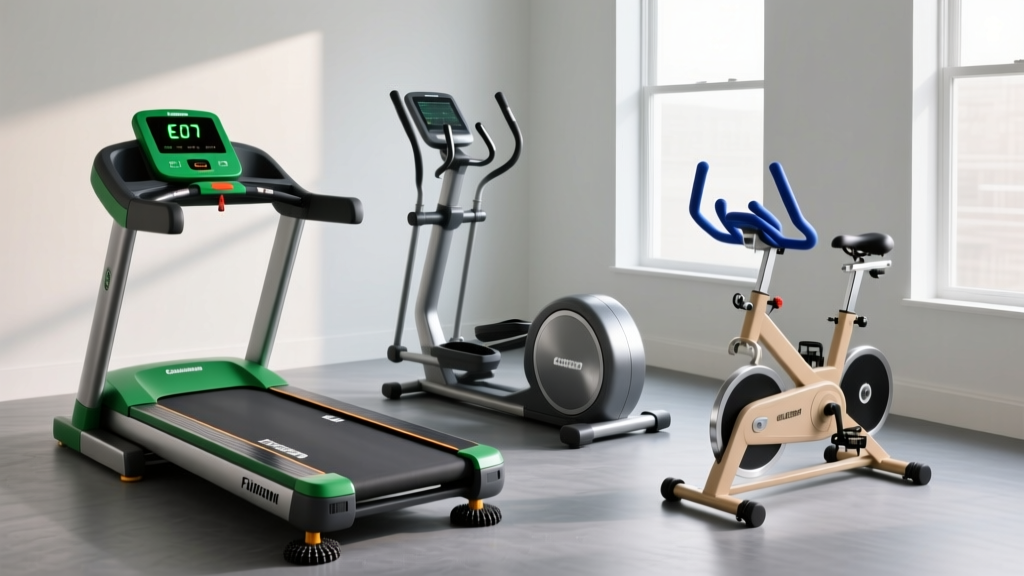
Cardio Machine Noise Comparison: Setup Guide & What Does E07 Mean on a Treadmill
Stair Climbers vs High Intensity Treadmill Workouts for Weight Loss
