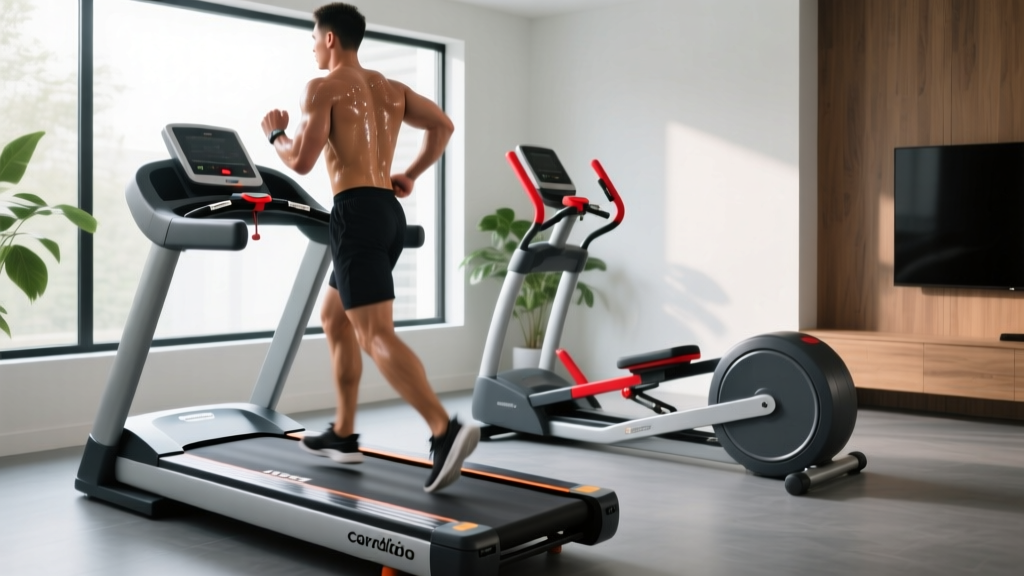
Nordic Track Treadmill Motor HP: 1750 vs T-Series vs X22i
Compare Nordic Track treadmill motor sizes and horsepower. We break down CHP vs Peak HP across the Commercial 1750, T-Series, and Incline Trainer.

The Heart of the Machine: Why Motor Sizing Dictates Longevity
When evaluating a Nordic Track treadmill, the interactive HD touchscreen and responsive cushioning system often steal the spotlight. However, the true determinant of the machine's lifespan, performance under load, and overall value is hidden beneath the motor hood. The motor is the cardiovascular system of your home gym equipment. If it is undersized for your body weight or workout intensity, you will experience belt stuttering, premature component failure, and eventual burnout.
In this comprehensive head-to-head comparison, we are stripping away the marketing gloss to examine the actual motor architecture across three of the brand's most popular models: the Commercial 1750, the budget-friendly T Series 6.5S, and the heavy-duty Incline Trainer X22i. By understanding the critical differences in horsepower ratings, flywheel mass, and thermal management, you can make an informed investment that aligns with your biomechanical needs.
The Great Deception: Peak HP vs. Continuous Horsepower (CHP)
Before diving into specific models, it is vital to understand the most common marketing trap in the fitness equipment industry: the distinction between Peak Horsepower (HP) and Continuous Horsepower (CHP). According to equipment testing standards highlighted by Consumer Reports, understanding motor duty cycles is the single most important factor in treadmill selection.
- Peak HP: This measures the absolute maximum power the motor can generate for a few seconds before overheating. It is largely a meaningless metric for sustained exercise and is frequently used on budget models to inflate perceived value.
- Continuous Horsepower (CHP): This measures the power the motor can sustain indefinitely during a normal workout without exceeding its thermal limits. This is the only metric that matters for runners and heavy users.
Head-to-Head Motor Comparison Matrix
Below is a technical breakdown of the motor specifications, pricing, and structural limitations for the three models in our 2026 comparison.
| Model | Motor Rating | Type | Max User Weight | Belt Size | Est. Price (2026) |
|---|---|---|---|---|---|
| T Series 6.5S | 2.6 HP | Peak | 250 lbs | 18' x 50' | $499 - $599 |
| Commercial 1750 | 3.5 CHP | Continuous | 300 lbs | 22' x 60' | $1,799 - $1,999 |
| Incline Trainer X22i | 4.0 CHP | Continuous | 300 lbs | 22' x 60' | $2,999 - $3,299 |
Model Deep Dives: Motor Architecture & Real-World Performance
NordicTrack T Series 6.5S (2.6 Peak HP)
The T Series 6.5S is a massive seller due to its aggressive price point, but its motor tells the real story of its limitations. Labeled as a 2.6 HP motor, this is a Peak rating. In reality, the continuous duty output is likely closer to 1.5 to 1.75 CHP. The DC motor relies on carbon brushes that physically press against the commutator to deliver electrical current. Under the friction and heat of a sustained run, these brushes wear down rapidly.
Furthermore, the T Series utilizes a lightweight flywheel. A lighter flywheel requires the motor to work significantly harder during the 'startup' phase of every footstrike to maintain belt momentum. For a 150 lb user walking at 3.0 mph, this motor is perfectly adequate. However, if a 220 lb user attempts to run at 7.0 mph, the motor will draw excessive amperage, causing the Pulse Width Modulation (PWM) controller board to overheat and eventually trip the thermal cutoff switch.
NordicTrack Commercial 1750 (3.5 CHP)
Stepping up to the Commercial 1750 introduces a massive leap in engineering. The 3.5 CHP Mach Z commercial motor is a true continuous-duty powerhouse. Because it is rated for continuous output, it operates at a much lower percentage of its maximum capacity during a standard 5-mile run compared to the T Series. This lower relative strain translates to significantly less heat generation and a vastly extended lifespan for the motor brushes and drive belt.
The 1750 also features a heavier, precision-balanced flywheel. This added rotational mass acts as a kinetic battery, smoothing out the micro-decelerations that occur when your foot strikes the deck. The motor doesn't have to 'surge' power with every step; it simply maintains the momentum. This is why the 1750 can confidently support a 300 lb user running at high speeds without stuttering or drawing enough amperage to trip a standard 15-amp household circuit.
NordicTrack Incline Trainer X22i (4.0 CHP)
The Incline Trainer X22i requires a 4.0 CHP motor not necessarily for speed, but for torque. When you elevate a treadmill deck to a 40% grade, gravity becomes the primary adversary. Pushing a 250 lb user up a 40% incline requires immense rotational force at the front roller. If this machine were equipped with a standard 3.0 CHP motor, the amperage draw on steep grades would fry the lower control board within months.
The 4.0 CHP motor in the X22i is specifically wound to deliver high low-end torque. It utilizes upgraded internal cooling fans and heavy-gauge copper windings that resist thermal expansion. For users focused on low-impact, high-resistance hiking simulations, this motor architecture is non-negotiable.
Failure Modes: What Happens When You Undersize Your Motor?
Understanding how treadmill motors fail is crucial for recognizing the value of investing in higher CHP ratings. Based on biomechanical load principles discussed by the American Council on Exercise (ACE), the impact forces generated during running place immense, fluctuating demands on the drive system. When a motor is undersized, three primary failure modes occur:
- PWM Board Burnout: The lower control board regulates power to the motor. If the motor demands more current than it is rated for (due to heavy user weight or high incline), the MOSFETs on the PWM board will overheat and short out. This is the most common and expensive failure on budget treadmills.
- Stator Demagnetization: DC motors rely on permanent magnets in the stator. Excessive heat (typically above 140°F inside the motor housing) can permanently demagnetize these magnets. Once this happens, the motor loses its torque and will never recover, even if allowed to cool.
- Drive Belt Glazing and Slippage: An underpowered motor will struggle to turn the front roller during footstrike. This causes the drive belt to slip against the motor pulley, creating friction heat that glazes the belt, leading to a high-pitched squealing noise and eventual snapping.
The 2026 Buyer's Decision Framework
To select the right Nordic Track treadmill motor for your home gym, apply this straightforward decision matrix based on your primary use case and body weight:
- Choose the T Series (2.6 Peak HP) IF: You weigh under 180 lbs, your primary exercise is walking or light jogging (under 5.0 mph), you have strict spatial and budget constraints, and you are willing to accept a shorter overall lifespan for the machine.
- Choose the Commercial 1750 (3.5 CHP) IF: You weigh between 180 and 275 lbs, you run regularly at speeds up to 10 mph, you perform interval training with rapid speed changes, and you want a machine that will reliably last 7 to 10 years with basic lubrication maintenance.
- Choose the Incline Trainer X22i (4.0 CHP) IF: You weigh over 250 lbs, you prioritize steep incline hiking over flat-out sprinting, and you require maximum torque to prevent belt hesitation on extreme 40% grades.
Final Verdict on Motor Engineering
Ultimately, the motor is the one component on a treadmill that you cannot easily upgrade later. While you can swap out a worn deck or replace a frayed belt, replacing a burned-out 2.6 HP motor and its associated control board often costs nearly as much as buying a new budget treadmill outright. By prioritizing Continuous Horsepower (CHP) and understanding the biomechanical load you place on the machine, you ensure that your investment in a Nordic Track treadmill delivers consistent, stutter-free performance for years to come. For further insights on optimizing your home gym layout and equipment selection, consulting resources from the National Strength and Conditioning Association (NSCA) can provide additional guidance on matching equipment specs to athletic demands.
More gear to consider
All reviews
Deer Run Treadmill Z10 & Motor Size Guide: What HP Do You Need?

Under Desk Treadmill Review: Office Layouts & Reading on Treadmill

Walking Pad Maintenance: Longevity Tips for 3 mph on Treadmill Workstations

Air Bike vs Assault Bike Guide & Treadmill Belt Not Centered Fixes

Rowing Machine Guide: Technique & Horizon 7.0 Treadmill Review