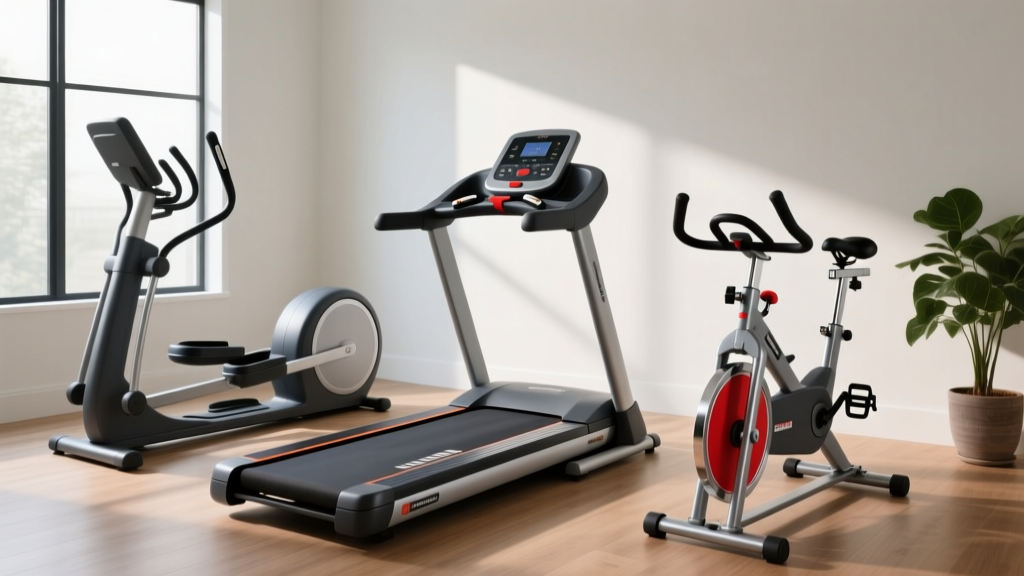
Beginner Noise Guide: Cardio Machines & Treadmill Sprints for Fat Loss
Compare cardio machine noise levels in our step-by-step beginner guide. Learn how to do treadmill sprints for fat loss without disturbing neighbors.

The Hidden Cost of Home Cardio: Airborne vs. Impact Noise
Setting up a home gym in an apartment or shared living space in 2026 requires more than just measuring floor space; it demands a deep understanding of acoustics. Many beginners purchase entry-level cardio equipment without realizing that the noise generated during high-intensity workouts can lead to neighbor complaints or even lease violations. According to the Environmental Protection Agency (EPA), prolonged exposure to noise pollution not only disrupts communities but can elevate stress levels and interfere with sleep patterns for those living directly below or adjacent to your workout space.
To make informed decisions, you must understand the two distinct types of fitness noise:
Acoustic Breakdown: Airborne vs. Structure-Borne
- Airborne Noise: Sound that travels through the air (e.g., the whir of a treadmill motor, the whoosh of a rowing machine fan, or your heavy breathing). This is easily blocked by closed doors and standard insulation.
- Structure-Borne (Impact) Noise: Vibrations transferred directly into the floor joists and walls (e.g., footstrikes during running). This low-frequency thumping is the primary culprit for neighbor complaints and is notoriously difficult to stop without specialized decoupling materials.
Step-by-Step Cardio Machine Noise Comparison Matrix
Not all cardio machines are created equal when it comes to acoustic output. Below is a comprehensive comparison of popular 2026 cardio machine categories, measuring both motor/resistance noise and peak impact noise.
| Machine Type | 2026 Benchmark Model | Airborne Noise (Motor/Fan) | Impact Noise (Footstrike) | Apartment Friendly? |
|---|---|---|---|---|
| Motorized Treadmill | Sole F80 ($1,199) | 55 - 65 dB | 75 - 85+ dB (High) | No (Unless ground floor) |
| Elliptical Cross-Trainer | NordicTrack SE7i ($799) | 45 - 55 dB | 40 - 50 dB (Low) | Yes (Highly Recommended) |
| Indoor Cycling Bike | Schwinn IC4 ($999) | 35 - 45 dB (Magnetic) | 0 dB (No impact) | Yes (Ultra-Quiet) |
| Air Rower | Concept2 RowErg ($1,395) | 65 - 80 dB (Wind) | 50 - 60 dB (Rollers) | Caution (Air noise is loud) |
| Magnetic Rower | Hydrow Arc ($1,495) | 40 - 50 dB | 45 - 55 dB (Rollers) | Yes |
| Walking Pad (Under-desk) | WalkingPad X21 ($599) | 50 - 60 dB | 60 - 70 dB (Walking) | Yes (Walking only) |
The Dilemma: Treadmill Sprints for Fat Loss in Shared Spaces
High-Intensity Interval Training (HIIT) remains one of the most effective methods for improving cardiovascular health and burning calories. Specifically, many beginners look into treadmill sprints for fat loss because of the high EPOC (Excess Post-exercise Oxygen Consumption) effect, which keeps your metabolism elevated for hours after the workout. However, performing maximal-effort sprints on a motorized treadmill in a multi-story dwelling is an acoustic nightmare.
The Biomechanics of Footstrike Noise
When you transition from a jog to a full sprint, your biomechanics change. According to sports science data referenced by the American Council on Exercise (ACE), the Ground Reaction Force (GRF) during a sprint can reach 2.5 to 3 times your body weight. If you weigh 180 lbs, each footstrike during a sprint generates up to 540 lbs of downward force. On a treadmill, this force is transferred through the deck, into the frame, and directly into your floor joists, creating a low-frequency bass thump that easily penetrates drywall and subflooring.
Expert Insight: Standard interlocking EVA foam puzzle mats (often sold for $15 at sporting goods stores) do absolutely nothing to stop low-frequency impact noise. They only dampen high-frequency airborne reflections. To stop sprint thumping, you need mass and decoupling.
Step 1: Optimize Your Sprint Biomechanics
If you are determined to do treadmill sprints for fat loss in an apartment, you must alter your form to minimize vertical oscillation. Focus on a mid-foot strike rather than a heavy heel strike, and increase your cadence (steps per minute) while shortening your stride length. This 'gliding' sprint technique reduces peak GRF by up to 20%, noticeably softening the impact transferred to the floor.
Step 2: Upgrade Your Footwear and Deck
Never sprint barefoot or in worn-out shoes. Invest in maximalist running shoes with thick, resilient foam midsoles (like the Hoka Bondi 8 or Brooks Glycerin 21, retailing around $160-$180). The extra foam acts as a primary shock absorber before the force ever reaches the treadmill deck. Additionally, ensure your treadmill's elastomer deck cushions are not compressed or worn out, which is a common failure mode in machines older than three years.
3 Ultra-Quiet Alternatives for High-Intensity Fat Loss
If your landlord strictly forbids treadmills, or your downstairs neighbors are highly sensitive to noise, you can still achieve the same fat-loss results using zero-impact machines. Here are the top three alternatives that allow for maximum heart-rate output with minimal acoustic footprint:
- 1. Magnetic Indoor Cycling Bikes (e.g., Peloton Bike+ or Schwinn IC4): Bikes utilize magnetic resistance, meaning there is zero physical friction and virtually no motor noise. You can perform 30-second all-out Tabata sprints at 110 RPM, and the only sound will be your breathing and the faint hum of the flywheel (under 45 dB).
- 2. Elliptical Cross-Trainers (e.g., Sole E95): Because your feet never leave the pedals, impact noise is reduced to near zero. You can crank the resistance to level 20 and perform standing hill sprints. The only noise generated is the mechanical whir of the drive system, which is easily masked by a TV or fan.
- 3. Assault AirBikes (e.g., Rogue Echo Bike): While the fan resistance does generate airborne wind noise (up to 70 dB at max RPM), there is zero structural impact noise. If you live on the ground floor or in a detached home, an air bike is the ultimate tool for brutal, fat-burning intervals without shaking the floorboards.
Step-by-Step Guide to Soundproofing Your Cardio Nook
If you must use a treadmill or a loud air rower, you need to build a proper acoustic isolation pad. The National Institute on Deafness and Other Communication Disorders (NIDCD) notes that reducing decibel levels at the source is the most effective way to prevent noise-induced issues and community disputes. Follow this step-by-step guide to build a professional-grade equipment pad for under $150.
- Step 1: Lay the Decoupling Layer. Purchase four 2x2 ft rubber paver tiles (3/4-inch thick vulcanized rubber, approx. $40 total from a hardware store). Place these directly on your hard floor. The high mass of the rubber absorbs low-frequency vibrations.
- Step 2: Add Mass Loaded Vinyl (MLV). Cut a 4x6 ft sheet of 1 lb/sq ft MLV (approx. $60 online). Lay this over the rubber pavers. MLV is specifically engineered to block sound transmission and adds dense mass to your pad.
- Step 3: The Anti-Slip Top Layer. Place a high-density EVA foam mat or a specialized treadmill mat (approx. $30) on top of the MLV. This protects the MLV from tearing and provides grip for your machine's feet.
- Step 4: Isolate the Machine Feet. Place the treadmill or rower on top of the pad. For extreme isolation, place small hockey pucks or specialized anti-vibration washer pads under each foot of the machine to further decouple it from the mat.
Frequently Asked Questions
Can I do treadmill sprints for fat loss on a walking pad?
No. Walking pads (like the popular WalkingPad or Urevo models) are designed with small-diameter rollers and low-torque motors (usually 1.5 to 2.0 HP). Attempting to sprint on them will cause the belt to stutter, potentially damaging the motor controller and causing you to trip. Stick to walking or very light jogging on folding pads.
Will a thick carpet replace the need for a soundproofing mat?
Carpet and standard padding only absorb high-frequency airborne sounds (like echoes). They lack the mass required to stop the low-frequency structural vibrations caused by heavy footstrikes. You still need dense rubber or MLV to protect downstairs neighbors.
What is a safe decibel level for late-night cardio?
For late-night workouts in shared housing, aim to keep airborne noise below 50 dB (the volume of a quiet conversation or a running refrigerator). This ensures you won't disturb roommates or neighbors sleeping in adjacent rooms.
More gear to consider
All reviews
Integra T500 Treadmill Review: Small Spaces & Longevity Tips

Inspire Series Treadmill: Under Desk Office Space & Layout Review

Curved vs Motorized Treadmill Assembly: Philadelphia Setup Guide

Beyond the 12/3/30 Treadmill Workout: Rowing Machine Buying & Technique

Who Makes Horizon Treadmills? Stair Climber Home Setup Guide
