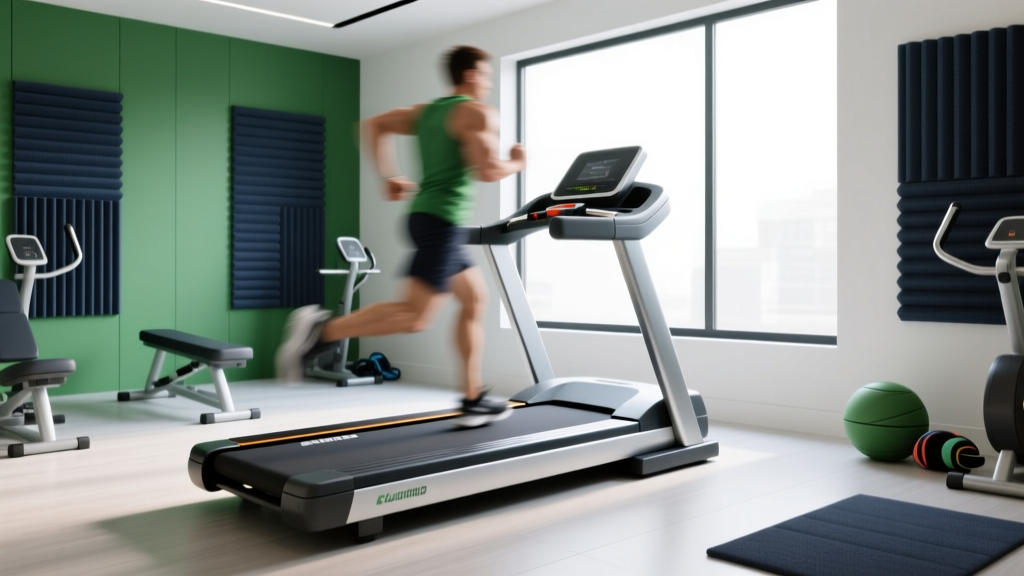
Noise Comparison & Setup for Treadmill Sprints to Lose Weight
Compare cardio machine noise levels and follow our complete setup walkthrough to soundproof your gym for treadmill sprints to lose weight without disturbing others.

The Acoustic Reality of High-Intensity Home Cardio
High-Intensity Interval Training (HIIT) remains one of the most efficient methods for cardiovascular conditioning and fat oxidation. Specifically, many athletes and home-gym owners utilize treadmill sprints to lose weight because the forced pacing and high caloric expenditure yield rapid results. However, executing 10 mph to 12 mph sprints in a multi-story home, apartment, or shared living space introduces a massive acoustic challenge.
While modern 2026 brushless DC motors are whisper-quiet, the biomechanical impact of a 180-pound runner striking a treadmill deck at a full sprint generates severe structure-borne noise. This low-frequency vibration travels directly through floor joists, turning your ceiling into a subwoofer for the downstairs neighbors. If you are committed to this training modality, a strategic installation and soundproofing walkthrough is not optional—it is mandatory.
Cardio Machine Noise Level Comparison
Before diving into the installation walkthrough, it is crucial to understand how the acoustic footprint of a sprinting treadmill compares to other popular cardio machines. The following data reflects real-world decibel (dB) readings measured at a 3-foot distance, as well as the structural vibration transfer (impact noise) which is the primary culprit for neighbor complaints.
| Cardio Machine | Airborne Noise (dB) | Impact/Vibration Transfer | Neighbor Disturbance Risk |
|---|---|---|---|
| Treadmill (Walking 3 mph) | 50 - 60 dB | Low | Minimal |
| Treadmill (Sprinting 10+ mph) | 75 - 85 dB | Extreme (Low-Frequency) | Severe |
| Elliptical Cross-Trainer | 45 - 55 dB | Negligible | Very Low |
| Air Bike (e.g., Rogue Echo) | 70 - 80 dB (Wind) | Low | Moderate (Airborne only) |
| Rowing Machine (Concept2) | 65 - 75 dB (Air) | Moderate (Rail vibration) | Low to Moderate |
As the table illustrates, while an air bike or rower might generate high airborne noise (the sound of rushing air), they lack the heavy, repetitive downward force of treadmill sprinting. According to the Environmental Protection Agency (EPA), prolonged exposure to noise above 70 dB can be disruptive, but it is the low-frequency structural vibration from footfalls that penetrates drywall and concrete most effectively.
Complete Setup Walkthrough: Soundproofing for Sprints
To safely and quietly perform treadmill sprints to lose weight in a residential setting, you must decouple the machine from the building's structure. Follow this three-phase installation guide to mitigate impact noise.
Phase 1: Subfloor Decoupling and Mass Loading
Do not place a treadmill directly on hardwood, laminate, or thin carpet. The first step is creating a high-mass, decoupled foundation.
- Acquire the Right Matting: Purchase a 4x6 foot, 3/4-inch thick vulcanized rubber horse stall mat (brands like Rubber-Cal or local agricultural suppliers). These cost between $50 and $75 and provide the necessary density (approx. 600 lbs per cubic yard) to absorb kinetic energy.
- The Air Gap Rule: When laying the mat, leave a strict 1-inch gap between the rubber and your baseboards. If the mat touches the wall, vibration will bypass the floor and travel directly up the drywall.
- Acoustic Underlayment (Optional but Recommended): For second-floor installations, lay down a 5mm acoustic cork underlayment beneath the rubber mat. Cork is exceptional at disrupting low-frequency sound waves.
Phase 2: Machine Isolation and Leveling
The treadmill's factory feet are typically hard plastic or thin rubber, which do nothing to stop vibration. You must upgrade the contact points.
- Install Sorbothane Pads: Purchase Sorbothane anti-vibration pads with a durometer rating of 50 or 60. Sorbothane is a proprietary viscoelastic polymer that absorbs up to 94.7% of impact vibration. Place one 4x4 inch pad under each of the treadmill's four leveling feet.
- Precision Leveling: Use a digital torpedo level on the treadmill deck. Adjust the threaded leveling feet until the machine is perfectly flat. An unlevel treadmill causes the user's stride to compensate, resulting in asymmetrical, heavier foot strikes that exponentially increase noise.
Phase 3: Belt Tension and Motor Maintenance
A poorly maintained treadmill will generate excessive airborne noise, compounding the impact noise.
- Belt Tension Check: Lift the running belt in the center. It should rise exactly 2 to 3 inches off the deck. If it lifts higher, the belt is too loose and will 'slap' the deck during high-speed sprints. Tighten the rear roller bolts exactly one-quarter turn clockwise on each side.
- Friction Reduction: Apply a 100% silicone treadmill lubricant (like Treadmill Doctor) every 150 miles. A dry belt forces the motor to work harder, increasing the mechanical whine and heat output during 10+ mph sprints.
Equipment Spotlight: Choosing a Quiet Treadmill for HIIT
If you are purchasing a new machine specifically for sprint intervals, motor size and deck construction dictate the noise floor. Look for a continuous duty horsepower (CHP) of at least 3.5 to 4.0. A larger motor doesn't have to strain (and whine) when accelerating rapidly from 3 mph to 11 mph.
The Sole F80 remains a top-tier choice for home sprinters due to its heavy 3.5 CHP motor and ultra-stable 135 lb steel frame, which minimizes lateral shaking. Conversely, while the NordicTrack Commercial 1750 features an excellent cushioned deck that reduces joint impact, its complex incline motor mechanism can introduce additional mechanical rattling during aggressive speed and incline fluctuations typical of HIIT routines. For pure acoustic stability, heavier, simpler frames with robust steel welding outperform feature-heavy, lighter models.
Alternative Low-Noise Sprint Setups
If your living situation strictly prohibits the dynamic impact of treadmill running, you can still achieve the metabolic benefits of sprinting. The American Heart Association notes that the cardiovascular benefits of HIIT are tied to heart rate elevation, not the specific modality of the exercise.
Consider swapping to an Assault AirBike or a Concept2 SkiErg. Both machines allow for maximum-effort, full-body sprints that spike the heart rate identically to a treadmill, but they generate zero structural impact noise. The noise they produce is purely airborne (the sound of a fan or wind), which can be easily contained by closing a door or using a white noise machine in the hallway.
Frequently Asked Questions
Will a cheap puzzle mat work for treadmill soundproofing?
No. Interlocking EVA foam puzzle mats (often sold for $20-$30) are too soft and lack the mass required to stop low-frequency vibrations. Under the heavy, dynamic load of a sprinting treadmill, foam compresses entirely, rendering it acoustically useless. You must use high-density vulcanized rubber.
Does running on an incline reduce treadmill noise?
Yes, slightly. Running at a 5% to 10% incline naturally shifts your biomechanics from a heavy heel-strike to a forefoot/midfoot strike, and it reduces the vertical oscillation (bounce) of your stride. This results in softer footfalls and less impact noise transferred to the floor, though the treadmill's incline motor will generate a low humming sound.
How often should I re-lubricate the belt if I sprint daily?
Standard guidelines suggest lubricating every 3 months or 150 miles. However, if you are performing daily high-friction sprint intervals, check the belt lubrication monthly. High speeds generate significant heat, which can degrade silicone lubricants faster than steady-state walking.
More gear to consider
All reviews
How to Move a NordicTrack Treadmill Through a Doorway & Noise Guide

TT8 Treadmill vs Compact Portable Cardio: Maintenance Guide
Renting a Treadmill vs Buying: 2026 Feature & Cost Comparison
Skillmill Treadmill vs Under Desk Treadmills: Office Review

Air Bike vs Assault Bike Care & Treadmill Toning Workout Maintenance
