Sunny Health & Fitness Manual Walking Treadmill vs Motorized: HP Guide
Do you need a motor? We compare the Sunny Health & Fitness manual walking treadmill against 1.5 HP and 2.5 HP motorized models in our horsepower guide.

The Great Motor Debate: Do You Actually Need Horsepower?
As we navigate the home fitness landscape in 2026, the cardio equipment market has bifurcated into two distinct camps: high-tech, motor-driven behemoths and minimalist, human-powered machines. For decades, the treadmill motor was considered the undisputed heart of the machine. However, a growing segment of walkers and biomechanics enthusiasts are questioning whether a motor is strictly necessary for daily cardiovascular health. This shift in consumer behavior has brought human-powered units, like the Sunny Health & Fitness manual walking treadmill, into direct competition with entry-level motorized walking pads and standard treadmills.
This comprehensive head-to-head comparison and treadmill motor size and horsepower guide will dissect the engineering, biomechanics, and real-world failure modes of 0 HP manual systems versus 1.5 HP and 2.5 CHP motorized alternatives. By the end of this guide, you will know exactly which drive system aligns with your stride, budget, and maintenance tolerance.
Expert Insight: The most common mistake buyers make in 2026 is overspending on 'Peak HP' marketing gimmicks. Understanding the difference between Continuous Duty Horsepower (CHP) and human-driven torque is critical for making a financially sound cardio investment.Treadmill Motor Size and Horsepower Guide: Decoding the Specs
Before pitting a manual machine against a motorized one, we must establish the baseline metrics for treadmill motors. According to the Consumer Reports treadmill buying guide, the motor is the most expensive component to replace, making its sizing crucial for longevity.
Peak HP vs. Continuous Duty HP (CHP)
Manufacturers often advertise 'Peak HP'—the absolute maximum power the motor can draw for a fraction of a second before overheating. This is a marketing illusion. The only metric that matters is Continuous Duty Horsepower (CHP), which measures the power the motor can sustain indefinitely during a standard workout.
- 1.0 to 1.5 CHP: Found in budget under-desk walking pads. Suitable only for slow walking (under 3.0 MPH) by users under 150 lbs.
- 2.0 to 2.5 CHP: The minimum standard for dedicated walking and light jogging. Required for users up to 200 lbs.
- 3.0+ CHP: Mandatory for serious runners, sprint intervals, or users exceeding 220 lbs.
The PWM Controller Problem in Budget Motorized Treadmills
Cheap motorized treadmills (often priced between $200 and $400) utilize basic Pulse Width Modulation (PWM) motor controllers. PWM works by rapidly pulsing DC power to the motor. At speeds below 2.0 MPH, this pulsing causes 'cogging'—a jerky, stuttering belt motion that disrupts natural walking cadence and places uneven stress on the user's knee joints. Manual treadmills entirely bypass this issue, as the belt speed is dictated purely by the user's foot strike.
The Zero-HP Contender: Sunny Health & Fitness Manual Walking Treadmill
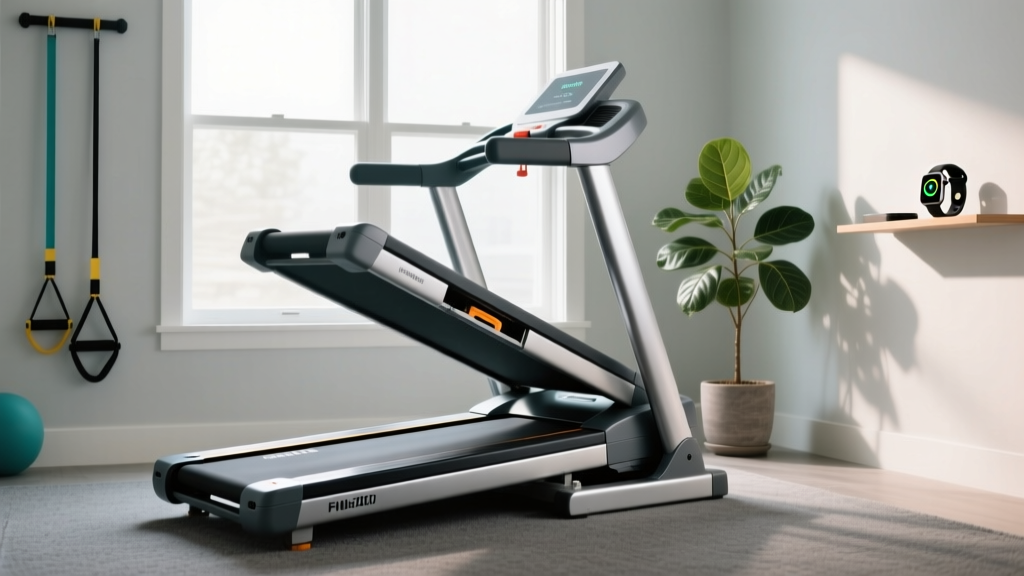
When evaluating the Sunny Health & Fitness manual walking treadmill (specifically the widely adopted SF-T7515 model, retailing around $140-$160 in 2026), the absence of a motor is not a deficit; it is a deliberate biomechanical choice. Without a motor pulling the belt, the user must generate the kinetic energy to move the deck.
The Physics of the 9% Fixed Incline
A critical, often misunderstood feature of the Sunny manual walking treadmill is its fixed 9% incline. Flat manual treadmills suffer from immense static friction; getting the belt to start moving requires a forceful, unnatural push that can strain the Achilles tendon. By elevating the front of the deck, Sunny utilizes gravity to assist the belt's return cycle. When you step forward and lift your foot, the slight downward angle and the momentum of the front roller help reset the belt, drastically reducing the breakaway force required for the next stride.
According to the American Council on Exercise (ACE), matching your treadmill's mechanics to your natural gait is vital for preventing repetitive strain injuries over long-term use.
Head-to-Head Comparison Matrix
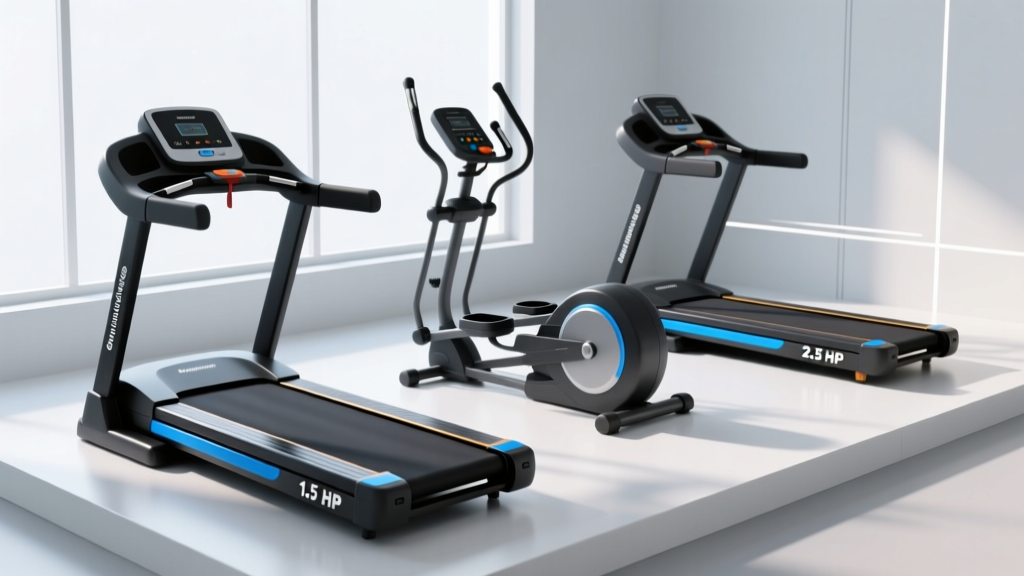
Below is a technical comparison between the 0 HP Sunny Manual, a standard 1.5 Peak HP (approx. 0.8 CHP) walking pad, and a mid-tier 2.5 CHP motorized treadmill.
| Metric | Sunny Manual (0 HP) | Budget Walking Pad (0.8 CHP) | Mid-Tier Motorized (2.5 CHP) |
|---|---|---|---|
| Top Speed | User-Dependent (Usually 4-6 MPH) | 3.5 MPH (Fixed Limit) | 10.0 - 12.0 MPH |
| Power Requirement | None (100% Human Kinetic) | 120V Standard Outlet | 120V Dedicated 15A Circuit |
| Belt Cogging at Low Speed | Zero (Smooth, user-paced) | High (PWM stuttering) | Low (Advanced DC controllers) |
| Weight Capacity | 250 lbs | 220 lbs | 300+ lbs |
| 2026 Avg. Price | $140 - $160 | $250 - $350 | $600 - $900 |
Biomechanics and Caloric Expenditure
The most significant advantage of the Sunny manual walking treadmill is the alteration of muscle recruitment patterns. On a motorized treadmill, the belt pulls your foot backward, meaning your hip flexors and hamstrings do less work; the machine essentially 'does the pulling' for you. On a manual treadmill, you must actively push the belt backward and pull your leg forward using your own posterior chain.
Research highlighted in Mayo Clinic's research on walking mechanics and various sports science journals indicates that non-motorized, self-propelled treadmills can increase caloric expenditure by up to 30% at the exact same speed compared to motorized counterparts. The fixed 9% incline on the Sunny model further amplifies glute and calf activation, making a 30-minute manual walk physiologically equivalent to a 45-minute walk on a flat, motorized deck.
Maintenance and Real-World Failure Modes
Understanding how these machines break is just as important as how they perform. The maintenance profiles of 0 HP and motorized treadmills are fundamentally different.
Motorized Failure Modes
- MOSFET Blowouts: In budget motorized treadmills, the motor controller board uses MOSFET transistors to regulate power. If a user exceeds the weight limit or frequently stops and starts the belt abruptly, these transistors overheat and fail, requiring a $100+ board replacement.
- DC Motor Brush Wear: Standard DC treadmill motors rely on carbon brushes that physically rub against the commutator. After 3 to 5 years of heavy use, these brushes wear down, leading to a loss of torque and eventual motor death.
- Drive Belt Slippage: The small rubber belt connecting the motor flywheel to the front roller stretches over time, requiring manual tensioning or replacement.
Manual Treadmill Failure Modes
The Sunny Health & Fitness manual walking treadmill eliminates all electronic and motor-driven failure points. However, it introduces mechanical wear specific to human-powered decks:
- Static Friction and Deck Scoring: Because the user's foot strike drives the belt, downward pressure is immense. If the deck is not lubricated with 100% silicone treadmill wax every 3 to 6 months, the friction will melt the belt backing and score the wooden/MDF deck, ruining both components.
- Tension Bolt Stripping: Manual belts stretch faster than motorized belts due to the high-torque push-off of the human foot. Users frequently over-tighten the rear roller adjustment bolts to compensate for slip, which can strip the internal threads of the frame brackets.
The Final Verdict: Matching Machine to User
The decision between a manual and motorized treadmill ultimately comes down to your desired workout intensity, budget, and spatial constraints.
Buy the Sunny Health & Fitness Manual Walking Treadmill If:
- You want to maximize caloric burn and posterior chain muscle activation in a shorter timeframe.
- You have a strict budget under $200 and zero desire to deal with electronic control board failures or motor replacements.
- You live in an apartment where the lack of a motor hum and the smaller footprint (approx. 53 x 23 inches) are critical advantages.
Buy a 2.5 CHP Motorized Treadmill If:
- You require precise, programmable speed intervals (e.g., HIIT protocols where the machine forces you to keep up).
- You are a runner needing speeds above 7 MPH, or a user over 250 lbs who requires the reinforced steel decking and high-torque drive of a 3.0 CHP system.
- You prefer a passive walking experience where the machine dictates the pace while you focus on upper body movement or watching a screen.
By understanding the reality of Continuous Duty Horsepower and the unique biomechanical advantages of human-driven decks, you can bypass marketing noise and select the cardio machine that truly fits your physiological and financial needs in 2026.
More gear to consider
All reviews
The Mike Tyson Daughter Treadmill: Compact Portable Cardio Guide
NordicTrack Series 9 Treadmill & Compact Portable Cardio Maintenance

Budget Folding Treadmills for a HIIT Treadmill Plan: 2026 Review

ProForm Crosswalk 400e Treadmill & Cardio Machine Noise Comparison

Air Bike vs Assault Bike Guide: Translating Treadmill Speed to Pace KM