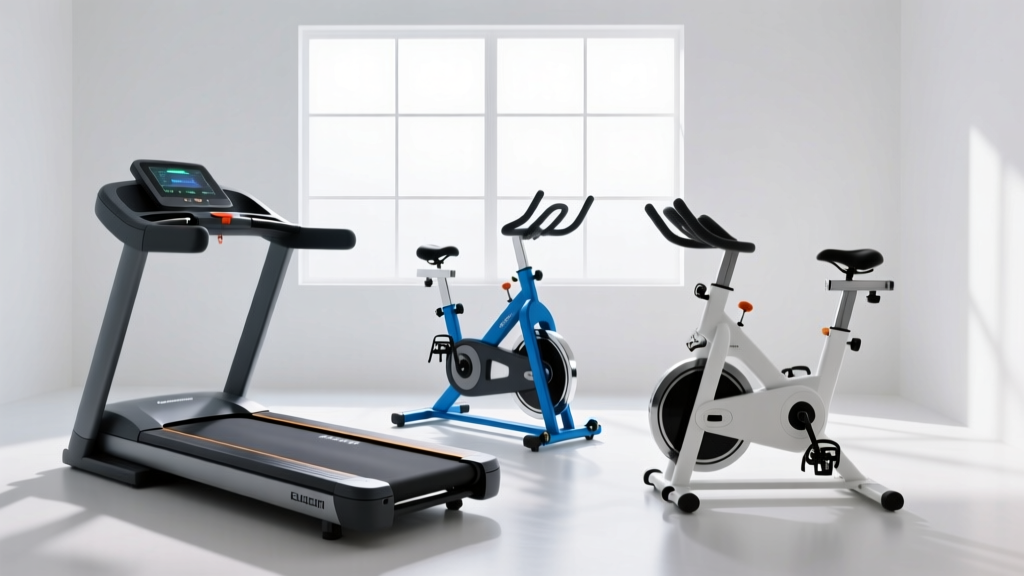
Does Nike Run Club Work on Treadmill? Stationary Bike Budget Guide
Discover if Nike Run Club works on treadmills, then dive into our 2026 budget breakdown of upright, recumbent, and spin bikes for maximum home value.

When building a home gym, the intersection of hardware cost and software connectivity dictates your long-term fitness success. Many athletes start with a specific software ecosystem in mind, leading to one of the most common search queries in the cardio space: Does Nike Run Club work on treadmill setups? The answer reveals a massive gap in treadmill technology compared to modern stationary bikes, fundamentally shifting how we should evaluate cardio machine budgets in 2026.
The Short Answer: NRC on Treadmills
Nike Run Club (NRC) does not natively pull speed, incline, or distance data directly from a treadmill's console via Bluetooth. To track an indoor run, you must use the 'Indoor Run' mode on the NRC Apple Watch app. This relies entirely on the Watch's internal accelerometer and gyroscope to estimate distance based on arm swing and cadence. Because arm movements vary, this estimation can skew your actual distance by 5% to 10% compared to the treadmill's physical belt rotation.
The Connectivity Gap: Why Bikes Outpace Treadmills
While treadmills struggle with universal third-party app integration, the stationary bike market has standardized around the Bluetooth SIG Fitness Machine Service (FTMS) protocol. FTMS allows smart bikes to broadcast exact wattage, cadence, and resistance levels to open-platform apps like Zwift, Rouvy, and MyWhoosh. This open ecosystem creates a far superior value proposition for home gym builders who want interactive training without being locked into a single brand's expensive subscription.
If you are reallocating your cardio budget away from treadmills and toward stationary cycling, you must choose between three distinct machine types: Spin Bikes (Indoor Cycles), Upright Bikes, and Recumbent Bikes. Below is our comprehensive 2026 budget breakdown and value analysis for each category.
2026 Stationary Bike Budget & Value Matrix
| Feature | Spin Bike (Indoor Cycle) | Upright Exercise Bike | Recumbent Bike |
|---|---|---|---|
| Avg. Price Range | $800 - $2,500 | $400 - $1,200 | $600 - $2,000 |
| App Connectivity | Excellent (FTMS/Zwift) | Limited (Proprietary) | Limited (Proprietary) |
| Footprint | ~4 sq. ft. | ~5 sq. ft. | ~8-10 sq. ft. |
| Primary Use Case | High-Intensity / Racing | Casual Cardio / Warmup | Rehab / Low-Impact |
| Resistance Type | Magnetic / Friction | Motorized Magnetic | Motorized Magnetic |
Spin Bikes: The App-Driven Value Kings
Spin bikes (or indoor cycles) mimic the geometry of a road bike, featuring a heavy flywheel, aggressive riding posture, and micro-adjustable seats. In 2026, they offer the highest return on investment for users who want interactive, gamified cardio.
Deep Dive: Schwinn IC4 vs. Peloton Bike+
The Schwinn IC4 (retailing around $899) is widely considered the undisputed value king of the home cardio market. It utilizes a physical magnetic brake pad that moves closer to the 40-pound metal flywheel to create resistance. Crucially, it broadcasts FTMS data, allowing you to ride in Zwift or control the bike's resistance automatically when climbing virtual hills in Rouvy.
Conversely, the Peloton Bike+ ($2,495) uses an electromagnetic eddy-current brake system, which is whisper-quiet and requires zero physical maintenance. However, its closed ecosystem forces you into the Peloton app. While the hardware is premium, the software lock-in severely impacts the long-term budget.
Expert Insight: When evaluating spin bikes, check the 'Q-Factor' (the horizontal distance between the pedals). Road bikes have a narrow Q-Factor (around 150mm). Bikes like the Wahoo KICKR Bike replicate this for biomechanical accuracy, while budget spin bikes often feature a wide Q-Factor (180mm+), which can cause knee tracking issues during high-cadence intervals.
Upright Bikes: The Traditionalist's Budget Pick
Upright bikes feature a smaller footprint, a wider padded seat, and a more relaxed, vertical riding posture. They are ideal for users who want to read, watch TV, or perform steady-state zone 2 cardio without the aggressive lower-back strain of a spin bike.
Value Analysis: Nautilus U618
The Nautilus U618 (approximately $799) represents the ceiling of the traditional upright market. It features a motorized magnetic resistance system controlled via a console with 25 preset levels. Unlike spin bikes, the U618 includes a backrest pad and multi-position handlebars. However, its Bluetooth connectivity is limited to the proprietary Nautilus Explorer app, which lacks the massive multiplayer user base of Zwift. If your goal is simple, distraction-free calorie burning without monthly app fees, the upright bike offers incredible baseline value.
Recumbent Bikes: Ergonomic Value for Rehab & Seniors
Recumbent bikes place the rider in a reclined position with the pedals out in front. This design completely unloads the lumbar spine and shifts the cardiovascular demand almost entirely to the lower body. According to Harvard Health Publishing, cycling is a premier low-impact exercise that elevates heart rate without the repetitive joint pounding associated with running or treadmill walking.
Value Analysis: Schwinn 270 Recumbent
Priced around $899, the Schwinn 270 Recumbent is a staple in physical therapy clinics and senior fitness centers. It features a step-through frame, a mesh lumbar-support backrest, and a massive 35-pound flywheel housed in the front base. The primary value proposition here is longevity and accessibility. While it will never be used for high-intensity interval training (HIIT), its ergonomic design ensures that users with sciatica, herniated discs, or knee replacements can maintain daily cardiovascular health safely.
Total Cost of Ownership (TCO): The 3-Year Math
Hardware is only half of your cardio budget. To truly understand value, we must calculate the 3-Year Total Cost of Ownership, factoring in mandatory and optional software subscriptions.
- Scenario A: The Ecosystem Lock-in (Peloton Bike+)
Hardware: $2,495
Subscription: $44/mo ($1,584 over 3 years)
3-Year TCO: $4,079 - Scenario B: The Open-Platform Value King (Schwinn IC4 + Zwift)
Hardware: $899
Subscription: $19.99/mo ($719 over 3 years)
3-Year TCO: $1,618 - Scenario C: The Traditionalist (Nautilus U618)
Hardware: $799
Subscription: $0 (Using free built-in programs)
3-Year TCO: $799
As the math illustrates, chasing a premium brand name can cost you over $2,400 more across a standard three-year lifespan compared to leveraging open-source FTMS hardware.
Expert Verdict: Where Should You Put Your Money?
If your primary search intent was figuring out if Nike Run Club works on a treadmill, you have likely already realized that treadmill software integration remains clunky and reliant on wearable estimations. Pivoting your budget toward a stationary bike yields far better technological returns in 2026.
For competitive athletes and data nerds, the Spin Bike category (specifically FTMS-compatible models like the Schwinn IC4 or Bowflex C7) offers the best intersection of price, biomechanics, and app integration. For casual users or those recovering from injury, the Recumbent and Upright categories provide reliable, low-maintenance cardiovascular health without the burden of monthly software subscriptions. Choose the machine that aligns not just with your current fitness level, but with your long-term financial and technological ecosystem goals.
More gear to consider
All reviews
Cardio Noise Level Comparison & Treadmill Program for Beginners
Maintaining Your Treadmill for Fat Loss: Belt Lubrication Guide

Top Treadmill Challenge for Weight Loss: Sole F85 vs NordicTrack

Stair Stepper vs Treadmill: Beginner Motor Size Guide
Elliptical vs Treadmill: Are Treadmills Accurate for Distance?
