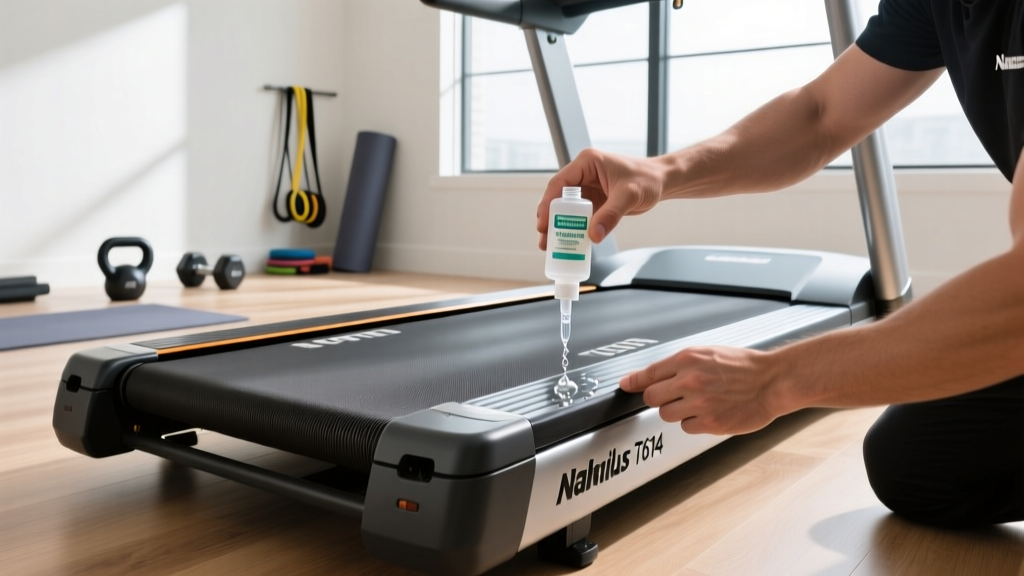
Nautilus T614 Treadmill Belt Maintenance: Expert Lubrication Guide
Learn expert Nautilus T614 treadmill belt maintenance. Our hands-on lubrication guide covers silicone types, tension checks, and step-by-step care.

Why the Nautilus T614 Treadmill Demands Specific Belt Care
The Nautilus T614 treadmill has long been a staple in home gyms, prized for its reliable 2.75 CHP motor and spacious 18-inch by 55-inch running surface. However, as we evaluate cardio equipment longevity in 2026, one truth remains absolute: the lifespan of your T614 is inextricably linked to its deck-to-belt friction coefficient. Unlike commercial club treadmills that utilize advanced wax-infused belts or self-lubricating systems, the Nautilus T614 relies on a traditional phenolic-resin coated MDF deck and a standard cotton-polyester blend belt. This combination requires manual, periodic lubrication to prevent catastrophic motor failure.
When the belt dries out, the friction between the belt and the deck increases exponentially. This forces the 2.75 CHP drive motor to work harder to maintain your target speed, particularly under the T614's 10% maximum incline load. According to equipment repair specialists at The Treadmill Doctor, excessive friction is the leading cause of premature motor burnout and control board failure in mid-range residential treadmills. Neglecting this simple maintenance step can turn a $700 machine into a $400 paperweight within two years.
The Anatomy of Treadmill Belt Friction and Amp Draw
To understand why lubrication is non-negotiable, you need to understand amp draw. When you step onto a dry Nautilus T614 belt and start walking at 3.0 MPH, the motor might draw 8 to 10 amps. If the belt is properly lubricated, that draw remains stable. If the belt is bone-dry, the amp draw can spike to 15 amps or higher.
⚠️ Expert Warning: The Thermal Breaker TripIf your Nautilus T614 suddenly shuts off mid-run and won't restart for 10 to 15 minutes, you have likely tripped the motor's internal thermal breaker due to high amp draw from a dry belt. Do not simply reset the machine and keep running; you must lubricate the deck immediately to prevent permanent winding damage.
Choosing the Right Lubricant for Your Nautilus T614
Not all lubricants are created equal. The most common mistake DIYers make is reaching for household aerosols. Below is a breakdown of what works, what is marginal, and what will destroy your T614's deck.
| Lubricant Type | Compatibility with T614 | Expert Verdict |
|---|---|---|
| 100% Pure Liquid Silicone | Excellent | The gold standard. Bonds safely with the cotton-polyester under-layer without degrading the rubber top surface. |
| Silicone Gel / Paste | Poor | Too viscous. Creates uneven drag spots and attracts dust, forming an abrasive sludge under the belt. |
| PTFE (Teflon) Sprays | Marginal | Evaporates too quickly and often contains petroleum distillates that eat away at the belt's rubber backing. |
| WD-40 / Petroleum Oils | Destructive | Will instantly melt the belt backing, ruin the phenolic deck coating, and void your Nautilus warranty. |
For the Nautilus T614, you must use a 100% pure liquid silicone treadmill lubricant. Brands like Impresa Products or Godora offer 4-ounce bottles specifically formulated for this application, typically costing between $10 and $15. A single bottle will last the average user up to four years.
Hands-On: Step-by-Step Nautilus T614 Belt Lubrication
Proper application is just as critical as using the right fluid. Follow this exact procedure to ensure even distribution across the 55-inch running surface.
- Power Down and Secure: Turn off the T614 using the main power switch at the front base (near the power cord) and unplug it from the wall. This prevents accidental startup while your hands are under the belt.
- Release Belt Tension: Locate the two rear roller adjustment bolts at the very back of the treadmill. Using the 3/16-inch Allen wrench provided with your machine (or a standard metric equivalent), turn both bolts counter-clockwise exactly 5 full turns. Keep track of your turns so you can restore the exact tension later.
- Access the Deck: Reach under the center of the belt and lift it away from the deck. The T614's belt should easily pull up about 2 to 3 inches once tension is released.
- Apply the Silicone: Insert the applicator tube of your 100% silicone bottle under the belt. Squeeze exactly 0.5 ounces (about half the bottle's standard 1oz application line) in a zig-zag pattern from the left edge to the center, then repeat on the right side. Total application should not exceed 1 ounce.
- Distribute the Lubricant: Lower the belt back onto the deck. Plug the treadmill back in, turn it on, and set the speed to 2.0 MPH. Walk on the treadmill for 3 to 5 minutes, deliberately stepping near the left and right edges to press the silicone evenly across the entire width of the phenolic deck.
- Restore Tension: Turn the machine off and unplug it again. Turn both rear adjustment bolts clockwise exactly 5 turns to return them to their starting position.
Verifying Belt Tension and Alignment Post-Lubrication
After restoring the bolts to their previous positions, you must verify the belt tension. A belt that is too tight will cause the same motor strain as a dry belt; a belt that is too loose will slip underfoot, creating a severe safety hazard.
The 'Snap' Test: Reach under the center of the belt and lift it. You should be able to raise it exactly 2 to 3 inches off the deck. When you let go, it should snap back down with a firm, dull thud. If it touches the deck easily without resistance, it's too loose. If you cannot lift it 2 inches, it's too tight.
If the belt tracks to the left or right during your 2.0 MPH distribution walk, you must adjust the alignment. If the belt moves to the left, turn the left rear bolt clockwise by 1/4 turn. If it moves to the right, turn the right rear bolt clockwise by 1/4 turn. Always make micro-adjustments and let the belt run for 30 seconds to settle before making further tweaks.
Troubleshooting Common T614 Maintenance Edge Cases
Even with perfect lubrication, you may encounter specific edge cases related to the T614's design. Here is how to diagnose them:
- Persistent Static Shocks: If you experience static shocks after lubricating, the issue is not friction. The T614 relies on a grounding wire connecting the frame to the deck. Check the underside of the deck for a loose spade connector. Additionally, ensure your wall outlet is properly grounded, as noted in safety guidelines by Consumer Reports.
- Belt Slipping on Incline: If the belt hesitates when you step on it at a 10% incline, but the motor sounds smooth, your belt is too loose, or the drive belt (connecting the motor to the front roller) is stretched. Remove the front motor hood (requires a Phillips head screwdriver) and check the drive belt tension. It should have about 1/2 inch of deflection when pressed.
- Fraying Belt Edges: If you notice the cotton fibers on the edge of the belt unraveling, your belt is severely misaligned and is rubbing against the T614's plastic side rails. Stop using the machine immediately and perform the 1/4 turn alignment correction detailed above.
Expert Maintenance Schedule for the Nautilus T614
Do not rely on the console's 'Lube Belt' reminder, as it is simply a mileage timer and does not account for environmental factors like humidity or user weight. Instead, use this usage-based matrix to dictate your maintenance schedule.
| Weekly Usage (Hours) | User Weight Category | Recommended Lube Interval |
|---|---|---|
| Under 3 hours | Under 180 lbs | Every 12 months |
| 3 to 5 hours | 180 - 220 lbs | Every 6 months |
| Over 5 hours | Over 220 lbs | Every 3 months |
By adhering to this precise lubrication protocol, you ensure the Nautilus T614's 2.75 CHP motor operates within its optimal thermal envelope. For further technical specifications and official warranty details regarding deck and motor coverage, always refer to the official Nautilus Support portal. Proper maintenance is the single highest-ROI investment you can make in your home cardio setup.
More gear to consider
All reviews
Rowing Guide: Alternative to Treadmill Stress Test Equipment
Is a Treadmill Good for Losing Weight? 2026 Buying Guide
Rowing Guide: Upgrading From Sole F63 Treadmill Older Model

NordicTrack C 700 Treadmill Setup & Walking Pad Review
Best Compact Fat Burning Treadmill Options for 2026
