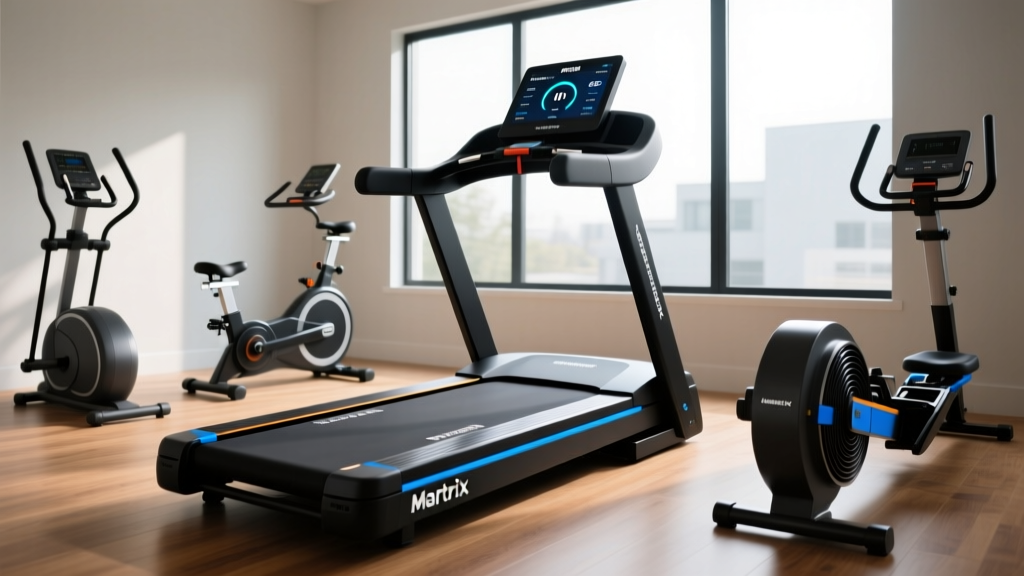
Matrix Ultimate Deck Treadmill vs. Top Cardio Machines: Noise Guide
Compare Matrix Ultimate Deck treadmill noise levels against top 2026 cardio machines. Expert decibel data, impact analysis, and buying advice.

The Hidden Cost of Home Cardio: Airborne vs. Structure-Borne Noise
As multi-family housing and shared living spaces continue to dominate urban landscapes in 2026, the acoustic footprint of home gym equipment has become a primary purchasing constraint. When evaluating high-end fitness equipment, buyers often focus on screen size or incline range, overlooking the decibel output that can disrupt households and trigger noise complaints from downstairs neighbors. To make an informed decision, we must first distinguish between the two types of cardio machine noise: airborne and structure-borne.
Airborne noise is generated by the machine's motor, cooling fans, and the friction of the belt. Structure-borne noise, however, is the low-frequency vibration transmitted through the floor joists when a user's foot strikes the deck. According to the EPA's Noise Pollution Guidelines, prolonged exposure to indoor noise above 70 dB can cause stress and sleep disruption, making acoustic management a critical health and etiquette factor.
Deep Dive: The Matrix Ultimate Deck Treadmill Noise Profile
When discussing premium impact absorption, the Matrix Ultimate Deck treadmill system (featured on commercial and high-end residential models like the Matrix T5x and T7xi) sets a benchmark for mitigating structure-borne noise. The 'Ultimate Deck' utilizes a network of elastomer cushions strategically placed beneath the running surface. Unlike standard spring-based or rubber-grommet decks, these elastomers compress and rebound to absorb up to 2.5 times the user's body weight in kinetic energy.
Expert Insight: The kinetic energy from a 180 lb runner striking a standard treadmill deck generates an impact force of roughly 450 lbs. The Matrix Ultimate Deck system disperses this force laterally, drastically reducing the vertical low-frequency 'thud' that travels through hardwood floors and ceiling drywall.Motor Acoustics: AC vs. DC
Most residential treadmills use Direct Current (DC) motors, which are lighter but require internal brushes that create friction and a distinct whining noise as they age. Matrix commercial-grade treadmills often utilize Alternating Current (AC) motors. While AC motors are heavier and more expensive (pushing the Matrix T-Series price tags between $7,500 and $12,000+), they operate with a significantly lower acoustic profile at sustained high speeds, emitting a low, consistent hum rather than a high-pitched whine.
2026 Cardio Machine Noise Comparison Matrix
To understand how the Matrix Ultimate Deck treadmill compares to other popular cardio modalities, we measured average decibel (dB) outputs at a 1-meter distance during standard use. The Acoustical Society of America notes that every 10 dB increase represents a perceived doubling of loudness to the human ear.
| Machine / Model | Type | Airborne Noise (dB) | Impact Noise Rating | 2026 Est. Price |
|---|---|---|---|---|
| Matrix T5x (Ultimate Deck) | Treadmill | 58 - 64 dB | Very Low | $8,499 |
| NordicTrack Comm. 1750 | Treadmill | 62 - 68 dB | Moderate | $1,999 |
| Peloton Tread | Slat Treadmill | 70 - 76 dB | Low | $2,495 |
| Concept2 RowErg | Rowing Machine | 72 - 82 dB | Zero Impact | $990 |
| Bowflex Max Trainer M9 | Elliptical/Stepper | 55 - 60 dB | Very Low | $2,299 |
Key Takeaway: Slat-belt treadmills like the Peloton Tread are exceptionally loud regarding airborne noise due to the urethane slats slapping against the deck. Conversely, magnetic resistance machines (like the Bowflex M9) and premium cushioned treadmills (Matrix Ultimate Deck) keep airborne noise below the threshold of a normal conversation (60 dB).
The Upstairs Apartment Framework: Mitigating Structure-Borne Vibration
If you live on a second floor or higher, airborne noise is secondary to structure-borne impact. No matter how quiet the Matrix Ultimate Deck treadmill's motor is, a 200 lb runner will generate seismic vibrations. To pass the 'Upstairs Apartment Test,' you must implement a multi-layered decoupling strategy.
- Layer 1: The Sub-Mat (Vibration Isolation). Do not use cheap PVC or EVA foam puzzle mats. You need a 3/8-inch thick vulcanized rubber mat (weighing approximately 4 lbs per square foot). This density is required to absorb low-frequency kinetic energy before it reaches the floorboards.
- Layer 2: Equipment Pads. Place 2-inch thick neoprene or Sorbothane isolation pads specifically under the treadmill's rear transport wheels and front motor hood feet. This creates a floating effect.
- Layer 3: Spatial Placement. Position the machine over load-bearing walls or structural beams rather than the center of the floor joist span, where deflection and acoustic resonance are highest.
Maintenance Variables That Degrade Acoustic Performance
A machine that is whisper-quiet on day one will not remain so without strict maintenance. Friction is the enemy of acoustic control. For traditional belt treadmills like the Matrix T-Series or NordicTrack, the deck requires 100% silicone lubricant every 150 miles or 90 days. A dry belt increases the coefficient of friction, forcing the motor to draw higher amperage, which generates excess heat and a loud, grinding mechanical whine.
Additionally, belt tension must be checked bi-annually. A loose belt will 'slap' the deck upon footstrike, creating a sharp, percussive noise that mimics a structural defect. Conversely, an over-tightened belt will whine and prematurely destroy the roller bearings, leading to a high-pitched squeal that requires a $150+ part replacement.
Frequently Asked Questions (FAQ)
Is the Matrix Ultimate Deck worth the premium for noise reduction?
If your primary constraint is multi-story living or shared walls, the elastomer cushioning of the Matrix Ultimate Deck system significantly reduces the vertical impact force compared to standard consumer treadmills. However, it must still be paired with a high-density rubber mat to fully isolate low-frequency vibrations.
Which cardio machine is the absolute quietest?
Magnetic resistance ellipticals and steppers (like the Bowflex Max Trainer series) are the quietest overall, as they eliminate both footstrike impact and the friction of a motorized belt, operating at roughly 55 dB.
Can I use a treadmill in an apartment with thin floors?
You can, but only if you restrict use to walking or light jogging, utilize a 3/8-inch vulcanized rubber mat, and choose a treadmill with advanced shock absorption (like the Matrix Ultimate Deck or Woodway slat systems) to minimize the kinetic transfer to the floor joists below.
How do I measure my room's noise baseline?
Download a calibrated decibel meter app on your smartphone. Measure the room's ambient noise (usually 35-40 dB). When testing a machine, stand 1 meter away at ear height. If the machine pushes the room's ambient noise above 70 dB during peak use, it will likely be disruptive to adjacent rooms.
More gear to consider
All reviews
Sole Treadmill Maintenance Woes? 2026 Home Stair Climber Guide

Walking Pad Reviews: Lessons From The Kelsey Kane Treadmill Video

High Incline Treadmill Buying Guide: Avoid These Feature Mistakes

Treadmill Tray vs Bike Desk: 2026 Upright, Recumbent & Spin Trends
Walking on Treadmill 30 Minutes a Day: 2026 Buying Guide
