Livestrong Treadmill LS10 0T Value Analysis & Compact Alternatives
We break down the true cost of the Livestrong Treadmill LS10 0T and compare it against the best compact portable cardio equipment options for 2026.

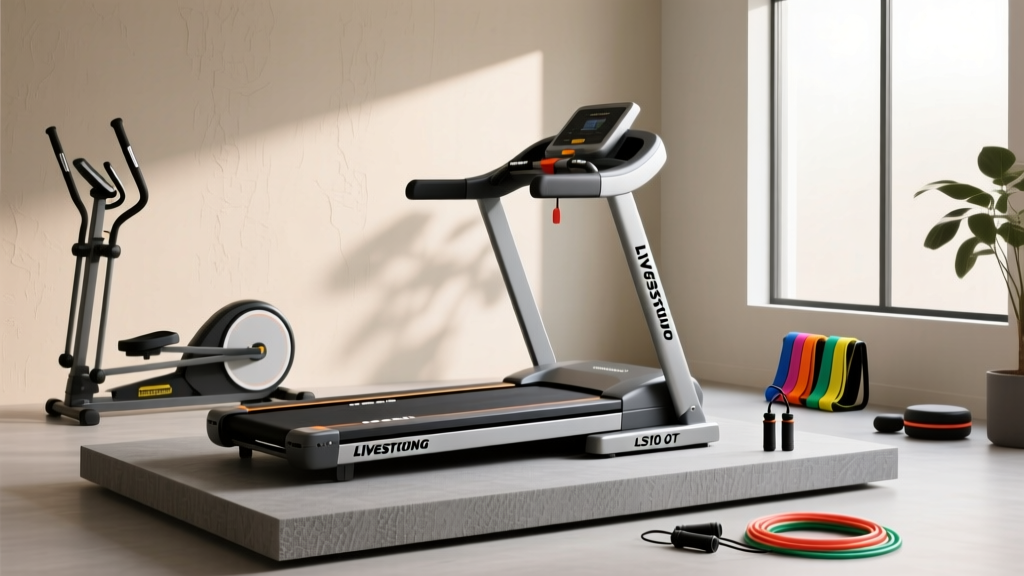
When evaluating home gym investments in 2026, the secondary market for legacy fitness equipment often presents a tempting proposition. The Livestrong Treadmill LS10 0T (officially manufactured by Horizon Fitness and often stylized as the LS10.0T) was a staple of the budget folding treadmill category throughout the 2010s. Originally priced around $799, it is now frequently listed on local marketplaces for $150 to $300. But does a discontinued, heavy folding treadmill still offer genuine value, or has the market shifted toward more efficient solutions?
In this comprehensive budget breakdown and value analysis, we will dissect the hidden costs of acquiring and maintaining the Livestrong Treadmill LS10 0T. More importantly, we will compare this legacy machine against modern compact portable cardio equipment options that are dominating small-space home gyms today.
⚠️ Buyer Beware: The Discontinued Tech TrapBecause Horizon Fitness phased out the Livestrong branded line years ago, proprietary replacement parts—specifically motor control boards and digital console overlays—are no longer manufactured. Sourcing these components requires scavenging from third-party parts liquidators or eBay, introducing significant downtime risk.
Budget Breakdown: The True Cost of the Livestrong Treadmill LS10 0T
Sticker price is only the first metric in fitness equipment valuation. The Livestrong LS10 0T features a 2.5 HP continuous duty motor and a 20" x 55" running belt. While it folds, it still weighs roughly 165 lbs and requires a dedicated 70" x 30" footprint when in use. According to Consumer Reports, moving and setting up heavy, used fitness equipment often incurs hidden costs that negate the initial discount.
First-Year Ownership Cost Matrix
| Expense Category | Estimated Cost | Notes & Edge Cases |
|---|---|---|
| Used Base Price | $150 - $300 | Varies by local market and cosmetic condition. |
| Freight / Moving | $75 - $150 | Requires a truck and 2 people. 165 lbs dead weight. |
| Replacement Belt (Generic) | $45 - $65 | Used belts are often dried out and require immediate swapping. |
| Silicone Lubricant | $15 | Mandatory for 2.5 HP motors to prevent overheating. |
| Total First-Year Cost | $285 - $530 | Assuming no catastrophic motor or board failure. |
The Shift to Compact Portable Cardio Equipment Options
For a total investment of $300 to $500, buyers in 2026 are increasingly abandoning heavy, folding treadmills in favor of compact portable cardio equipment options. This shift is driven by urbanization, the permanence of work-from-home setups, and a deeper understanding of exercise physiology.
The American College of Sports Medicine (ACSM) heavily promotes the concept of Non-Exercise Activity Thermogenesis (NEAT)—the energy expended for everything we do that is not sleeping, eating, or sports-like exercise. Modern compact cardio gear is specifically designed to integrate into daily life, boosting NEAT without requiring a dedicated "gym room" or a 30-minute time block.
Head-to-Head Value Analysis: Legacy vs. Modern Compact
Let us compare the used Livestrong Treadmill LS10 0T against three leading categories of compact portable cardio equipment available in 2026.
1. The Ultra-Compact Walking Pad (e.g., KingSmith WalkingPad R2)
- Price Point: $399 - $449 (New)
- Footprint: 57" x 22" (Unfolded), folds entirely flat to 5" height for under-bed storage.
- Value Proposition: Unlike the LS10 0T, which demands permanent floor space even when folded, the WalkingPad R2 disappears into a closet. It features a 1.25 HP motor optimized for walking and light jogging (up to 7.5 MPH).
- Failure Mode: The central folding hinge is the primary stress point. Users exceeding 200 lbs who jog aggressively may experience hinge squeaking or belt misalignment over 18+ months.
2. The Under-Desk Elliptical (e.g., Cubii JR2)
- Price Point: $299
- Footprint: 23" x 17" (Weighs just 12.5 lbs).
- Value Proposition: Zero dedicated space required. The magnetic resistance is whisper-quiet, allowing for simultaneous desk work. According to the Mayo Clinic, low-impact elliptical motions are vastly superior for joint preservation compared to the repetitive striking impact of a treadmill belt, making this ideal for older demographics or those with knee pathology.
- Failure Mode: Bluetooth connectivity drops with third-party apps; drive belt tension loss after 2+ years of heavy daily use.
3. The Foldable Magnetic Bike (e.g., XTERRA FB150)
- Price Point: $199 - $249
- Footprint: 32" x 18" (Folds down to a 12" x 18" profile).
- Value Proposition: Offers genuine cardiovascular elevation (high BPM zones) that walking pads and under-desk ellipticals struggle to achieve. The manual magnetic resistance requires no power outlet, eliminating the motor control board failures that plague used treadmills like the LS10 0T.
- Failure Mode: The seat post adjustment pin can wear out the frame holes if not properly aligned during height changes, leading to wobbling at high cadences.
Comparative ROI and Lifestyle Matrix
| Equipment | Space Efficiency | Cardio Ceiling | Maintenance Risk | Resale Value (1 Yr) |
|---|---|---|---|---|
| Livestrong LS10 0T | Poor (Heavy/Bulky) | High (Running) | High (Discontinued parts) | Low ($50-$100) |
| WalkingPad R2 | Excellent | Moderate (Jogging) | Moderate (Hinge wear) | High ($250) |
| Cubii JR2 | Perfect (Under-desk) | Low (NEAT/Active Recovery) | Low | Moderate ($150) |
| XTERRA FB150 | Good | High (HIIT Capable) | Very Low | Low ($80) |
Edge Cases and Troubleshooting: What Goes Wrong?
When analyzing value, we must account for the cost of failure. If you proceed with the Livestrong Treadmill LS10 0T, you are inheriting a machine with a known set of age-related defects.
- The E1 Error Code: This is the most common failure on Horizon/Livestrong models. It indicates a motor communication error, usually stemming from a degraded motor control board or a faulty reed switch. Sourcing a compatible control board in 2026 costs upwards of $120 on secondary markets, instantly destroying the budget advantage of buying used.
- Belt Slippage Under Load: The 2.5 HP motor is technically adequate, but the LS10 0T uses a smaller front roller. Users over 220 lbs will experience belt hesitation during foot-strike, which accelerates motor wear and strains the drive belt.
- Compact Gear Hinge Fatigue: Conversely, if you choose a foldable walking pad, the primary failure mode is physical stress on the folding mechanism. To mitigate this, buyers should avoid models with plastic hinge housings and strictly opt for aluminum alloy hinge joints, even if it adds $50 to the initial purchase price.
The Verdict: Where Should Your Budget Go?
The value of the Livestrong Treadmill LS10 0T in 2026 is highly conditional. It is only a viable investment if you are a dedicated runner weighing under 200 lbs, possess the mechanical aptitude to perform your own belt alignments and motor board swaps, and have a dedicated garage space where the machine's 70-inch length is not an issue.
For the remaining 85% of home users, the value proposition heavily favors compact portable cardio equipment options. If your goal is daily step accumulation and joint-friendly movement while working, the Cubii JR2 or a high-quality WalkingPad offers a vastly superior return on investment, lower maintenance overhead, and seamless integration into modern living spaces. By prioritizing spatial efficiency and mechanical simplicity over legacy brand names, you future-proof your fitness budget against the inevitable wear and tear of home exercise.
Frequently Asked Questions
Can I still get official parts for the Livestrong LS10 0T?
No. Horizon Fitness discontinued the Livestrong partnership and subsequent parts manufacturing years ago. You must rely on generic treadmill belts and third-party electronic liquidators.
Are walking pads actually effective for weight loss?
Walking pads excel at increasing NEAT (Non-Exercise Activity Thermogenesis). While they won't replace high-intensity interval training for rapid caloric burn, adding 4,000 extra steps a day via an under-desk or living-room walking pad can create a sustainable 150-200 calorie daily deficit, leading to gradual, maintainable fat loss over time.
More gear to consider
All reviews
Under Desk Treadmill Care: Good Treadmill Speed for Weight Loss

Elliptical vs Treadmill: Designing Space for Treadmill Walks

2026 Trends: Elliptical vs Running Treadmill Curved Slat Designs
Rowing Machine Buying Guide: Technique vs Running on a Manual Treadmill

Stair Climber Guide: Adapting a Holder for iPad on Treadmill