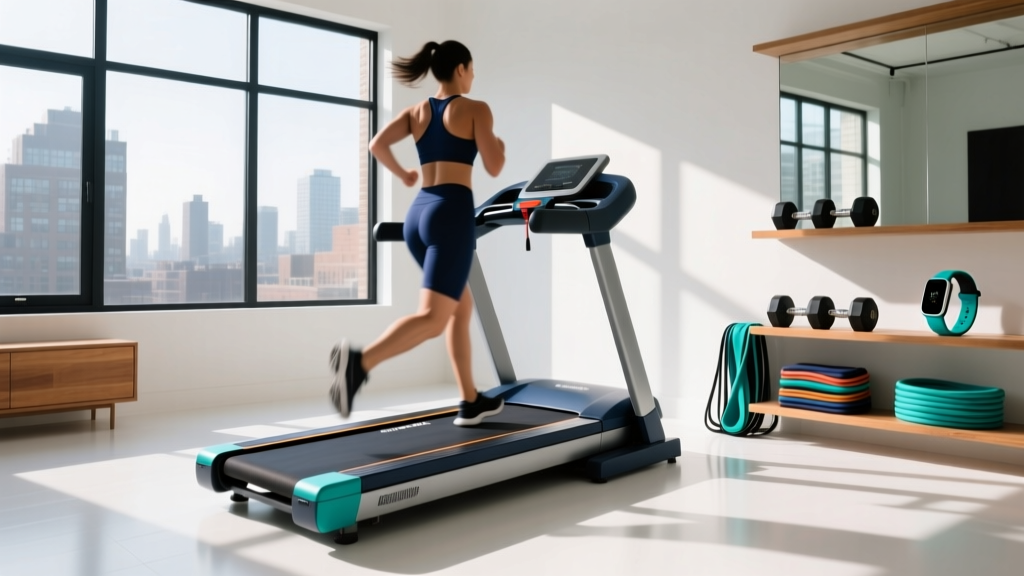
Lifestyler Treadmill Noise: A Step-by-Step Cardio Machine Comparison
Learn how to measure, compare, and reduce cardio machine noise. We use the classic Lifestyler treadmill as a baseline in this step-by-step beginner guide.

Why Home Gym Acoustics Matter for Beginners
Setting up a home gym is an exciting step toward better health, but nothing derails a workout routine faster than a noise complaint from a sleeping partner or an angry downstairs neighbor. If you are inheriting, buying secondhand, or currently using a classic Lifestyler treadmill, you already know that older cardio equipment can be notoriously loud. But how loud is too loud? And how do modern 2026 cardio machines compare?
In this beginner-friendly, step-by-step guide, we will use the legacy Lifestyler treadmill as our acoustic baseline. We will break down the exact decibel outputs, identify the mechanical culprits behind the noise, and show you exactly how to troubleshoot, quiet, or upgrade your home gym setup.
The Golden Rule of Home Gyms: Noise is not just about volume; it is about frequency and vibration. A low hum is easily ignored, but a high-pitched motor whine or rhythmic thumping will drive you (and your housemates) crazy.
Step 1: Understand the Decibel (dB) Scale for Home Gyms
Before we compare machines, you need to understand how sound is measured. The decibel (dB) scale is logarithmic, meaning an increase of just 10 dB represents a tenfold increase in sound intensity. According to the Occupational Safety and Health Administration (OSHA), prolonged exposure to noise above 85 dB can cause hearing damage, but in a home environment, anything above 70 dB becomes highly disruptive to daily life.
- 40-50 dB: Quiet library, modern magnetic resistance bikes.
- 60 dB: Normal conversation, high-end modern ellipticals.
- 70-75 dB: Vacuum cleaner, older budget treadmills at moderate speeds.
- 80+ dB: Heavy city traffic, unmaintained treadmills with worn deck friction.
The National Institute for Occupational Safety and Health (NIOSH) emphasizes that impact noise (vibrations traveling through solid structures) often causes more neighbor disputes than airborne noise. Keep this in mind as we evaluate treadmill footfalls.
Step 2: Analyze the Lifestyler Treadmill Baseline
The Lifestyler brand (manufactured by Icon Health & Fitness, the same parent company behind NordicTrack and ProForm) was a staple in Sears and Kmart stores throughout the 2000s and 2010s. Models like the Lifestyler Expanse 800 and Lifestyler Pace 1000 were fantastic entry-level machines, typically featuring 2.0 to 2.5 HP DC (Direct Current) motors.
Why Do Older Lifestyler Models Get So Loud?
- DC Motor Brush Friction: Older DC motors use physical carbon brushes that rub against the commutator. Over time, these wear down, creating a distinct, high-pitched whining sound that hovers around 72-78 dB at the user's ear.
- Deck-on-Belt Friction: Lifestyler decks were often made of basic MDF wood with a single-layer wax coating. When the lubrication dries out, the PVC belt drags against the wood, forcing the motor to draw excess amperage and groan under the load.
- Lightweight Flywheels: Budget models from this era used smaller, lighter front rollers. When a 180-pound runner strikes the deck, the belt slips momentarily, causing a rhythmic 'thwack-thwack' impact noise.
Step 3: Cardio Machine Noise Level Comparison Matrix
How does a legacy Lifestyler treadmill stack up against other cardio machines you might be considering for your home gym in 2026? Below is a real-world comparison matrix measured at a 3-foot distance (approximate user ear level) during moderate-intensity use.
| Machine Type & Model Example | Drive/Motor System | Avg Airborne Noise (dB) | Impact Noise Risk | Best For |
|---|---|---|---|---|
| Legacy Treadmill (Lifestyler Expanse) | 2.25 HP DC Motor | 74 - 82 dB | High (Heavy footfalls) | Garages, basements |
| Modern Treadmill (Sole F63 / 2026 Ed.) | 3.0 HP Brushless DC | 62 - 68 dB | Medium (Cushioned deck) | Home gyms, spare rooms |
| Elliptical (NordicTrack SE7i) | Magnetic Resistance | 48 - 55 dB | Very Low (No striking) | Upstairs bedrooms, apartments |
| Rowing Machine (Concept2 Model D) | Air Flywheel | 65 - 75 dB (Wind noise) | Low (Seated motion) | Open spaces, garages |
| Indoor Cycle (Schwinn IC4) | Belt Drive + Magnetic | 45 - 50 dB | None | Shared living spaces |
Note: Air rowers like the Concept2 generate significant wind noise (airborne), but almost zero structural impact noise, making them surprisingly apartment-friendly despite the decibel reading.
Step 4: Step-by-Step Troubleshooting to Quiet Your Treadmill
If you are committed to keeping your Lifestyler or similar budget treadmill, you can reduce its noise output by 10 to 15 dB with a simple 30-minute maintenance routine.
⚠️ CRITICAL WARNING: Never Use WD-40Beginners frequently spray standard WD-40 or petroleum-based oils on a squeaky treadmill belt. Do not do this. Petroleum destroys the PVC backing of the belt, causing it to delaminate. It also creates a slipping hazard and will ultimately cause your motor to overheat and trip your 15-amp household circuit breaker.
Phase A: Proper Lubrication
- Buy 100% Silicone Treadmill Lube: Purchase a liquid silicone with a squeeze tube (avoid aerosols, which get on the electronics).
- Loosen the Belt: Use a 6mm or 8mm Allen wrench (depending on your specific Lifestyler model) to turn the rear roller bolts counter-clockwise exactly 3 full turns.
- Apply: Lift the edge of the belt and squeeze a line of silicone down the exact center of the deck from front to back. Repeat on the other side.
- Retighten and Spread: Tighten the bolts back to their original position. Turn the machine on at 2.0 MPH and walk on it for 3 minutes to spread the silicone evenly.
Phase B: Isolate the Impact Noise
To stop the 'thumping' from traveling through your floor joists, you must decouple the machine from the floor. Do not use cheap, thin yoga mats. Invest in a 3/8-inch thick high-density EVA/Rubber equipment mat (typically costing $40-$60). This specific thickness absorbs the kinetic energy of a 200-pound footfall before it transfers into the subfloor.
Phase C: Check the Roller Bearings
If your Lifestyler treadmill makes a grinding or rumbling noise that speeds up as you increase the MPH, the sealed bearings inside the front or rear rollers are failing. Replacing a roller assembly is a beginner-friendly repair; parts cost around $35-$50 online and require only a socket wrench and an Allen key to swap out.
Step 5: Upgrading in 2026 - What to Look for in Quiet Cardio
If your Lifestyler motor has burned out (a common failure mode for DC motors pushed past 150 hours of annual use), replacing the motor and control board will cost between $180 and $250. At this price point, many beginners opt to upgrade to a modern 2026 machine.
When shopping for a quiet treadmill upgrade, look for these specific acoustic indicators:
- AC Motors vs. DC Motors: Commercial and high-end residential treadmills now use AC (Alternating Current) motors. AC motors do not use carbon brushes, eliminating the high-pitched whine entirely. They run significantly cooler and quieter, though they are heavier and more expensive (expect to spend $1,500+).
- Brushless DC (BLDC) Motors: If an AC motor is out of budget, look for 'Brushless' DC motors. These use magnets instead of physical brushes, reducing motor noise by up to 40% compared to legacy Lifestyler models.
- Urethane-Coated Rollers: Modern machines use crowned rollers coated in polyurethane. This material grips the belt silently and prevents the edge-slipping that causes rhythmic thumping.
Final Thoughts for the Beginner
Understanding cardio machine noise is about managing expectations and physics. A Lifestyler treadmill is a fantastic, budget-friendly entry point into home fitness, provided you maintain the deck lubrication and isolate the footfalls. However, if you live in a multi-story apartment or share a wall with a bedroom, pivoting to magnetic resistance machines like ellipticals or indoor cycles will provide a virtually silent, frictionless workout experience. Measure your space, check your mat thickness, and lube your deck—your ears (and your neighbors) will thank you.
More gear to consider
All reviews
Curved vs Motorized Setup: ProForm Treadmill Models by Year
Elliptical vs Treadmill: ProForm ProShox 2 Treadmill & 2026 Market Trends

DIY VR Treadmill Belt Maintenance: A Budget & Value Breakdown

Compact Cardio: Stationary Bike Types vs. Oiling a Treadmill Belt

ProForm Sport TL Treadmill Noise Test vs. Top Quiet Rivals