Treadmill Motor Guide: LifeSmart TM4500 PowerTouch HP Explained
Learn how to read treadmill motor specs. We break down HP vs. CHP using the LifeSmart TM4500 PowerTouch as a beginner-friendly case study.

The Beginner’s Dilemma: Decoding Treadmill Horsepower
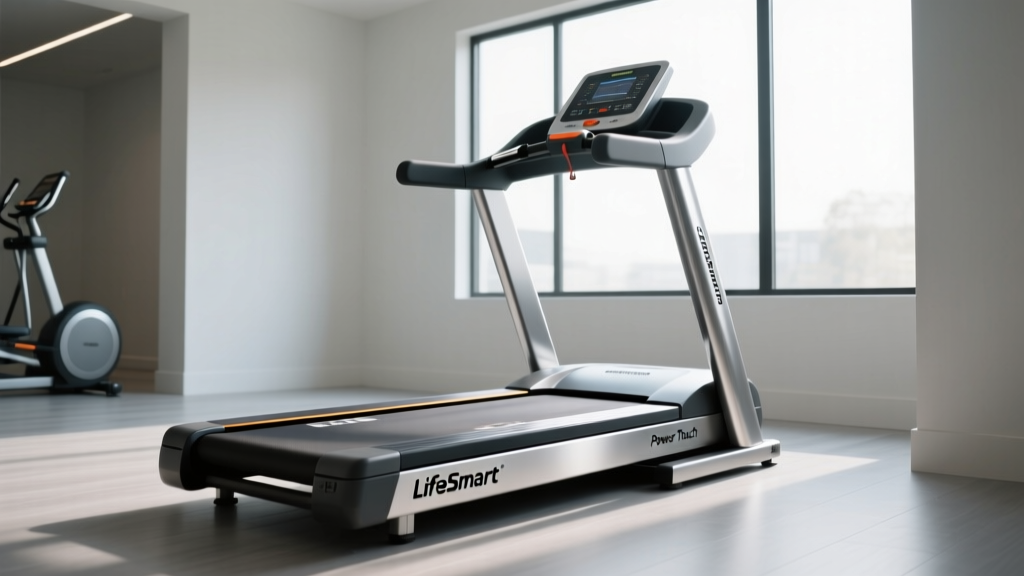
Stepping into the world of home fitness equipment can feel like learning a new language. When you start researching entry-level or secondhand cardio machines, you will inevitably encounter the LifeSmart TM4500 PowerTouch treadmill. It is a classic budget-friendly model that frequently circulates on the refurbished market in 2026. However, beginners often make a critical mistake when evaluating this machine: they look at the "Horsepower" sticker without understanding the physics of treadmill motors.
Understanding motor size is the single most important factor in determining whether a treadmill will last you three months or three years. In this step-by-step beginner’s guide, we are going to demystify treadmill horsepower, using the LifeSmart TM4500 PowerTouch as our primary case study to show you exactly how to evaluate motor specs, avoid catastrophic failure, and match a machine to your specific biomechanics.
💡 Beginner’s Rule of Thumb: Never buy a treadmill based on "Peak HP." Peak Horsepower is a marketing metric measured in a laboratory with zero weight on the belt. Always look for CHP (Continuous Duty Horsepower), which measures the motor’s actual sustained output under a real human load.Step 1: Understanding the HP vs. CHP Alphabet Soup
To properly evaluate any cardio machine, you must first understand the difference between the two primary motor ratings used by manufacturers.
Peak Horsepower (The Marketing Gimmick)
Peak HP represents the absolute maximum power the motor can generate for a fraction of a second before overheating or tripping a breaker. Budget brands often use 1.5 HP, 2.0 HP, or even 2.5 HP Peak ratings on their boxes to make entry-level machines sound more robust than they are. According to Consumer Reports’ treadmill buying guide, relying on Peak HP is one of the most common pitfalls for first-time buyers.
Continuous Duty Horsepower (The Reality Check)
CHP is the measure of power a motor can sustain indefinitely during a standard workout session. A motor rated at 2.5 HP Peak might only have a 1.0 CHP rating. If you weigh 180 pounds and attempt to jog, a 1.0 CHP motor will strain, overheat, and eventually burn out its internal copper windings.
Step 2: Case Study — The LifeSmart TM4500 PowerTouch Motor
Let’s apply this knowledge to our case study. The LifeSmart TM4500 PowerTouch is generally equipped with a 1.5 HP Peak motor. But what does that mean in real-world terms for your home gym?
In engineering terms, a 1.5 HP Peak DC motor typically translates to roughly 0.75 to 1.0 CHP. This specific motor profile dictates exactly who this treadmill is built for:
- Ideal User: A person weighing under 150 lbs who plans to walk at speeds between 2.0 mph and 3.5 mph on a flat incline.
- At-Risk User: Anyone over 175 lbs, or anyone attempting to jog or run at speeds exceeding 4.5 mph.
The Hidden Danger of DC Motors at Slow Speeds
Here is a piece of industry expertise that most generic buying guides miss. Home treadmills like the TM4500 use Permanent Magnet DC (Direct Current) motors. These motors rely on a small cooling fan attached directly to the motor’s flywheel shaft.
When you run at 6.0 mph, the fan spins rapidly, pulling air across the motor’s heat sink. However, if you are recovering from an injury and walking slowly at 1.5 mph on a steep incline, the motor is working incredibly hard (high amp draw), but the fan is barely spinning. This creates a thermal bottleneck. Even if the user is lightweight, the lack of airflow combined with high torque demands can cause the motor’s internal thermal cutoff switch to trip, or worse, melt the insulation on the stator windings.
Step 3: The Motor Sizing Matrix (What Do You Actually Need?)
If the LifeSmart TM4500 PowerTouch’s motor profile doesn’t match your needs, you need to know what specs to look for in an upgrade. Use the matrix below to find your minimum required Continuous Duty Horsepower (CHP) based on your primary activity and body weight.
| Primary Activity | User Weight: Under 150 lbs | User Weight: 150 - 200 lbs | User Weight: 200 - 250+ lbs |
|---|---|---|---|
| Walking (Under 4.0 mph) | 1.5 CHP | 2.0 CHP | 2.5 CHP |
| Jogging (4.0 - 6.0 mph) | 2.0 CHP | 2.5 CHP | 3.0 CHP |
| Running (6.0+ mph) | 2.5 CHP | 3.0 CHP | 3.5 - 4.0 CHP |
Note: If you are purchasing a refurbished entry-level machine with a 1.0 CHP equivalent (like the TM4500), you must strictly adhere to the walking category and keep user weight under 150 lbs to ensure longevity.
Step 4: How to Stress-Test a Budget Treadmill Motor
Whether you are inspecting a used LifeSmart TM4500 PowerTouch on Facebook Marketplace or testing a new budget model in a showroom, follow this step-by-step stress test to evaluate the motor’s health and PWM (Pulse Width Modulation) controller response.
- The Dead-Start Test: Stand on the side rails, start the machine at 1.0 mph, and step onto the belt. A healthy motor will maintain its RPM without a noticeable "hesitation" or "stutter" when your full weight hits the deck. If the belt jerks, the motor is struggling to overcome static friction, indicating worn carbon brushes or a failing lower control board.
- The Incline Amp-Draw Simulation: Set the treadmill to a 5% incline and walk at 2.5 mph. Listen to the motor housing. You should hear a smooth, consistent hum. If you hear a high-pitched whining or a rhythmic clicking, the motor bearings are shot.
- The Belt Friction Check: A dry treadmill belt forces the motor to work up to 30% harder, drawing excess amps that fry the controller’s MOSFETs. Slide your hand under the belt; it should feel slightly slick with silicone lubricant. If it feels dry or gritty, the motor is likely suffering from chronic over-amping.
4 Warning Signs Your Treadmill Motor is Failing
Treadmill motors rarely die without warning. According to physical therapy and biomechanics experts, such as those publishing research on treadmill gait kinematics via the National Institutes of Health, an inconsistent belt speed can alter your natural stride and lead to joint injuries. Watch out for these four mechanical red flags:
⚠️ Critical Warning Signs:- The Ozone Smell: A sharp, metallic scent (like burning electrical tape) near the motor hood means the copper windings are overheating and the enamel insulation is melting.
- Belt Hesitation: If the belt stutters every time your heel strikes the deck, the motor lacks the continuous torque to handle your stride length.
- Thermal Shutdowns: If the machine abruptly stops after 15-20 minutes of use but works again after an hour of cooling, the internal thermal breaker is tripping.
- Error Code E1 or E2: On most budget control boards, these codes indicate a communication failure between the PWM controller and the motor’s RPM sensor, often caused by a dying motor drawing erratic voltage.
The Economics of Motor Replacement in 2026
Beginners often assume that if a budget treadmill motor dies, they can simply swap it out. In 2026, the economics of repairing entry-level machines like the LifeSmart TM4500 PowerTouch are rarely in your favor.
A standard 130VDC or 180VDC replacement treadmill motor costs between $130 and $190. If the motor failure was caused by a short circuit, it likely took the lower control board with it, adding another $70 to $110 to the bill. With a total repair cost hovering around $250 to $300, and the secondhand market value of a TM4500 sitting around $125, a motor burnout is effectively a total loss. This is exactly why understanding CHP requirements before you buy is the most financially sound decision you can make.
Final Verdict for Beginners
The LifeSmart TM4500 PowerTouch treadmill serves as a perfect educational baseline for understanding entry-level cardio equipment. It is a machine built for light, casual walking for smaller individuals. By looking past the "Peak HP" marketing stickers and focusing entirely on Continuous Duty Horsepower, user weight limits, and proper belt lubrication, you can protect your joints, safeguard your wallet, and ensure your home gym is built on a foundation of reliable engineering.
For more in-depth reviews on commercial-grade motors and heavy-duty cardio equipment, explore our comprehensive FitGearPulse Cardio Buying Guides.
More gear to consider
All reviews
Upgrading From ProForm Treadmill Older Models: Stair Climber Guide

Under Desk Treadmill Office Review: Trends & Lubricating Sole F80 Treadmill
How to Start a Treadmill: Walking Pad vs Full-Size Comparison 2026

Rowing Buying Guide & Technique: Lubrication for Treadmill Belt Care

Under Desk Treadmill Review: Care Tips & 3.0 HP Treadmill Myths