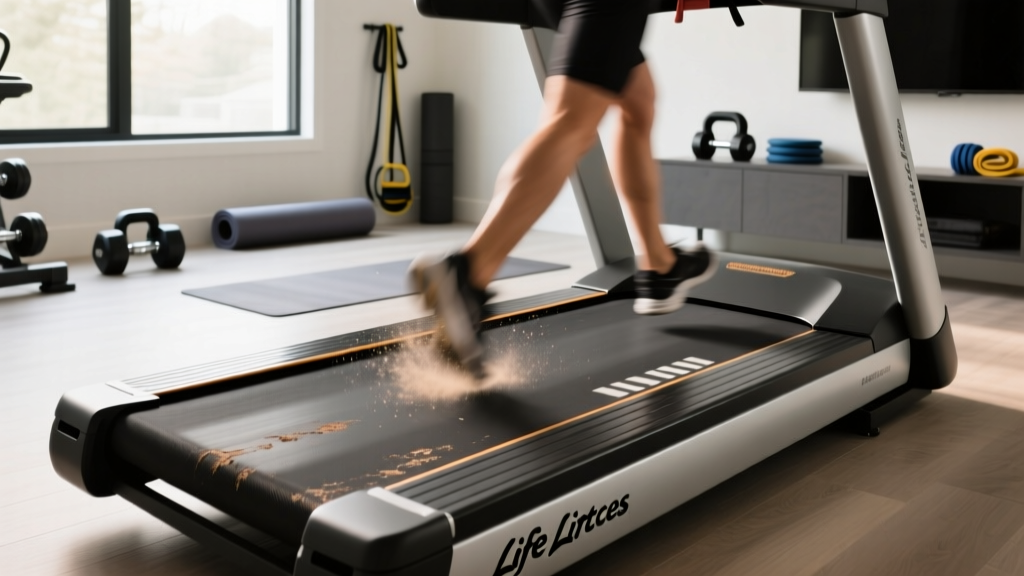
Life Fitness Integrity Treadmill Belt Maintenance & Cost Analysis
Discover the true cost of Life Fitness Integrity treadmill belt maintenance. We break down lubrication myths, DIY vs. pro service, and 5-year budgets.

The Lubrication Myth: Understanding the Integrity Series Deck
When investing in a premium light-commercial machine like the Life Fitness Integrity treadmill, owners often default to generic maintenance advice found on fitness forums. The most pervasive and damaging myth? The idea that you must routinely spray silicone lubricant under the running belt. As of 2026, with replacement parts for commercial-grade cardio equipment seeing a 12% price increase due to supply chain shifts in phenolic resins and urethane, misunderstanding your machine's specific deck system can lead to catastrophic financial waste.
The Life Fitness Integrity series utilizes a proprietary FlexDeck shock absorption system paired with a low-friction, pre-impregnated running belt and a wax-coated reversible deck. According to the Life Fitness Owner Resources and official service manuals, these specific belts do not require routine liquid silicone lubrication. In fact, introducing aftermarket silicone sprays to an Integrity treadmill causes the belt to hydroplane. When the belt slips, the natural user reaction is to tighten the rear roller bolts to compensate. This over-tensioning creates massive lateral friction, spiking the amp draw on the 3.0 HP or 4.0 HP continuous-duty motor and eventually frying the MOSFETs on the lower motor control board (MCB).
⚠️ CRITICAL WARNING: Never apply 100% silicone spray to a factory-installed Life Fitness Integrity belt. Over-lubrication is the leading cause of premature motor and control board failure in light-commercial treadmills, voiding your warranty and resulting in $600+ in unnecessary repair bills.5-Year Budget Breakdown: Maintenance vs. Neglect vs. Over-Lubrication
To truly understand the value of proper treadmill belt maintenance, we must look at the long-term financial impact. Below is a 5-year cost projection comparing three common ownership behaviors for a Life Fitness Integrity treadmill in a home or boutique studio environment.
| Ownership Scenario | Action Taken | 5-Year Estimated Cost |
|---|---|---|
| Scenario A: Informed DIY | Routine cleaning, tension checks, deck flip at Year 3. | $0.00 |
| Scenario B: Neglect | No cleaning. Dust and rubber debris build up, causing friction burns on the deck. | $1,050.00 (New belt: $450 + New deck: $350 + Labor: $250) |
| Scenario C: Over-Lubrication | Monthly silicone spraying leads to slipping, over-tensioning, and motor burnout. | $1,150.00 (New MCB: $400 + Motor: $500 + Labor: $250) |
The data is clear: informed, preventative maintenance yields a 100% return on investment by preserving the factory components. As noted by equipment repair experts at the Treadmill Doctor's Lubrication Guidelines, commercial and light-commercial belts are engineered to run dry or with factory-applied wax; adding liquid silicone disrupts the engineered coefficient of friction.
The Value-Driven Maintenance Protocol
Rather than wasting money on unnecessary lubricants, your budget is better spent on a few basic tools and 20 minutes of monthly maintenance. Here is the exact protocol to maximize the lifespan of your Integrity series treadmill.
Step 1: Deep Cleaning the Belt Edges (Monthly)
The true enemy of the Integrity treadmill belt is not a lack of oil, but the accumulation of micro-debris. Dust, pet hair, and microscopic rubber particles roll up into small ' pills' along the edges of the belt. Over time, these get forced between the belt and the phenolic deck, acting like sandpaper.
- Tool Required: Microfiber cloth, mild dish soap, water.
- Procedure: Dampen the cloth (do not soak it) and wipe down the entire surface of the belt. Use a dry cotton swab or a soft-bristled brush to gently clean the seams where the belt meets the side motor hood and rear roller.
- Cost: $0.00
Step 2: Checking Belt Tension and Alignment (Quarterly)
A properly tensioned belt ensures the motor operates within its optimal amperage range. A healthy Integrity treadmill running at 6.0 mph with a 175 lb user should draw between 4 to 6 amps. If friction increases, it spikes to 10-14 amps, triggering thermal cutoffs.
- Stand on the side rails and start the treadmill at 2.0 mph.
- Walk onto the belt and intentionally drag your feet to create resistance.
- If the belt slips but the front motor pulley continues to spin, the belt is too loose.
- Locate the rear roller adjustment bolts at the very back of the machine (usually requiring a 6mm or 8mm Allen wrench).
- Turn both the left and right bolts clockwise by exactly one-quarter turn.
- The Lift Test: With the machine off, reach under the center of the belt. You should be able to lift it exactly 2 to 3 inches off the deck. Any higher, and it is too loose; any lower, and you are straining the motor bearings.
Step 3: Flipping the Reversible Deck (Year 3 or 4)
This is the most overlooked value-saver in the Life Fitness ecosystem. The Integrity series features a reversible MDF/phenolic deck. After roughly 3,000 to 5,000 miles of use, the primary side of the deck will develop microscopic wear grooves. Instead of buying a new deck for $350, you can flip it.
Pro-Tip for Deck Flipping: Before removing the side rails and motor hood to flip the deck, take a photo of the wiring harness connections. While flipping the deck is mechanically straightforward, misrouting the static discharge wire upon reassembly can lead to console glitches and erratic heart rate monitor readings.
ROI Analysis: DIY vs. Professional Service Contracts
Many boutique studios and high-net-worth home gym owners opt for annual Preventative Maintenance (PM) contracts. In 2026, a commercial PM contract typically costs between $175 and $250 per visit, with providers recommending two visits per year.
For Home Users: Signing a $500/year PM contract for a single Integrity treadmill is a poor allocation of capital. The tasks performed by a technician—vacuuming the motor hood, checking the drive belt tension, and wiping down the deck—are easily replicated by the owner using the protocol above. The 5-year savings of DIY maintenance over a PM contract is roughly $2,500.
For Boutique Studios (3+ Units): The ROI shifts. If you operate a fitness studio with multiple Integrity treadmills running 8+ hours a day, the wear rate accelerates exponentially. In this scenario, paying a certified technician $200 per unit annually to perform deep motor vacuuming, inspect the drive motor brushes, and run diagnostic amp-draw tests via the engineering mode console is a valid insurance policy against catastrophic downtime.
Summary Checklist for Integrity Owners
Protecting the value of your Life Fitness Integrity treadmill requires discarding outdated maintenance myths and embracing data-driven care. Keep this checklist handy:
- Stop Lubricating: Trust the factory pre-impregnated belt and wax deck.
- Start Cleaning: Remove edge debris monthly to prevent phenolic deck scratching.
- Monitor Amp Draw: Use the console's hidden engineering mode (usually accessed by holding 'Pause' and the 'Faster' arrow simultaneously) to check motor amp draw. If it consistently exceeds 8 amps with no user on the belt, inspect the drive belt and rear roller bearings.
- Plan for the Flip: Mark your calendar for Year 3 to flip the reversible deck and double its lifespan.
By treating your treadmill as a precision piece of engineering rather than a generic consumer appliance, you ensure that your investment continues to deliver premium biomechanics and joint protection for a decade or more.
More gear to consider
All reviews
Yosuda Treadmill Review: Under Desk Office Value in 2026

Under Desk Treadmill Value: Treadmill Walking Workouts for Weight Loss

Treadmill Motor Size Guide: York Millennium Treadmill HP Analysis
Treadmill Belt Care & Ladder Treadmill Machine Space Layouts

Fixing Your Treadmill for CrossFit: 6 Common WOD Mistakes & Solutions
