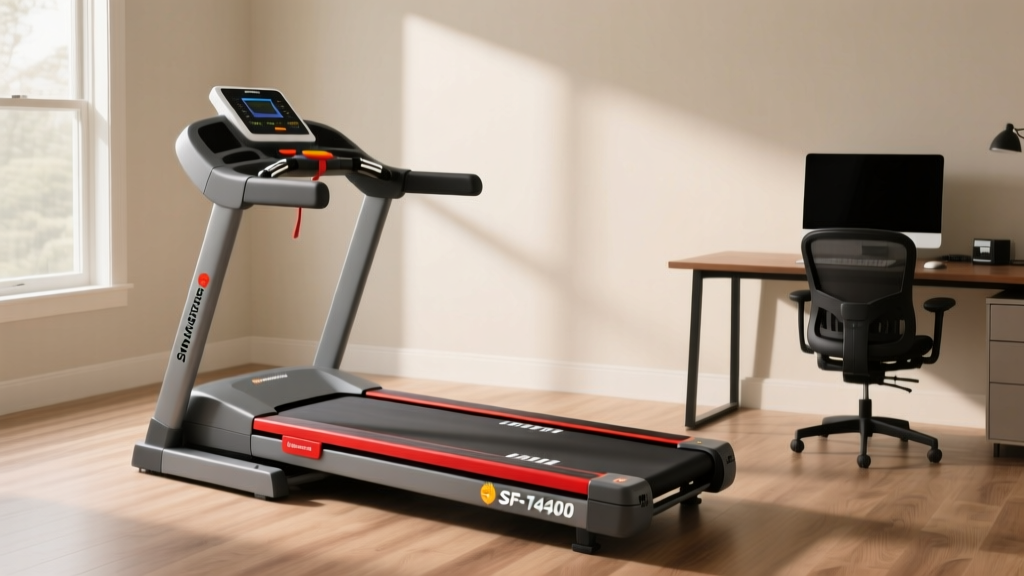
Landice L9 Treadmill Belt Maintenance and Lubrication Guide
Learn how to properly maintain, tension, and lubricate your Landice L9 treadmill belt to extend motor life and ensure a smooth, quiet workout experience.

The Landice L9 remains one of the most formidable premium home treadmills on the market in 2026, with retail configurations ranging from $7,200 to over $8,900 depending on the console package. At the heart of this machine is a robust 4.0 HP continuous-duty motor and a commercial-grade frame designed to last a lifetime. However, even the most meticulously engineered drive system is vulnerable to the single most destructive force in treadmill mechanics: belt friction. Proper Landice L9 treadmill belt maintenance and lubrication is not just about preserving a quiet workout; it is a critical intervention to protect the motor controller, prevent static discharge, and ensure the deck's phenolic coating remains intact.
Understanding the Landice L9 Belt and Deck Interface
The Landice L9 features an expansive 22-inch by 60-inch running surface. This multi-ply belt glides over a high-density fiberboard deck coated with a specialized low-friction resin. When the belt is properly lubricated, the coefficient of friction is minimized, allowing the 4.0 HP motor to operate at a low, efficient amp draw. According to equipment repair specialists at Treadmill Doctor, a dry belt can increase the motor's amp draw by up to 30%, forcing the Pulse Width Modulation (PWM) motor controller to work overtime. Over months of use, this excess heat degrades the internal wiring, eventually leading to a catastrophic controller failure—a repair that can cost upwards of $400 in parts and labor.
The 300-Mile Lubrication Interval
Landice engineering specifies that the running belt should be lubricated every 300 miles or every three months, whichever comes first. If you are using the L9 Executive or Signature touchscreen console, you can track exact odometer readings in the user settings or maintenance menu. Do not rely on guesswork. A 150-pound user running at 6.0 mph generates significantly more friction and heat than a 200-pound user walking at 3.0 mph, but the 300-mile baseline remains the safest threshold for the proprietary liquid silicone to maintain its viscosity.
Diagnostic Signs of a Dry Belt
- Footfall Hesitation: A momentary stutter or slip when your foot strikes the deck, indicating the motor is struggling to pull the belt under load.
- Static Shocks: Mild electrical shocks when touching the handrails. Friction generates static electricity; a well-lubricated belt acts as a grounding conduit, whereas a dry belt allows charge buildup.
- Excessive Heat: The belt feels unusually warm to the touch immediately after a 30-minute run.
- Motor Whine: A higher-pitched electrical whine from the motor hood, signaling high amp draw.
Step-by-Step Silicone Lubrication Protocol
Never use household oils, aerosol sprays, or petroleum-based products. These will dissolve the phenolic deck coating and ruin the belt's rubber backing. You must use a 100% pure liquid silicone treadmill lubricant (Landice sells proprietary bottles, but high-grade third-party 100% silicone liquids are equally effective).
⚠️ CRITICAL WARNING: Do not use WD-40 or silicone aerosol sprays. Aerosols contain propellants and petroleum distillates that will permanently degrade the Landice deck surface and cause the belt to delaminate.- Power Down and Clean: Unplug the L9 from the wall. Use a vacuum with a crevice tool to remove dust, hair, and debris from the edges of the belt and the motor hood vents.
- Position the Belt: Mark the current position of the belt seam with a piece of painter's tape on the side rail. This helps you return the belt to the exact same orientation for even wear distribution.
- Lift and Apply: Reach under the center of the belt on the left side and lift it just enough to expose the deck. Squeeze exactly 0.5 ounces (about half the provided bottle) of liquid silicone in a zig-zag pattern from the front roller to the rear roller.
- Repeat on the Right: Move to the right side, lift the belt, and apply the remaining 0.5 ounces of silicone.
- Distribute the Lubricant: Plug the machine back in. Start the treadmill at 1.0 mph. Walk on the belt for two minutes, deliberately stepping on the left and right edges to press the silicone evenly across the entire 22-inch width of the deck.
- Wipe the Excess: Stop the machine and use a dry microfiber cloth to wipe any silicone that may have squeezed out onto the side rails or motor cover. Excess silicone on the rails can cause foot slippage.
Belt Tensioning and Alignment: The 1/4 Turn Rule
Lubrication reduces friction, but improper tension causes entirely different failure modes. If the belt is too loose, it will slip during heavy foot strikes. If it is too tight, it will place immense lateral pressure on the front and rear roller bearings, eventually causing them to seize, and it will stretch the secondary drive belt connecting the motor to the front roller.
To adjust the tension on the Landice L9, locate the two rear roller adjustment bolts at the very back of the treadmill. You will need the 3/8-inch Allen wrench provided in your original Landice owner's kit.
The Lift Test and The Stomp Test
According to guidelines referenced in Consumer Reports treadmill maintenance guides, proper tension is a balance between grip and bearing preservation. Perform these two tests to calibrate your belt:
- The Lift Test: With the machine off, reach under the center of the belt and lift. You should be able to raise the belt exactly 2 to 3 inches off the deck. If it lifts higher than 3 inches, it is too loose. If you cannot break the 2-inch plane, it is over-tensioned.
- The Stomp Test: Turn the treadmill on to 2.0 mph. Step onto the side rails, then forcefully stomp your foot onto the center of the moving belt. The belt should not hesitate or slip under your foot. If it does, tighten both rear bolts by exactly 1/4 turn clockwise. Re-test. Never tighten more than 1/4 turn at a time.
Troubleshooting Matrix: Belt and Deck Failure Modes
| Symptom | Diagnostic Cause | Corrective Action |
|---|---|---|
| Belt drifts consistently to the left | Rear roller misalignment; left side is looser than the right. | Turn left rear bolt 1/4 turn clockwise, or right bolt 1/4 turn counter-clockwise. |
| Fraying or curling on belt edges | Chronic misalignment or over-tensioning causing edge friction against the rail caps. | Realign roller. Inspect deck edges for burrs. Replace belt if structural damage is visible. |
| High-pitched squealing from motor hood | Over-tensioned running belt straining the secondary drive belt or motor bearings. | Loosen both rear adjustment bolts by 1/4 turn counter-clockwise. Re-test with Lift Test. |
| Visible groove worn into the deck center | Normal wear over 3-5 years; phenolic coating has been breached. | Flip the reversible Landice deck (requires removing side rails and belt). See Landice Support for deck reversal instructions. |
Deck Inspection and The Reversible Advantage
One of the distinct advantages of the Landice L9 architecture is the reversible deck. While standard treadmill decks must be discarded once a wear groove forms in the center (where 80% of foot strikes occur), the Landice deck can be unbolted, flipped 180 degrees, and reinstalled, effectively giving you a brand-new running surface. This is typically required every 4 to 6 years, depending on user weight and mileage.
During your bi-annual deep maintenance, loosen the belt entirely, slide it off the deck, and run your bare hand across the center of the deck surface. If you feel a distinct physical dip or groove deeper than 1/16th of an inch, or if your fingernail catches on exposed raw wood fiber, the phenolic coating has failed. Continuing to run on a breached deck will act like sandpaper on the underside of your belt, destroying the belt's cotton/polyester backing within weeks and drastically spiking motor amp draw. If the coating is breached, it is time to flip the deck or order a replacement from Landice direct.
Preserving Your Investment
Maintaining the Landice L9 treadmill belt is a straightforward process that requires less than 15 minutes every quarter. By strictly adhering to the 300-mile liquid silicone interval, utilizing the 1/4 turn tensioning rule, and monitoring the deck surface for coating breaches, you ensure that the L9's 4.0 HP motor and commercial-grade frame operate exactly as engineered. Consistent maintenance not only preserves the biomechanical feel of your run but safeguards the electronic components that make the L9 a flagship staple in home fitness.
More gear to consider
All reviews
Treadmill Haul Away: Top Compact Cardio Swaps for Small Spaces

Pro NRG Treadmill Noise vs Quiet Cardio: Step-by-Step Guide

Office Treadmill Review: Care vs NordicTrack X24 Treadmill Assembly

NordicTrack 700 Treadmill Review: Troubleshooting & Buying Mistakes

Deer Run Treadmill Review & Air Bike vs Assault Bike Value Guide