
Horizon Fitness T101 Treadmill vs. 2026 Compact Portable Cardio Trends
We analyze 2026 compact portable cardio trends, comparing ultra-compact walking pads to traditional folding models like the Horizon Fitness T101 treadmill.

The 2026 Shift: Traditional Folding vs. Ultra-Compact Cardio
The home fitness equipment market has undergone a radical spatial recalibration over the last five years. As urban real estate premiums skyrocket and remote work solidifies its place in the 2026 economy, the average home gym footprint has shrunk. According to recent industry data aggregated by RunRepeat's fitness statistics reports, over 68% of home fitness buyers now cite 'available floor space' as their primary purchasing constraint, superseding even price and digital connectivity.
This macro-trend has sparked a fierce market war between legacy folding equipment and the new wave of ultra-compact portable cardio options. At the center of this debate is the budget-friendly folding staple: the Horizon Fitness T101 treadmill. Long considered the gold standard for entry-level home runners, the T101 now faces intense competition from sub-40-pound walking pads, foldable magnetic rowers, and portable air bikes. This trend report dissects the engineering, biomechanics, and real-world utility of these competing categories to help you optimize your 2026 micro-gym.
2026 Market Snapshot: The Space Premium
- Average Urban Apartment Size: 715 sq. ft. (down 4% from 2020)
- Traditional Folding Treadmill Footprint: ~13.5 sq. ft. (active)
- Ultra-Compact Walking Pad Footprint: ~4.5 sq. ft. (active)
- Consumer Priority Shift: 82% of buyers under 35 prefer equipment that can be stored under a bed or sofa.
Benchmarking the Horizon Fitness T101 Treadmill in a Shrinking Market
To understand the portable cardio revolution, we must first benchmark against the traditional folding paradigm. The Horizon Fitness T101 treadmill remains a dominant force in the $600 to $700 price bracket. Its engineering is built around a 3.0 CHP motor, a 20-inch by 55-inch running belt, and a 0-10% motorized incline.
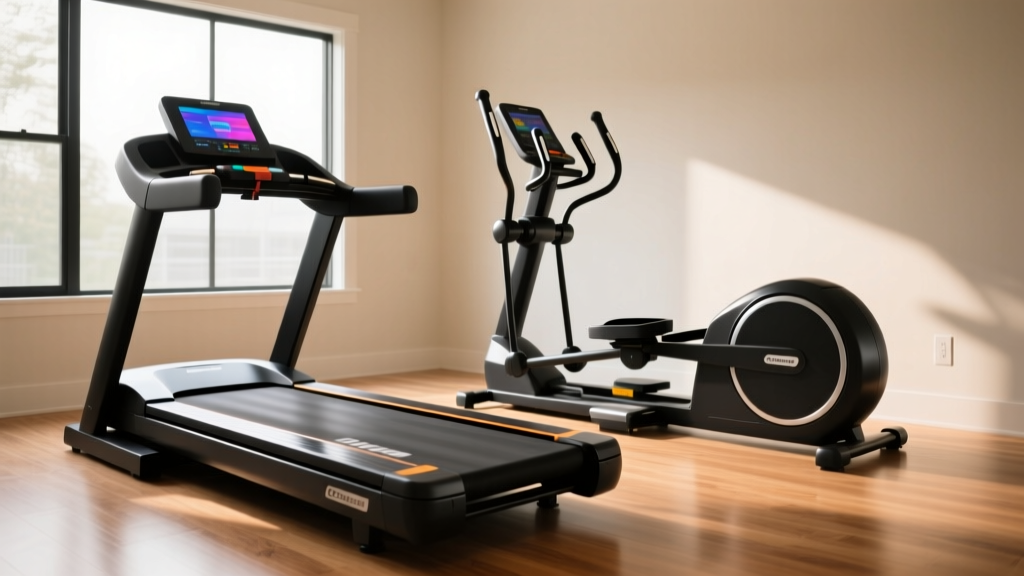
However, the term 'folding' is often misunderstood by consumers. When the T101's deck is folded up against the console, the machine's footprint shrinks from roughly 70 inches by 28 inches to about 46 inches by 28 inches. While this reclaims some floor space, the machine still commands a massive 63-inch vertical clearance and weighs approximately 130 pounds. It is not truly portable; it is merely storable. Moving the T101 from a living room to a bedroom requires tilting it on its transport wheels, a maneuver that is cumbersome on thick carpets and impossible over thresholds without two people.
Despite its spatial demands, the T101 offers biomechanical advantages that portable options struggle to replicate. The 55-inch belt length accommodates a full running stride, and the 3.0 CHP motor provides the continuous torque necessary to sustain 10 MPH speeds without overheating. For serious runners, these specs are non-negotiable.
The Rise of True Portable Cardio: 2026 Market Contenders
The true 'portable' category is defined by equipment weighing under 60 pounds, requiring zero assembly upon unboxing, and featuring a stored footprint of less than 5 square feet.
1. Walking Pads and Under-Desk Treadmills
Brands like WalkingPad, UREVO, and Sunny Health have dominated the portable treadmill sector. The 2026 iteration of these devices features 180-degree folding hinges, brushless 1.5 HP to 2.0 HP motors, and aluminum alloy frames that weigh as little as 38 pounds. They are designed exclusively for NEAT (Non-Exercise Activity Thermogenesis) maximization—allowing users to accumulate 10,000 steps while working at a standing desk. However, they lack incline capabilities, side handrails (in folded mode), and the belt length required for running.
2. Compact Rowers and Portable Air Bikes
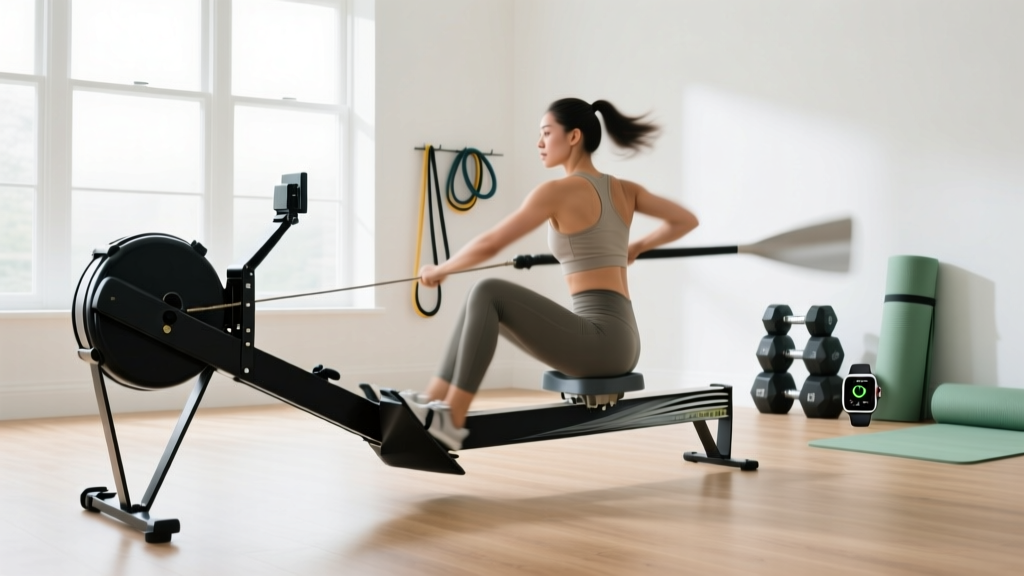
For high-intensity interval training (HIIT), portable cardio has pivoted toward magnetic resistance rowers that fold vertically or separate into two pieces, and compact air bikes. While heavier than walking pads, their active footprints are remarkably small, often occupying just a 4-foot by 2-foot rectangle during use, and they provide full-body cardiovascular engagement that treadmills cannot match.
Footprint & Performance Matrix: Legacy vs. Portable
The following data table illustrates the stark trade-offs between traditional folding treadmills and modern portable alternatives.
| Equipment Category | Active Footprint | Weight | Max Speed / Resistance | 2026 Avg. Price |
|---|---|---|---|---|
| Horizon T101 (Folding) | 16.2 sq. ft. | 130 lbs | 10 MPH / 10% Incline | $649 |
| Premium Walking Pad | 4.8 sq. ft. | 42 lbs | 7.6 MPH / 0% Incline | $499 |
| Portable Magnetic Rower | 7.5 sq. ft. | 55 lbs | 16 Magnetic Levels | $329 |
| Compact Air Bike | 6.0 sq. ft. | 95 lbs | Infinite Air Resistance | $599 |
Engineering Deep Dive: Failure Modes and Edge Cases
When evaluating compact portable cardio equipment options, consumers rarely consider the mechanical limitations imposed by miniaturization. As highlighted in Consumer Reports' treadmill buying guides, motor and deck longevity are the primary failure points in budget and portable cardio machines.
Walking Pad Motor Burnout
The most common edge case in the portable walking pad market is PWM (Pulse Width Modulation) board failure. Because walking pads feature ultra-slim decks (often less than 5 inches thick), manufacturers cannot install adequate cooling fans. When a 180-pound user walks at 4 MPH for two continuous hours, the friction between the belt and the low-density MDF deck generates immense heat. This heat transfers directly to the motor controller, eventually frying the PWM board. Expert mitigation: Limit walking pad use to 90-minute intervals and strictly adhere to monthly silicone lubrication schedules to reduce belt friction.
Folding Treadmill Hinge Shearing
Conversely, traditional folding models like the Horizon Fitness T101 treadmill suffer from structural fatigue at the folding hinge. The hydraulic cylinder that assists in lifting the 130-pound deck is rated for roughly 3,000 articulation cycles. Users who fold and unfold the machine daily will notice hydraulic fluid leaks and hinge squeaking within 24 to 36 months. Furthermore, if the deck pivot bolts are not torqued to the manufacturer's 45 Nm specification during annual maintenance, the lateral flex of running can cause bolt shearing.
The Biomechanics of Compact Cardio
Space-saving equipment forces biomechanical compromises. The American Heart Association recommends moderate-intensity aerobic activity for cardiovascular health, but the modality matters.
'While walking pads are exceptional for increasing daily step counts and combating sedentary behavior, their 43-inch belt lengths and lack of incline restrict the user to a flat, shortened stride. They cannot replicate the posterior chain activation achieved through the 10% incline walking or the cardiovascular peak achieved through running on a traditional 55-inch belt treadmill.'
If your goal is Zone 2 endurance training or marathon preparation, a portable walking pad will actively hinder your progress due to stride restriction and speed caps. However, if your goal is metabolic health, calorie expenditure during sedentary work hours, and joint-friendly movement, the portable category is vastly superior for spatial integration.
The 2026 Decision Framework: Which Category Fits Your Space?
To navigate the market, apply this practical decision matrix based on your living situation and fitness objectives:
- The Dedicated Runner (Requires Horizon T101 or larger): If you run at speeds above 6 MPH, require incline training for hiking prep, or weigh over 220 lbs, you must absorb the 16 sq. ft. footprint penalty. The 3.0 CHP motor and reinforced steel frame of a traditional folder are mandatory to prevent deck snapping and motor stalling.
- The NEAT Maximizer (Requires Walking Pad): If you work from home, live in a sub-800 sq. ft. apartment, and primarily want to offset the dangers of prolonged sitting, invest in a premium walking pad with an aluminum frame and a minimum 2.5 HP peak motor. Store it under your sofa when not in use.
- The HIIT Athlete (Requires Portable Air Bike or Rower): If you need maximum cardiovascular output in minimum time and space, bypass treadmills entirely. A compact air bike provides infinite resistance scaling, requires zero electrical outlet proximity, and can be pushed into a closet corner post-workout.
Conclusion
The 2026 cardio market is no longer a one-size-fits-all landscape. The Horizon Fitness T101 treadmill remains a highly capable, budget-friendly workhorse for users who possess the dedicated floor space and require traditional running biomechanics. However, the explosive growth of compact portable cardio equipment options proves that for the modern urban dweller, consistency trumps intensity. By matching your equipment's engineering realities to your spatial constraints and biological goals, you can build a highly effective, space-optimized cardiovascular routine without sacrificing your living room.
More gear to consider
All reviews
Infinadeck Omnidirectional Treadmill vs Standard: 2026 Buyer Guide

NordicTrack T Series 10 Treadmill vs Portable Cardio: Budget Guide

Walking Pad Review: Treadmill Belt Alignment & Top 2026 Picks
Rowing Machine Guide: Beating Life Fitness Treadmill Incline Levels
Elliptical vs Treadmill: Can You Train for a Marathon on a Treadmill?
