
Matching Motor Sizes to Different Types of Treadmills
Match continuous horsepower to different types of treadmills. A beginner's step-by-step guide to motor sizes, from walking pads to commercial rigs.

The Beginner's Guide to Treadmill Motors: Decoding the Specs
Walking into a fitness showroom or browsing online for cardio equipment in 2026 can feel like navigating a maze of technical jargon. When evaluating the different types of treadmills on the market—from ultra-compact walking pads to massive commercial-grade rigs—the most critical and frequently misunderstood specification is the motor size. Buy too little, and your machine will stutter, overheat, and die prematurely. Buy too much, and you are paying for unnecessary electricity and weight.
This step-by-step guide will demystify treadmill horsepower, teach you how to calculate your exact motor requirements, and help you avoid the most common purchasing mistakes beginners make.
💡 The Golden Rule of Treadmill Motors: Always look for Continuous Duty Horsepower (CHP), never just 'Horsepower' (HP) or 'Peak HP'. Peak HP only measures the motor's maximum output for a few seconds before it inevitably bogs down.Step 1: Demystifying the Jargon (HP vs. CHP)
Before we match motors to machines, you need to understand the terminology manufacturers use. According to testing standards highlighted by Consumer Reports, the motor is the heart of the treadmill, and its rating dictates the machine's lifespan.
- Peak Horsepower (HP): A marketing gimmick. This is the absolute maximum power the motor can generate for a split second without burning out. If a budget treadmill advertises '3.0 HP', it likely only has a 1.5 CHP motor.
- Continuous Duty Horsepower (CHP): The real metric. This is the power the motor can sustain indefinitely during a normal workout without overheating. This is the number you must base your decision on.
- Treadmill Duty (Commercial vs. Residential): Commercial motors are rated for 24/7 usage with multiple users, while residential motors are rated for 1-3 hours of daily use.
Step 2: Mapping Motor Sizes to Different Types of Treadmills
Not every user needs a massive 4.0 CHP motor. The motor size must align with the physical design and intended use case of the machine. Below is a breakdown of how motor sizes correlate with the different types of treadmills available in 2026.
| Treadmill Category | Typical Motor Size | Best Suited For | 2026 Avg. Price Range |
|---|---|---|---|
| Manual / Curved | N/A (Self-Powered) | HIIT, Sprinters, Eco-conscious users | $1,500 - $4,500 |
| Under-Desk Walking Pads | 1.0 - 1.5 HP (Peak) | Light walking, Office use (< 4 mph) | $200 - $500 |
| Light-Duty Folding | 2.0 - 2.5 CHP | Walkers, light joggers, small spaces | $600 - $1,200 |
| Heavy-Duty Residential | 3.0 - 4.0 CHP | Daily runners, marathon training, families | $1,300 - $3,500 |
| Light Commercial | 4.0 - 5.0+ CHP (AC Motor) | Apartment gyms, boutique studios | $4,000 - $8,000+ |
Step 3: Calculate Your Exact Motor Requirement
Do not just buy a 3.0 CHP machine because it is the 'standard.' Your body weight and workout intensity drastically change the amp draw on the motor. Use this step-by-step formula recommended by fitness equipment technicians to find your baseline.
The Base Requirement
- For Walking Only (under 4.5 mph): Minimum 2.0 CHP.
- For Jogging (4.5 to 7 mph): Minimum 2.5 CHP.
- For Running (7+ mph): Minimum 3.0 CHP.
The Weight Multiplier
Motor strain increases exponentially with user weight due to belt friction and deck impact. The American Council on Exercise (ACE) notes that heavier users require more torque to maintain belt speed consistency.
- If the heaviest user is under 200 lbs: Add 0 CHP.
- If the heaviest user is 200 - 250 lbs: Add 0.5 CHP to your base requirement.
- If the heaviest user is over 250 lbs: Add 1.0 CHP to your base requirement.
Example Calculation: You weigh 220 lbs and want to run at 8 mph. Your base requirement for running is 3.0 CHP. Because you weigh over 200 lbs, you add 0.5 CHP. Your absolute minimum motor size is 3.5 CHP. A machine like the Sole F80 (3.5 CHP, typically priced around $1,199) would be a perfect fit.
Step 4: Understanding Failure Modes (What Happens When You Under-Buy)
Why is it so dangerous to buy a 2.0 CHP motor for a 240 lb runner? It is not just about the machine feeling 'weak.' It is about catastrophic hardware failure. Here is what happens behind the plastic motor hood when a treadmill is underpowered:
⚠️ Common Motor & Controller Failure Modes
- Thermal Throttling & Shutdowns: When a heavy user steps on the belt, the motor requires a spike in amperage. If the motor is too small, it draws excess current, generating immense heat. The internal thermal sensor will eventually trip, shutting the machine off mid-run to prevent a fire.
- PWM Controller Burnout: The Pulse Width Modulation (PWM) board regulates power to the motor. Constant high-amp draw from an underpowered motor will fry the capacitors on the PWM board, resulting in a $200-$400 replacement bill.
- Belt Stuttering (The 'Hesitation' Effect): As your foot strikes the deck, a weak motor cannot maintain torque. The belt momentarily slows down and then jerks forward to catch up. This is a leading cause of knee and ankle injuries on budget treadmills.
Step 5: 2026 Market Realities & Pricing Expectations
The fitness equipment market has shifted significantly. In 2026, copper shortages and advanced brushless DC (BLDC) motor technology have changed the pricing landscape. Here is what you should expect to pay for reliable, continuous-duty motors:
- 2.25 CHP to 2.5 CHP (e.g., Horizon T101 or similar entry-level models): Expect to spend between $799 and $999. These are excellent for dedicated walkers and light joggers under 180 lbs.
- 3.0 CHP to 3.5 CHP (e.g., Sole F63 / Sole F80): The sweet spot for home runners. Prices range from $1,099 to $1,499. These motors feature heavy-duty flywheels that store kinetic energy, reducing the electrical load on the motor.
- 4.0 CHP and Above (e.g., NordicTrack Commercial 2450 or Peloton Tread+ equivalents): Premium home and light commercial units. Expect to invest $2,499 to $3,500+. These machines utilize advanced cooling fans and commercial-grade bearings designed for 10+ years of heavy use.
Frequently Asked Questions (FAQ)
Do I need a motorized treadmill, or will a manual one work?
Manual treadmills (especially curved models like the AssaultRunner or Technogym Skillmill) have no motor. They are powered entirely by your stride. They are phenomenal for high-intensity interval training (HIIT) and sprinting, but they are generally unsuited for steady-state, long-distance endurance training because maintaining a consistent pace requires constant, exhausting forward-leaning effort.
What is the difference between a DC and an AC motor?
Residential treadmills use Direct Current (DC) motors. They are quieter, lighter, and more energy-efficient but require cool-down periods. Commercial gym treadmills use Alternating Current (AC) motors. AC motors are heavier, louder, and more expensive, but they can run 24/7 without overheating. Unless you are opening a gym, a high-quality DC motor (3.0+ CHP) is the correct choice for your home.
How can I extend the life of my treadmill motor?
The number one killer of treadmill motors is belt friction. When the belt dries out, the friction against the deck forces the motor to work twice as hard, spiking the amp draw. Lubricate your treadmill deck with 100% silicone treadmill lubricant every 3 months (or every 130 miles). This single maintenance step can double the lifespan of your motor and PWM controller.
Final Thoughts
Choosing the right motor size is about matching the engineering of the machine to the biomechanics of your body. By ignoring deceptive 'Peak HP' marketing and focusing strictly on Continuous Duty Horsepower (CHP), applying the weight multiplier, and understanding the physical limitations of the different types of treadmills, you will secure a machine that delivers smooth, safe, and reliable workouts for years to come. Measure your space, calculate your required CHP using the formula above, and invest in a motor that won't quit when you push the pace.
More gear to consider
All reviews
Interval Treadmill Motors: 2026 HP vs CHP Comparison
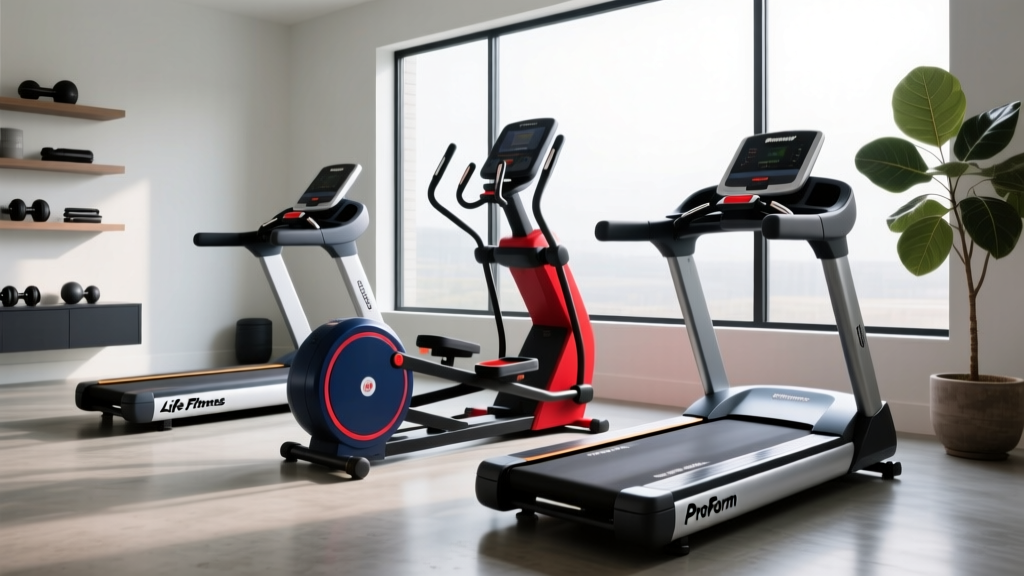
Beyond the Treadmill Image: Head-to-Head Stair Climber Comparison

Curved vs Motorized Setup: Optimizing Your Garmin Treadmill Run

How to Stop Feeling Dizzy After Treadmill: Curved vs Motorized Tips
Rowing Machine Setup: Upgrading Gold's Gym Treadmill Older Models
