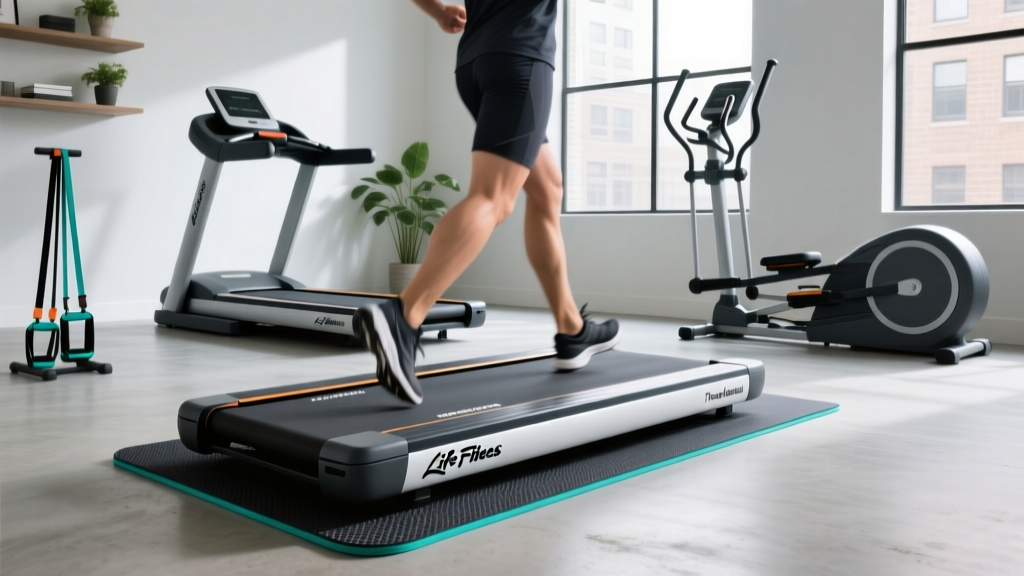
Small Space Review: Horizon Fitness 7.0 AT Studio Series Treadmill
Is the Horizon Fitness 7.0 AT Studio Series treadmill viable for small spaces? We analyze its folded footprint, layout clearance, and optimization.

The term 'folding treadmill' is often a marketing misnomer. While the deck may hinge upward, the resulting footprint rarely vanishes into a closet. For urban dwellers and apartment owners in 2026, true space optimization requires a rigorous look at operational clearance, visual weight, and structural acoustics. In this spatial design review, we dissect the Horizon Fitness 7.0 AT Studio Series treadmill to determine if its 'Studio' moniker genuinely translates to small-space viability, or if it is simply a traditional machine with a hydraulic hinge.
The Spatial Reality: Unfolded vs. Folded Footprint
To understand how any cardio equipment interacts with a room, we must look beyond the manufacturer's basic dimensions and analyze the 'swing radius' and 'stored volume.' The Horizon Fitness 7.0 AT Studio Series treadmill features a 22-inch by 60-inch running belt, necessitating a robust steel frame.
Dimensional Breakdown & Spatial Data
- Active Footprint (Unfolded): 76" L x 35" W x 63" H (approx. 18.4 sq. ft.)
- Stored Footprint (Folded): 42" L x 35" W x 72" H (approx. 10.2 sq. ft.)
- Machine Weight: 330 lbs.
- Deck Lift Mechanism: Hydraulic cylinder with manual release latch
When folded, the machine saves roughly 8 square feet of floor space. However, notice the height differential: folding the deck raises the highest point of the machine from 63 inches to 72 inches. In rooms with standard 8-foot (96-inch) ceilings, this leaves only 24 inches of overhead clearance. If you plan to place this treadmill beneath a low-hanging pendant light, a ceiling fan, or a shallow shelving unit, the folded height will create a claustrophobic and potentially hazardous spatial conflict.
Clearance, Swing Radius, and Safety Margins
A critical failure mode in small-space home gym design is ignoring the operational safety zone. According to guidelines highlighted by the Consumer Product Safety Commission (CPSC), treadmills require specific clearance to prevent severe friction-burn injuries in the event of a fall.
The CPSC Safety Zone Rule
You must maintain a minimum of 24 inches of clearance on both lateral sides and a full 78 inches (6.5 feet) of unobstructed space behind the treadmill. This means the Horizon 7.0 AT, despite its 35-inch width, actually demands an operational corridor nearly 7 feet wide and over 12 feet long. In a compact 10x12 bedroom, placing the machine in the exact center of the room is often the only way to satisfy this safety envelope, which severely limits the rest of your room's layout potential.
Layout Configurations for Compact Apartments
Integrating a 330-pound piece of fitness equipment into a multi-use living space requires strategic zoning. Based on spatial planning principles from Apartment Therapy's small-space home gym guides, here is how the 7.0 AT performs in various layouts:
| Layout Strategy | Spatial Viability | Design Considerations |
|---|---|---|
| The Alcove Nook | High | Utilizes dead space. Ensure the alcove is at least 8 feet deep to accommodate the rear safety zone. |
| Window Facing | Moderate | Great for views, but direct UV exposure degrades the running belt and fades the Studio Series matte finish. |
| Room Divider | Low | The rear of the 7.0 AT exposes the motor hood and wiring; it lacks the finished aesthetic required for 360-degree visibility. |
Visual Weight and Studio Aesthetics
Space optimization is not just about physical dimensions; it is also about 'visual weight'—how heavy an object feels to the human eye. The Horizon Fitness 7.0 AT Studio Series treadmill excels here. Unlike traditional treadmills with bulky, wrap-around plastic consoles that block sightlines, the 'Studio' design features an upright, minimalist console and a sleek, matte-black frame with subtle gray accents.
From an interior design perspective, this open-console architecture allows light to pass through the upper half of the machine. When placed in a corner, it prevents the room from feeling visually anchored or dragged down by a massive block of plastic. The integrated device holder and Bluetooth connectivity mean you do not need to add bulky external tablet mounts, preserving the clean, low-profile silhouette that makes small rooms feel larger.
Acoustic & Vibration Considerations for Multi-Family Dwellings
If you live in a condo or apartment, your spatial layout must account for vertical space—specifically, the floor below you. The 7.0 AT houses a 3.0 CHP motor. While this provides excellent torque for a 350 lb user weight capacity, it generates significant low-frequency vibration when combined with the rhythmic impact of a runner's stride.
Expert Layout Tip: Never place a folding treadmill directly on engineered hardwood or laminate flooring in a multi-story building. To mitigate structural noise transfer, you must use a high-density, 3/8-inch thick vulcanized rubber mat cut to 4x8 feet. Standard PVC 'puzzle mats' will compress under the 330-pound static weight of the Horizon 7.0 AT, rendering them useless for acoustic dampening.
Furthermore, the Mayo Clinic's guidelines on home fitness safety emphasize the importance of a stable, level surface to prevent joint strain and machine wobble. The 7.0 AT features adjustable rear leveling feet, which are crucial for older apartments where floors may slope or sag by up to half an inch over a 6-foot span.
Long-Term Spatial Maintenance & Edge Cases
When designing a space around a folding machine, you must anticipate how the machine's mechanics interact with the environment over time. Here are two edge cases specific to the 7.0 AT that impact spatial planning:
- Hydraulic Strut Degradation: If you fold the treadmill daily and store it in a room that experiences high temperature fluctuations (like a sunroom or uninsulated garage), the hydraulic gas strut can lose pressure over 3 to 5 years. A failing strut makes lowering the 150-pound deck a dangerous, two-person job. Plan your layout so you have lateral access to the release latch, rather than trapping the machine tightly between two heavy dressers.
- Dust Ingress in Vertical Storage: When folded upright, the motor hood vents face outward and upward. In carpeted rooms, this acts as a magnet for airborne dust and pet dander. If you plan to keep the machine folded for weeks at a time, your spatial layout should allow enough clearance to drape a breathable canvas cover over the unit without the cover touching the walls and scuffing the paint.
Final Verdict: Is It Truly a 'Small Space' Treadmill?
The Horizon Fitness 7.0 AT Studio Series treadmill is a masterclass in blending commercial-grade performance with residential aesthetics. Priced in the $1,299 to $1,499 range in 2026, it offers a 22" x 60" belt and a robust 3.0 CHP motor that ultra-compact walking pads simply cannot match.
However, calling it a 'small space' treadmill requires a caveat. It is not a closet-friendly, slide-under-the-bed walking pad. It is a space-conscious performance machine. It is ideally suited for a dedicated 10x12 spare bedroom, a deep architectural alcove, or a finished basement where the 10.2 square foot folded footprint can be reclaimed during the day. If your primary goal is to hide your cardio equipment completely out of sight when guests arrive, this machine's 72-inch folded height and 330-pound weight will frustrate you. But if your goal is to integrate a serious, high-capacity running machine into a small room without making the space feel like a cluttered commercial gym, the Studio Series design is currently one of the most spatially intelligent choices on the market.
More gear to consider
All reviews
What Does Watts Mean on a Treadmill? Motor Power Guide

Air Bike Assault Bike Comparison & TrueForm Runner Curved Treadmill
Crosswalk 415 Treadmill Review: Top Compact Portable Cardio Pick

Stair Climber vs. Walking on Treadmill for an Hour: Home Gym Showdown

Curved vs Motorized: Long Walk Movie Treadmill Screening Mistakes