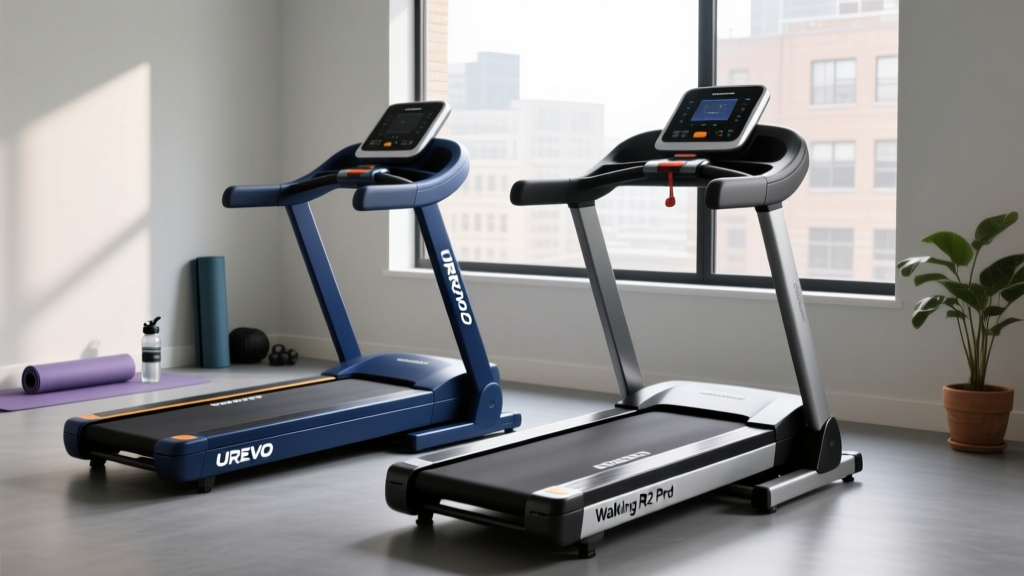
How to Stop Static on Treadmill: Setup & Buying Guide
Learn how to prevent static on treadmill machines. Compare anti-static features and follow our complete installation walkthrough for a shock-free setup.

The Hidden Hazard: Static on Treadmill Machines
There are few things more jarring during a high-intensity interval session than a sudden, 10,000-volt zap from your fitness equipment. Experiencing static on treadmill machines is a widespread issue that plagues home gyms, particularly during the dry winter months. While often dismissed as a minor annoyance, severe static buildup can actually damage sensitive console electronics, corrupt firmware, and cause users to involuntarily flinch, creating a serious fall hazard.
As a senior reviewer for FitGearPulse, I have tested dozens of cardio machines and found that static shocks are rarely random. They are the direct result of poor manufacturing choices, improper environmental conditions, and flawed installation. This comprehensive guide merges our 2026 treadmill buying guide features comparison with a complete setup and installation walkthrough to ensure your machine remains entirely shock-free.
⚡ The Physics of the Zap
Static electricity on a treadmill is generated by the triboelectric effect. As the belt rubs against the deck, electrons are stripped from one surface and transferred to the other. If the machine lacks proper grounding or the ambient air is too dry to dissipate the charge, the voltage accumulates in the user's body until they touch a grounded metal component (like the handrails), resulting in a rapid, painful discharge.
Treadmill Feature Comparison: Anti-Static Capabilities
Not all treadmills are engineered equally when it comes to static dissipation. When consulting any treadmill buying guide, features comparison charts often highlight motor size and screen resolution, but they ignore the belt composition and deck friction coefficients. Below is our 2026 comparison matrix of three top-tier models, evaluated specifically on their anti-static engineering.
| Feature / Model | Sole F80 (2026 Ed.) | NordicTrack 1750 | Horizon 7.4 |
|---|---|---|---|
| Belt Material | 2-Ply Polyurethane (PU) | Urethane-Coated | Standard PVC |
| Deck System | Phenolic Resin (Low Friction) | Cushion Flex | Heavy-Gauge Steel |
| Static Risk Profile | Low | Low | Moderate |
| Grounding Setup | 3-Prong Heavy Duty | Integrated Chassis Ground | Standard 3-Prong |
| Price Range | $1,199 - $1,299 | $1,599 - $1,799 | $899 - $999 |
Expert Synthesis: Polyurethane (PU) belts inherently generate less triboelectric charge than raw Polyvinyl Chloride (PVC) belts. Furthermore, phenolic resin decks, like those found on the Sole F80, create a naturally slick surface that reduces the friction required to strip electrons. If you live in an arid climate or a region with harsh winters, investing in a PU-belt model is your first line of defense.
Complete Setup & Installation Walkthrough
Even a premium treadmill with a urethane belt will deliver static shocks if installed incorrectly in a dry, ungrounded environment. Follow this precise, step-by-step installation walkthrough to guarantee a shock-free setup.
Step 1: Environmental Baseline & Humidity Control
Static electricity thrives in dry air. Moisture in the air acts as a natural conductor, allowing micro-charges to dissipate harmlessly before they accumulate. According to the Environmental Protection Agency (EPA), maintaining proper indoor humidity is critical for both health and electronics safety.
- Target Humidity: Keep your home gym between 40% and 50% relative humidity.
- Action: Install a digital hygrometer in the room. If levels drop below 35% (common in winter), run a large-capacity evaporative humidifier during your workout.
Step 2: Electrical Grounding Verification
Never assume a wall outlet is properly grounded, especially in older homes or finished basements. The treadmill's 3-prong plug is designed to route static charge safely into the earth.
- Purchase a $10 receptacle tester (outlet tester) from any hardware store.
- Plug it into the dedicated 20-amp circuit you plan to use for the treadmill.
- Verify the lights indicate "Correct Wiring." If it shows "Open Ground," the static charge has nowhere to go but through you. Hire a licensed electrician to install a proper ground wire before proceeding.
Step 3: Anti-Static Mat Placement
Placing a treadmill directly on synthetic carpet is a recipe for static buildup. The friction between the machine's leveling feet and the carpet fibers generates an ambient charge.
Pro Tip: Do not use cheap, recycled rubber horse stall mats. They can sometimes act as insulators. Instead, purchase a specialized 3/8-inch thick PVC equipment mat designed specifically for indoor fitness. This creates a physical barrier and dampens vibration without trapping electrical charge.Step 4: Belt Tension Calibration
Over-tightening the running belt is a leading cause of static on treadmill decks. A belt that is too tight presses aggressively into the deck, exponentially increasing friction and heat.
- The Lift Test: With the machine off, reach under the center of the belt and lift. You should be able to raise it exactly 2 to 3 inches off the deck.
- Adjustment: If it barely lifts, use the provided Allen key to loosen the rear roller bolts by exactly one-quarter turn counter-clockwise on each side until the 2-3 inch clearance is achieved.
Step 5: Proper Lubrication Protocol
Friction is the enemy. The Mayo Clinic notes that regular maintenance of fitness equipment is essential for safe, long-term use. For treadmills, this means lubrication.
WARNING: Never use WD-40, petroleum jelly, or household silicone sprays. These will melt the belt backing and void your warranty. You must use 100% pure liquid silicone treadmill lubricant. Apply 15ml under the belt, directly onto the deck, once every 150 miles or every 3 months.
Troubleshooting Edge Cases: When You Still Feel a Shock
If you have followed the buying guide features comparison, selected a PU-belt model, and completed the installation walkthrough, but you are still experiencing static on treadmill components, consider these advanced edge cases:
1. Worn Motor Brushes
Treadmill DC motors use carbon brushes to conduct electricity to the armature. As these brushes wear down (typically after 3 to 5 years of heavy use), they can create excessive electrical arcing inside the motor housing. This electromagnetic interference (EMI) can sometimes manifest as a static-like tingling on the metal handrails. If your treadmill is out of warranty and you suspect brush wear, consult a certified technician for a multimeter continuity test on the motor.
2. User Apparel and Footwear
Sometimes the machine isn't the primary culprit; you are. Running in 100% synthetic moisture-wicking shirts, nylon shorts, and wool socks creates a massive triboelectric charge on your body. Furthermore, wearing shoes with highly insulating EVA foam soles prevents your body from naturally grounding through the machine's deck. Try switching to cotton-blend workout apparel or running barefoot on the belt (if safe and hygienic) to see if the static dissipates.
3. Ground Loop Interference
If your treadmill is plugged into the same circuit as a heavy appliance (like a refrigerator or chest freezer), the grounding path may be compromised by electrical noise. The American Heart Association recommends dedicating specific, quiet spaces for cardiovascular health, which extends to the electrical environment. Ensure your treadmill is on a dedicated 20-amp breaker with no other major appliances sharing the ground line.
Final Verdict
Eliminating static on treadmill machines requires a holistic approach. It starts at the point of purchase—prioritizing polyurethane belts and phenolic decks over cheaper PVC alternatives—and concludes with a meticulous installation walkthrough that addresses humidity, grounding, and belt tension. By treating your treadmill not just as a piece of cardio equipment, but as an integrated electromechanical system, you ensure a safer, more comfortable, and entirely shock-free workout experience for years to come.
More gear to consider
All reviews
Office Under Desk Treadmill Review: Elliptical Workout vs Treadmill

Can You Walk on a Curved Treadmill? 2026 Belt Maintenance Trends

NordicTrack C2300 Treadmill vs Curved Manual: Which Wins?
Compact Professional Treadmills: Small Space Folding Review 2026

Walking Pad vs Incline Treadmill: What Does 12 Incline Look Like?