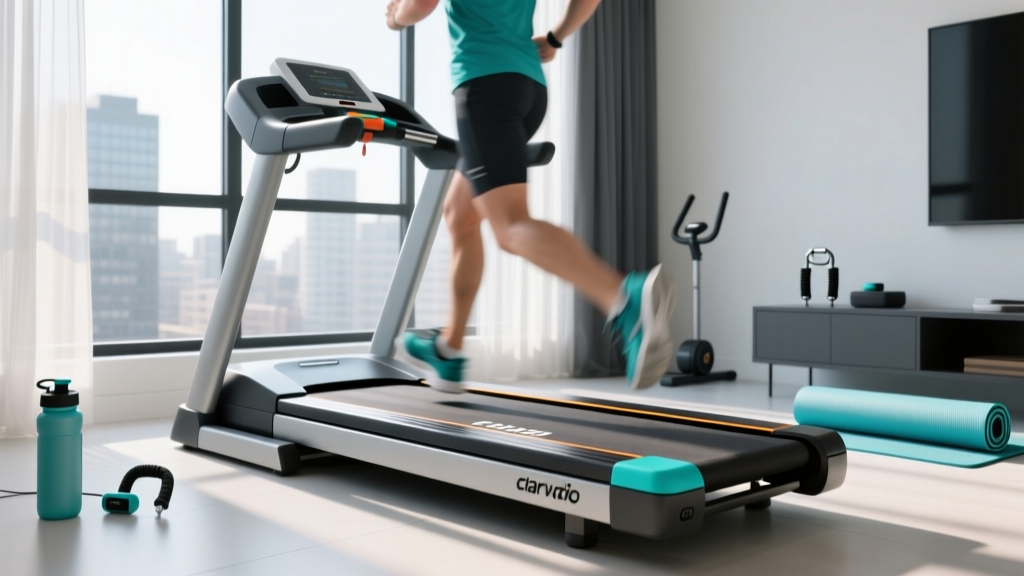
Prep for a Good Treadmill Interval Workout: Belt Maintenance & Costs
Discover the true cost of treadmill belt maintenance. Learn how proper lubrication protects your machine during a good treadmill interval workout.

The Hidden Cost of High-Intensity Friction
Executing a good treadmill interval workout requires rapid transitions between all-out sprints and active recovery walks. While your cardiovascular system adapts to the stress, your treadmill's hardware absorbs the mechanical shock. Every time you push the speed from 3.0 mph to 10.0 mph, the friction between the PVC belt and the wooden deck spikes exponentially. If your machine lacks proper lubrication, this friction doesn't just slow you down—it silently destroys your drive motor and warps the deck.
From a budget breakdown perspective, ignoring treadmill belt maintenance is one of the most expensive mistakes a home gym owner can make. In 2026, replacing a high-torque drive motor on a premium unit like the Sole F80 or NordicTrack Commercial 1750 can cost upwards of $600, not including labor. Conversely, a lifetime supply of proper silicone lubricant costs less than $30. This value analysis breaks down the exact costs, materials, and mechanical realities of maintaining your treadmill for high-intensity interval training (HIIT).
💡 Quick Value Summary
- Preventative Maintenance Cost: $12 - $18 per year
- Motor Replacement Cost: $400 - $850
- Deck & Belt Replacement Cost: $250 - $500
- ROI of Lubrication: Prevents up to 80% of premature hardware failures related to friction.
Budget Breakdown: Lubricants and Maintenance Supplies
Not all lubricants are created equal, and using the wrong chemical compound will instantly void your warranty and degrade the belt's cotton underlay. According to equipment specialists at the Treadmill Doctor, petroleum-based products like WD-40 or standard household oils will melt the rubber and PVC layers of a treadmill belt, leading to catastrophic delamination.
Silicone vs. Wax vs. PTFE: What's Worth Your Money?
When shopping for maintenance supplies, you will encounter three primary chemical bases. Here is how they stack up in terms of value and hardware compatibility for modern 2026 treadmill models.
| Lubricant Type | Average Cost | Compatibility | Value Rating |
|---|---|---|---|
| 100% Liquid Silicone | $12 - $18 (4oz bottle) | Universal (Sole, Horizon, ProForm) | ⭐⭐⭐⭐⭐ (Best) |
| Silicone Gel/Paste | $15 - $25 | High-end commercial decks | ⭐⭐⭐⭐ |
| PTFE (Teflon) Spray | $10 - $15 | Older models / Specific belts | ⭐⭐⭐ |
| Petroleum / WD-40 | $6 - $10 | NONE (Destroys PVC) | ❌ (Avoid Completely) |
The Verdict: 100% liquid silicone is the undisputed champion of value. A single $15 bottle contains enough fluid for 10 to 12 applications, effectively covering 3 to 5 years of routine maintenance. Brands like Liquid Wrench (100% Silicone formulation) or proprietary bottles sold by Sole Fitness are reliable choices.
The Financial Impact on Interval Training Hardware
Why does a good treadmill interval workout demand stricter maintenance than steady-state jogging? The answer lies in biomechanics and electrical engineering. According to research on exercise equipment stress tests referenced by the American Council on Exercise (ACE), the impact force of a runner's footstrike can exceed 2.5 times their body weight. During a sprint interval, this force is applied aggressively, pushing the belt down into the deck.
Motor Strain and Deck Warping During Sprints
If the deck is dry, the coefficient of friction increases dramatically. The drive motor must draw excess electrical current (amps) to overcome this resistance and maintain the belt's speed.
- Normal Walking (3.0 mph, Lubricated): Motor draws 2 to 4 amps.
- Sprint Interval (10.0 mph, Lubricated): Motor draws 6 to 9 amps.
- Sprint Interval (10.0 mph, DRY Belt): Motor draws 14 to 18+ amps.
Most residential treadmills feature a 15-amp thermal breaker. Repeatedly drawing 14+ amps during HIIT sessions will eventually trip this breaker, degrade the lower control board's capacitors, or permanently demagnetize the drive motor. Furthermore, the excessive heat generated by dry friction can literally melt the wax coating on a standard MDF deck, causing permanent warping that necessitates a $250+ replacement.
⚠️ Warning Sign: If your treadmill belt consistently hesitates or 'stutters' when your foot strikes it during a sprint, or if you smell a faint burning rubber odor after a good treadmill interval workout, your deck is critically dry. Stop using the machine immediately and apply silicone lubricant.
DIY vs. Professional Servicing: A Value Analysis
Should you pay a technician to maintain your belt, or handle it yourself? Let us break down the financial value of both routes.
Professional Servicing
- Cost: $120 - $200 per visit (plus parts).
- Pros: Includes comprehensive diagnostic checks, belt tensioning, and motor vacuuming.
- Cons: Extremely poor ROI if you are only paying for lubrication. Best reserved for annual deep-cleans on machines under extended warranties.
DIY Maintenance
- Cost: $15 (one-time purchase of silicone).
- Pros: Takes exactly 15 minutes. Yields the highest financial return on investment.
- Cons: Requires minor physical effort to lift the belt and track tension bolts.
Expert Recommendation: For 95% of home users, DIY lubrication is the only financially sound choice. Save the $200 professional fee and invest it in a premium chest-strap heart rate monitor to better track your interval zones.
Step-by-Step Value-Maximizing Lubrication Routine
To ensure your machine survives the rigors of daily interval training, follow this exact 15-minute protocol every 3 to 6 months (or every 130 miles of use).
- Power Down: Unplug the treadmill from the wall. Never apply lubricant while the machine is connected to a power source.
- Release Tension: Using an Allen wrench, loosen the left and right rear roller adjustment bolts. Count the exact number of turns (e.g., 3 full turns counter-clockwise) so you can restore the exact tension later.
- Lift and Apply: Lift the edge of the belt approximately 2 inches from the deck. Squeeze exactly 1/2 ounce of 100% liquid silicone in a zig-zag pattern down the center of the deck. Repeat on the opposite side.
- Restore Tension: Tighten the rear roller bolts clockwise, matching the exact number of turns you counted in Step 2.
- Distribute the Fluid: Plug the machine back in. Walk on the treadmill at a slow pace (2.0 mph) for 5 minutes. The friction of your footsteps will evenly distribute the silicone across the entire deck surface.
Expert Verdict: Protecting Your Investment
A premium treadmill is a significant financial investment, often ranging from $1,200 to $3,500. Protecting that investment requires shifting your mindset from reactive repairs to proactive maintenance. When you commit to a rigorous HIIT regimen, the mechanical demands on your equipment multiply. By dedicating $15 a year to 100% silicone lubrication, you eliminate the primary catalyst for motor burnout and deck degradation.
Ultimately, the value of treadmill maintenance is measured in uninterrupted workouts. You cannot execute a good treadmill interval workout if your machine is sidelined with a fried control board or a melted deck. Follow the budget breakdown outlined above, stick to pure silicone, and your cardio equipment will reliably support your fitness goals for years to come.
More gear to consider
All reviews
Cardio Machine Noise Comparison & Treadmill Belt Tension Adjustment

Maintaining Your Compact Treadmill: Incline Percent & Longevity

Elliptical vs Treadmill: Urevos Strol Lite Treadmill Review

Shrimp on a Treadmill? Cardio Machine Noise Comparison & Fixes
Treadmill Squeaking When Running? Concept2 vs Hydrow Rower Guide
