
What's a Good Incline on a Treadmill? Folding Models & Care
Discover what's a good incline on a treadmill, review top folding models for small spaces, and learn expert maintenance tips to extend machine life.

Living in an apartment or a compact home doesn't mean sacrificing the biomechanical benefits of hill training. However, combining high-incline workouts with the mechanical realities of folding treadmills requires a strategic approach to both purchasing and maintenance. When users search for answers to whats a good incline on treadmill decks, they rarely consider how sustained slope training impacts the motor, belt friction, and folding hinges of space-saving models.
In this 2026 guide, we break down the science of incline training, review the best folding treadmills for small spaces that can actually handle the stress of hill workouts, and provide a rigorous maintenance protocol to ensure your machine survives years of steep climbs.
Decoding the Slope: What's a Good Incline on a Treadmill?
The ideal incline setting depends entirely on your biomechanical goals and the structural limits of your equipment. According to Runner's World, varying your incline recruits different muscle groups and significantly increases caloric expenditure without requiring you to increase your pace to joint-jarring speeds.
The Incline Tier System
- 1% to 2% (The Outdoor Simulator): A 1% incline accurately mimics the wind resistance and subtle terrain variations of outdoor running. This is your baseline for flat-road pacing.
- 3% to 7% (The Endurance & Fat-Burn Zone): This range elevates your heart rate into Zone 2 or Zone 3 without the high impact of sprinting. It heavily targets the calves, hamstrings, and glutes.
- 8% to 12% (The Hill Climb / HIIT): Best used in short intervals (1–3 minutes). This builds explosive power and anaerobic capacity.
- 15% (Maximum Incline): Reserved for specialized walking protocols (like the viral 12-3-30 method). Running at 15% is generally discouraged as it forces unnatural biomechanics and places extreme torque on the treadmill's deck and motor.
2026 Review: Best Folding Treadmills for Incline Training
Not all folding treadmills are engineered to handle the gravitational stress of high inclines. Cheap models with 2.0 Continuous Horsepower (CHP) motors will overheat and degrade rapidly when pushed up a 10% slope. Below is our curated matrix of small-space treadmills that offer robust incline capabilities and the build quality to survive long-term maintenance.
| Model | Motor (CHP) | Max Incline | Folded Footprint | 2026 Price Range |
|---|---|---|---|---|
| Sole F63 | 3.0 CHP | 15% | 35' x 35' | $1,099 - $1,199 |
| Horizon 7.0 at | 3.0 CHP | 15% | 38' x 27' | $999 - $1,099 |
| ProForm Carbon TL | 2.6 CHP | 10% | 32' x 28' | $599 - $699 |
| NordicTrack T Series 10 | 2.8 CHP | 10% | 30' x 26' | $749 - $849 |
"For apartment dwellers doing daily incline walking, the Horizon 7.0 at remains our top 2026 recommendation. Its featherlight folding mechanism utilizes heavy-duty hydraulic shocks that don't degrade under the stress of being lowered from a 15% incline position, a common failure point in cheaper manual-fold models."
The Hidden Toll of Incline: Belt Friction and Deck Wear
When you elevate a treadmill deck, gravity pulls the user backward. To compensate, the drive motor must work exponentially harder to pull the belt over the deck. According to Consumer Reports, high-friction environments are the number one killer of residential treadmill electronics.
On a 15% incline, the coefficient of friction between your foot, the belt, and the phenolic deck increases dramatically. If the belt is under-lubricated, the motor controller will push excess voltage to maintain speed, generating immense heat in the motor compartment and eventually frying the lower control board.
Signs Your Incline Training is Destroying Your Deck
- The 'Jerky' Belt Syndrome: If the belt stutters specifically when the incline is above 8%, your deck is likely worn down to the bare MDF wood beneath the phenolic coating.
- Ozone or Burning Rubber Smells: This indicates the belt is slipping against the drive roller due to extreme backward tension.
- Motor Hood Heat: If the plastic motor cover is hot to the touch after a 20-minute incline walk, the motor is suffocating from dust or the belt is dry.
Small Space, Big Care: The Folding Treadmill Maintenance Protocol
Folding treadmills require a more rigorous maintenance schedule than commercial gym models because their components are smaller, run hotter, and feature moving hinges. Follow this exact protocol to maximize longevity.
Step 1: The 100% Silicone Lubrication Rule
Never use WD-40, PTFE, or household oils. You must use 100% pure liquid silicone treadmill lubricant. Frequency: Every 150 miles or every 3 months (whichever comes first) if you frequently use inclines above 5%. Application: Lift the belt edge and apply exactly 15ml (half an ounce) down the center of the deck on both the left and right sides. Run the treadmill at 2.0 mph, 0% incline for 3 minutes to distribute the silicone.
Step 2: Folding Hinge and Gas-Shock Care
The pivot point of a folding treadmill bears the entire weight of the steel frame and motor. Quarterly Task: Wipe down the hydraulic gas shocks with a microfiber cloth to remove dust that can score the metal shafts. Apply a single drop of white lithium grease to the main pivot bolt on either side of the deck base. If your treadmill uses a manual locking pin, ensure the pin housing is free of debris so it engages with an audible 'click' every time.
Step 3: Motor Compartment Vacuuming
Incline workouts generate higher motor heat, which acts as a magnet for ambient dust and pet hair. Bi-Annual Task: Unplug the machine. Remove the 4 to 6 Phillips-head screws securing the motor hood. Use a vacuum with a soft brush attachment to remove dust from the motor fan blades and the lower control board heat sink. Do not use compressed air, as it will blow conductive dust deeper into the circuit board.
Troubleshooting Common Folding Treadmill Failures
Issue: Incline Motor Grinds but Deck Doesn't Move
Diagnosis: The incline lift tube has stripped its internal nylon gear. This happens when users attempt to adjust the incline while running at high speeds. Fix: Replace the incline lift actuator. (Part cost: $80-$140).
Issue: Belt Slips to the Left on High Incline
Diagnosis: Uneven belt tension combined with the asymmetric foot-strike of incline walking. Fix: Turn the left rear roller adjustment bolt clockwise by exactly 1/4 turn. Run at 3 mph and observe. Never adjust more than 1/4 turn at a time.
FAQ: Incline & Folding Treadmill Longevity
Q: Does walking at a 15% incline void the warranty on a folding treadmill?
A: Generally, no. However, if the manufacturer specifies a maximum user weight of 250 lbs, and you weigh 240 lbs while walking at a 15% incline, you are pushing the Continuous Duty Horsepower (CHP) to its absolute thermal limit. If the motor burns out under these specific conditions, some brands may classify it as 'commercial use' or 'user abuse' and deny the claim. Always check the fine print of the 2026 warranty terms.
Q: Can I leave my folding treadmill in the 'up' folded position when not in use?
A: Yes, and you should. Storing the deck in the upright, locked position relieves the continuous tension on the belt and the rear roller springs. However, ensure the safety lock pin is fully engaged. According to the Mayo Clinic, consistent walking routines are key to long-term health, but a consistent safety routine is key to preventing household accidents with heavy folding fitness equipment.
Q: Is a manual incline folding treadmill worth buying to save money?
More gear to consider
All reviews
The Mechanical ETT Treadmill Stress Test: Folding Treadmill Longevity Review

Cheapest VR Treadmill Hack: Folding Small Space Review & Care

Air Bike vs Assault Bike Layouts & ProForm Treadmill CrossWalk 480
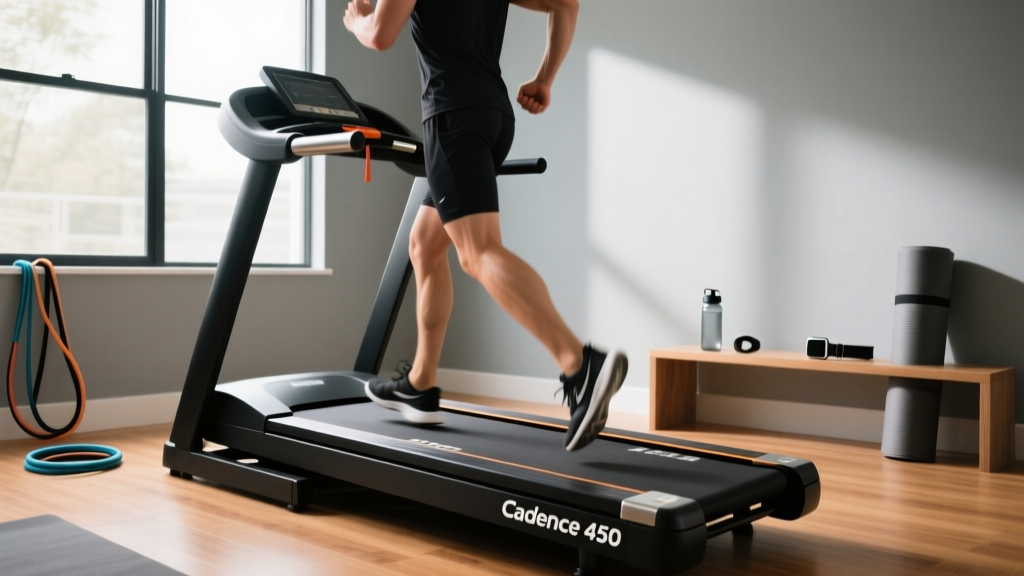
Curved Manual vs Motorized: How the Cadence 450 Treadmill Compares

Elliptical vs Treadmill: Weighing ProForm Treadmill Support Costs
