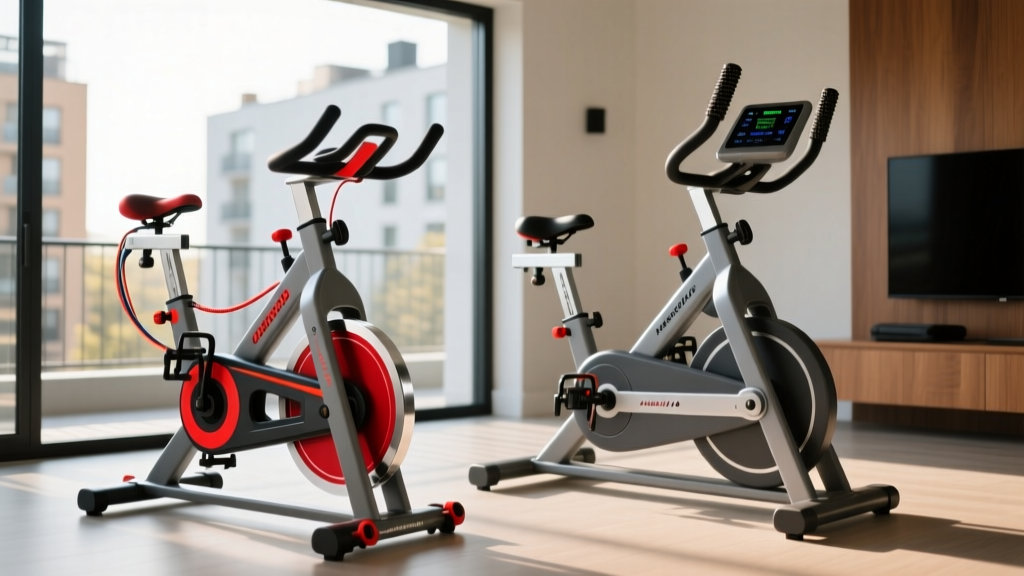
Air Bike vs Assault Bike: Weighing Treadmill Uses Advantages in 2026
Explore the 2026 air bike vs assault bike market. We compare top models and weigh their HIIT benefits against traditional treadmill uses advantages.

The 2026 Wind-Resistance Bike Market Landscape
The home and commercial cardio equipment market has undergone a significant recalibration by 2026. While the post-pandemic fitness boom initially caused massive supply chain bottlenecks and inflated pricing, the current landscape is defined by stabilized manufacturing, aggressive feature integration, and a hyper-focus on digital connectivity. At the center of the high-intensity interval training (HIIT) boom are wind-resistance ergometers—colloquially known as air bikes. These machines have become staples in CrossFit affiliates, hybrid training garages, and elite sports performance centers.
However, as consumers and strength coaches map out comprehensive conditioning programs, a recurring debate emerges regarding modality selection. Fitness professionals frequently weigh the anaerobic spikes and zero-impact nature of wind bikes against the traditional treadmill uses advantages for steady-state hypertrophy, joint conditioning, and gait mechanics. Understanding where the premier air bikes fit into this broader cardio ecosystem requires a deep dive into the engineering, market positioning, and biomechanical realities of the top contenders: the Rogue Echo Bike and the Assault Fitness AssaultBike Pro X.
Head-to-Head: Rogue Echo Bike vs. AssaultBike Pro X
To understand the current market dynamics, we must look at the two undisputed heavyweights of the wind-resistance category. Both machines utilize a fan-based resistance mechanism where the resistance scales infinitely with the user's output, but their engineering philosophies diverge significantly in 2026.
| Specification | Rogue Echo Bike (V3) | AssaultBike Pro X |
|---|---|---|
| Drivetrain Mechanism | Polyurethane Belt Drive | Heavy-Duty Chain Drive |
| Fan Diameter | 18 Inches (High Inertia) | 25 Inches (Maximum Air Volume) |
| MSRP (2026) | $995.00 | $1,099.00 |
| Connectivity Protocol | FTMS Bluetooth (Zwift/MyWhoosh) | ANT+ / Bluetooth Heart Rate Sync |
| Max User Weight Capacity | 350 lbs (158 kg) | 350 lbs (158 kg) |
| Frame Warranty | Lifetime | Lifetime |
Drivetrain and Biomechanical Feel
The most critical differentiator between these two models is the drivetrain. The Rogue Echo Bike utilizes a polyurethane belt drive system. This engineering choice results in a remarkably smooth, whisper-quiet pedal stroke that mimics the feel of a high-end indoor cycling bike, albeit with the brutal, compounding resistance of the 18-inch fan. The belt drive requires virtually zero maintenance regarding lubrication, though it does demand periodic tension checks to prevent slipping during max-effort sprint intervals.
Conversely, the AssaultBike Pro X relies on a heavy-duty steel chain drive. This provides a raw, mechanical, and slightly gritty feel that many competitive athletes prefer for the immediate feedback it offers during rapid RPM changes. The 25-inch fan on the AssaultBike moves a massive volume of air, creating a slightly more aggressive resistance curve at peak RPMs compared to the Echo. However, the chain drive necessitates strict maintenance protocols, including regular degreasing and tension adjustments, to prevent the dreaded "chain slap" against the chainstay during abrupt decelerations.
"Wind-resistance ergometers are unique because the work-to-rest ratio is entirely dictated by the athlete's central nervous system output. There is no magnetic brake to hide behind; if you stop pushing, the fan stops spinning. This makes them the ultimate tool for lactic threshold testing."
— 2026 Sports Performance Ergometer Analysis
Beyond the Wind: Contextualizing Treadmill Uses Advantages
While air bikes dominate the anaerobic alactic and lactic energy systems, they are not a panacea for all cardiovascular and physiological adaptations. When sports scientists design hybrid conditioning programs, they must weigh the explosive output of wind bikes against the treadmill uses advantages that remain entirely unique to motorized running surfaces. According to the American Heart Association, achieving optimal cardiovascular health requires a mix of moderate-intensity steady-state (LISS) and vigorous-intensity training, a balance that is difficult to achieve on an air bike alone.
The Biomechanical Gap: Why Treadmills Still Hold Market Share
Air bikes completely eliminate axial loading and eccentric muscle contractions. While this is excellent for joint preservation and active recovery days, it fails to stimulate bone mineral density (BMD) or prepare the connective tissues for the realities of field sports. This is where the specific treadmill uses advantages become irreplaceable in a well-rounded 2026 training facility.
- Eccentric Loading and Gait Specificity: Running on a treadmill (or outdoors) involves an eccentric braking phase with every footstrike, which is critical for hamstring resilience and Achilles tendon stiffness. Air bikes only offer concentric muscular actions.
- Bone Mineral Density (BMD) Stimulation: The impact forces generated during treadmill running trigger osteogenic adaptations that non-weight-bearing cardio machines simply cannot replicate.
- Incline Mechanics and Posterior Chain Activation: The massive popularity of incline walking protocols (such as the 12-3-30 method) highlights a distinct treadmill advantage. Setting a treadmill to a 12% to 15% grade forces deep gluteus maximus and soleus engagement without the high-impact forces of sprinting, a physiological stimulus an air bike cannot mimic.
- Thermoregulation and Core Temperature: Treadmill running generates a higher core temperature and sweat rate compared to seated cycling, which is a vital adaptation for endurance athletes preparing for hot-weather events.
Therefore, the modern market analysis reveals a bifurcation in consumer spending. Buyers are not necessarily choosing between an air bike and a treadmill; rather, elite home gyms and commercial facilities are allocating budgets to acquire both, utilizing the air bike for localized muscular endurance and VO2 max intervals, while leveraging the treadmill for Zone 2 LISS sessions, incline walking, and sprint mechanics.
Failure Modes, Maintenance, and Edge Cases
A common mistake in the 2026 equipment purchasing cycle is underestimating the long-term maintenance requirements of high-output cardio machines. Both wind bikes and treadmills possess distinct failure modes that buyers must account for.
Wind Bike Edge Cases
- Console Sweat Damage: The LCD consoles on both the Echo and AssaultBike are positioned directly in the "splash zone" of high-volume sweat during 30-minute AMRAP workouts. In 2026, utilizing a silicone console cover is mandatory; without it, sweat ingress will corrode the membrane keypad within 14 to 18 months of heavy use.
- Pedal Bearing Wear: Because users frequently stand and apply lateral torque to the pedals during max-effort sprints, the stock pedal bearings are a known wear item. Upgrading to aftermarket sealed cartridge bearings is a common edge-case fix for athletes exceeding 5 hours of weekly bike usage.
Treadmill Maintenance Realities
When comparing the upkeep of an air bike to a high-end treadmill like the NordicTrack Commercial 1750 (priced around $2,499 in 2026), the treadmill requires significantly more proactive maintenance. The running belt must be lubricated with 100% silicone fluid every 150 miles to prevent the deck from generating excess friction, which can overheat the drive motor and trip the thermal breaker. Furthermore, the accumulation of belt dust (micro-particles of rubber and nylon) requires monthly vacuuming of the motor hood to prevent catastrophic electronic board failure.
The 2026 Buyer’s Decision Framework
Given the distinct physiological profiles and maintenance demands of these machines, how should a consumer or facility manager allocate their capital? The Mayo Clinic's research on HIIT supports the efficacy of wind bikes for rapid cardiovascular improvements, but the decision ultimately hinges on the primary training objective.
- Step 1: Define the Primary Energy System Target. If your goal is to maximize VO2 max, improve lactic acid clearance, and perform Tabata or CrossFit-style metcons, allocate your budget to the Rogue Echo Bike ($995). Its belt drive and FTMS connectivity make it the superior choice for digital integration and high-intensity output.
- Step 2: Assess the Need for Axial Loading. If your training requires preparation for field sports, marathon running, or if you need to maintain bone density through impact, the treadmill uses advantages dictate that you must prioritize a motorized treadmill with a minimum 15% incline capability and a 4.0 CHP motor.
- Step 3: Evaluate Space and Acoustic Constraints. Air bikes have a compact footprint (approx. 52" x 29") but generate significant wind noise at high RPMs. Treadmills require a massive footprint (approx. 80" x 35") and generate low-frequency structural vibration that can be problematic in multi-story residential buildings. Choose the machine that aligns with your physical environment.
Ultimately, the 2026 cardio market is not a zero-sum game between wind-resistance bikes and motorized treadmills. By understanding the brutal, infinite resistance curve of the Echo and AssaultBike, and contrasting them with the biomechanical and gait-specific treadmill uses advantages, buyers can construct a highly periodized, scientifically backed training environment that leaves no physiological adaptation on the table.
More gear to consider
All reviews
Define Treadmill Trends 2026: Best Folding Models for Small Spaces
Compact Professional Treadmills: Small Space Folding Review 2026
Star Trek Treadmill Belt Maintenance & Lubrication Guide

Treadmill Motor Setup: Treadmill or Elliptical for Belly Fat?

AssaultRunner Pro Treadmill: Feature Comparison & Setup Walkthrough
