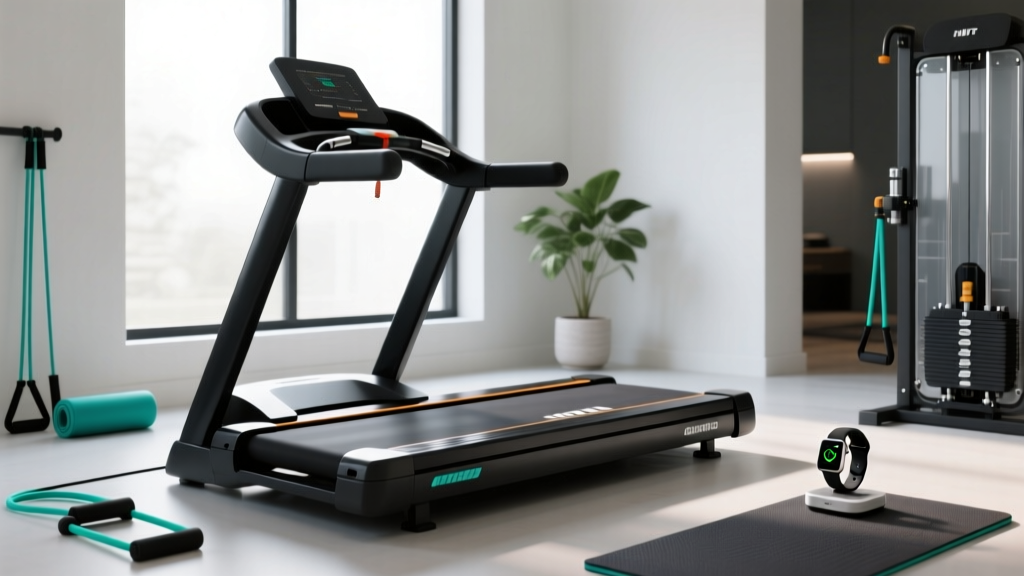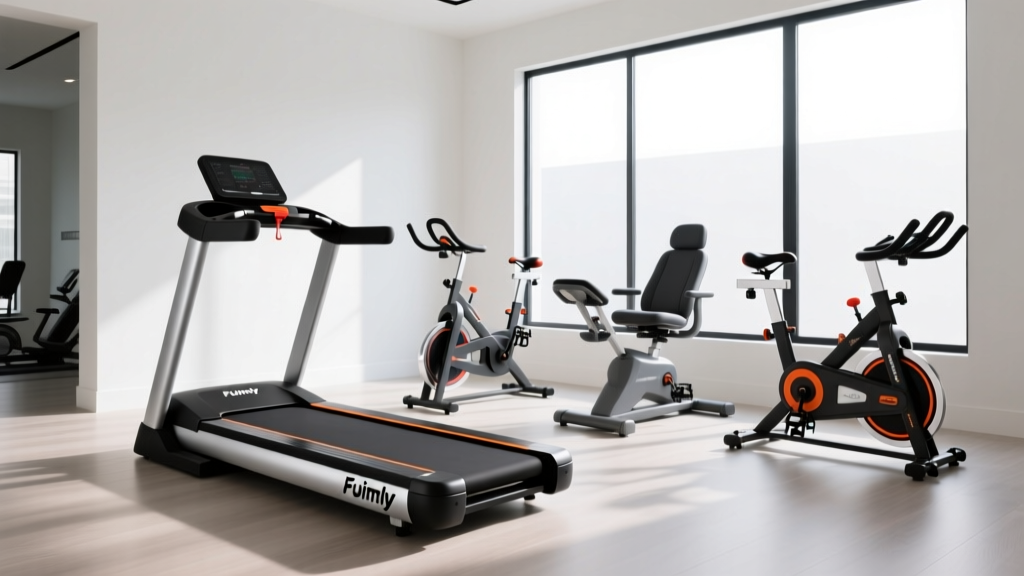
Fuimly Treadmill and Stationary Bike Types: Space Guide
Optimize your home gym layout. Compare the Fuimly treadmill footprint against upright, recumbent, and spin stationary bike types for ideal space planning.

The 2026 Home Gym Spatial Dilemma: Compact Treadmills vs. Bikes
As urban living spaces continue to shrink and multi-use rooms become the standard in 2026, home gym design has shifted from simply buying equipment to mastering spatial geometry. When fitness enthusiasts attempt to integrate cardio into bedrooms, home offices, or small apartments, the debate often narrows down to two distinct categories: ultra-compact walking pads like the Fuimly treadmill and the diverse ecosystem of stationary bike types (upright, recumbent, and spin).
Choosing between these options is not just about your preferred workout modality; it is a strict exercise in space optimization, ergonomic clearance, and structural load management. According to the American Council on Exercise (ACE), improper equipment spacing is a leading cause of home gym injuries and equipment failure. This guide provides a deep-dive spatial analysis to help you architect the perfect cardio zone.
Footprint Analysis: Fuimly Treadmill vs. Stationary Bike Types
To understand the spatial compromise, we must look at the raw dimensions and required safety clearances. The table below contrasts the popular Fuimly 3.0 HP folding treadmill against the three primary stationary bike archetypes.
| Equipment Type | Model Benchmark | Base Footprint (L x W) | Required Safety Clearance | Approx. 2026 Price |
|---|---|---|---|---|
| Compact Treadmill | Fuimly 3.0 HP Folding | 51' x 25' (10' thick folded) | 24' sides, 36' rear | $239 |
| Upright Bike | Schwinn IC4 | 48.6' x 21.2' | 24' sides, 12' rear | $799 |
| Recumbent Bike | Schwinn 270 | 57.5' x 27.8' | 30' sides, 18' front/rear | $699 |
| Spin Bike | Keiser M3i | 45' x 26' | 30' sides (for out-of-saddle) | $2,195 |
Deep Dive: Stationary Bike Types and Spatial Profiles
Stationary bikes are not a monolith. The spatial requirements shift drastically depending on the biomechanics of the specific bike type you choose.
Upright Bikes: The Vertical Space Compromise
Upright bikes mimic traditional outdoor cycling. Because the rider's weight is centered over a relatively small bottom bracket, the floor footprint is minimal. However, the spatial challenge is vertical.
- Overhead Clearance: You must account for the rider's height plus 12 inches. If you are 6'2', your bike zone requires an 8-foot ceiling minimum to avoid head strikes during high-cadence climbs.
- Handlebar Swing Radius: While rare on magnetic resistance models, aggressive upper-body movement during sprints requires a 24-inch lateral buffer zone to prevent knuckle strikes on adjacent walls or furniture.
Recumbent Bikes: Managing the Horizontal Sprawl
Recumbent bikes are the undisputed space hogs of the cardio world. With a wheelbase often exceeding 55 inches, they demand significant horizontal real estate.
Critical Edge Case - Pedal Strike: A common layout failure occurs when users place recumbent bikes flush against a baseboard. The extended pedal crank on models like the Schwinn 270 can strike standard 5-inch baseboards or nearby floor vents during the forward extension phase, causing severe joint jarring and plastic crank damage. Always maintain an 18-inch rear buffer.Despite their sprawling footprint, recumbent bikes possess a low visual weight. Their seat height (usually around 20 inches) allows them to slide under standard floating shelves or window sills, making them ideal for rooms where maintaining sightlines to the outdoors is a priority.
Spin Bikes: High-Intensity Clearance Zones
Spin bikes (indoor cycles) feature aggressive, forward-leaning geometries. The spatial requirement here is dictated by lateral movement. During out-of-saddle climbing or choreographed rhythm rides, riders naturally sway side-to-side. The American College of Sports Medicine (ACSM) recommends wider lateral buffers for high-intensity interval training (HIIT) equipment to accommodate dynamic movement patterns. If you place a spin bike 12 inches from a wall, you will instinctively restrict your own movement, compromising your workout form.
The Fuimly Treadmill: Spatial Advantages and Hidden Limitations
The Fuimly treadmill represents the modern 'walking pad' or compact folding treadmill trend. Its primary spatial advantage is its 10-inch folded profile, allowing it to slide under standard bed frames (which typically offer 12 to 14 inches of ground clearance) or stand vertically in a closet.
However, space optimization is not just about storage; it is about operational viability.
The Thermal Failure Mode: Compact treadmills like the Fuimly utilize smaller, high-RPM motors (often 2.5 to 3.0 HP peak). When deployed in a tight corner with zero rear clearance, the motor's cooling intake is suffocated. Over a 6-month period, this thermal restriction degrades the motor windings and voids the warranty. Always deploy the Fuimly with at least 36 inches of rear clearance for heat dissipation and emergency dismounting.
Strategic Layout Frameworks for Multi-Use Rooms
How do you integrate these machines into a room that serves multiple purposes? Here are two proven layout frameworks for 2026 micro-gyms.
Framework 1: The 'Hidden-Gym' Layout (Best for Fuimly Treadmill)
This layout prioritizes the room's primary function (e.g., home office) and treats cardio as a secondary, hidden activity.
- The Anchor: Place your desk facing a window or solid wall.
- The Storage Zone: Utilize the space beneath a raised platform bed or a custom-built ottoman with a 12-inch interior cavity to store the folded Fuimly treadmill.
- The Deployment Path: Ensure a straight, unobstructed 6-foot path from the storage zone to the center of the room. You should not have to navigate around coffee tables to unfold the treadmill.
Framework 2: The 'Dual-Zone' Layout (Best for Upright/Spin Bikes)
This layout embraces the equipment as a permanent fixture but uses it to define the room's architecture.
- The Anchor: Position the upright or spin bike in a corner at a 45-degree angle facing the room's center, rather than flat against a wall. This opens up the lateral clearance zones on both sides.
- The Acoustic Buffer: Place a large potted plant or a high-density acoustic room divider directly behind the bike's flywheel to absorb the low-frequency hum of magnetic resistance systems.
- The Visual Boundary: Use a 3/8-inch thick, high-density rubber mat that extends 3 feet beyond the bike's front wheel to catch sweat and visually delineate the 'workout zone' from the 'living zone'.
Flooring, Vibration, and Structural Edge Cases
Space optimization also includes the Z-axis: how the equipment interacts with your floor and the structure beneath it.
Pro-Tip on Point Loads: While a Fuimly treadmill distributes its 110-lb weight across a wide deck, a spin bike concentrates 250+ lbs of dynamic rider weight onto two small leveling feet. On engineered hardwood or luxury vinyl plank (LVP), this point load will cause permanent denting over time. Always use a high-density EVA mat specifically rated for point-loads under stationary bikes, regardless of how small their footprint appears.Furthermore, acoustic transfer is a major constraint in multi-story homes or apartments. Treadmills generate high-impact vertical force vectors (up to 3x body weight per footstrike). Bikes generate rotational torque and low-frequency vibration. If you live on a second floor, an upright bike with a heavy perimeter-weighted flywheel will transfer less disruptive noise to the floor below than even the most well-lubricated compact treadmill.
Frequently Asked Questions
Can I store the Fuimly treadmill vertically against a wall?
Yes, but with a critical caveat. The Fuimly 3.0 HP weighs roughly 115 lbs. When stored vertically, the center of gravity shifts high. If you have pets, small children, or live in an active seismic zone, you must use a nylon furniture strap to anchor the top rail to a wall stud. Relying solely on the treadmill's folded kickstand on slick hardwood floors is a severe tipping hazard.
Which stationary bike type is best for a low-ceiling basement?
Recumbent and spin bikes are ideal for low ceilings. Because the rider is seated low (recumbent) or leaning forward (spin), the total vertical clearance required is usually just the rider's seated height plus 6 inches. Upright bikes, which position the rider vertically, often cause ceiling fan or ductwork strikes in basements with 7-foot ceilings.
How do I manage sweat corrosion in a small, poorly ventilated room?
In small spaces, sweat aerosolizes and settles on nearby electronics and metal joints. For spin bikes, apply a silicone-based protectant to the handlebar posts and seat sliders monthly. For compact treadmills, ensure the console is wiped down immediately, as the low-profile deck places the console closer to the floor where dust and sweat mix to form a conductive grime that shorts out membrane keypads.
More gear to consider
All reviews
Cardio Machine Noise Level Comparison & The Two Stage Treadmill Test

Treadmill Stops When I Step On It? Fix Stalls & Cardio Noise Levels

Spirit XT185 Treadmill Review: Home Office vs Under Desk Models

ProForm 520 Treadmill Review & Air Bike vs Assault Bike Comparison

Stair Climber Home Setup vs Life Fitness Integrity Series Treadmill