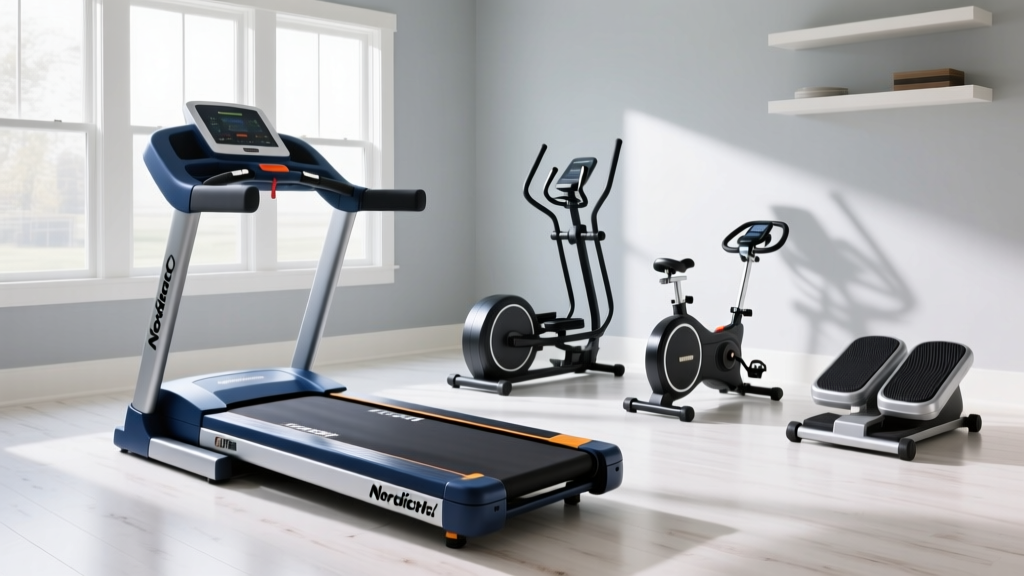
How to Avoid the 'Fall Off Treadmill GIF': Feature Comparison & Troubleshooting
Don't become a viral meme. Learn how to choose the right treadmill features, avoid common setup mistakes, and troubleshoot belt lag to stay safe.

The Anatomy of a Viral Treadmill Fail
If you have ever watched a viral fall off treadmill gif, you likely laughed at the sudden jolt, the flailing arms, and the abrupt dismount. But as fitness equipment engineers and physical therapists know, these viral moments are rarely just user error. They are usually the result of a mechanical mismatch between the user's biomechanics and the treadmill's hardware specifications, compounded by poor maintenance.
When a user is thrown backward, it is almost always due to belt hesitation—a micro-second lag where the motor fails to keep pace with the user's footstrike. When a user drifts off the side, it is typically a combination of insufficient belt width and improper deck alignment. This guide bridges the gap between internet comedy and serious biomechanics, providing a feature comparison and troubleshooting matrix to ensure your next treadmill purchase keeps you safely on the deck.
Safety Alert: According to the Mayo Clinic, treadmill-related injuries account for a significant portion of home gym emergency room visits, with friction burns and fall-related fractures being the most common. Proper equipment selection is your first line of defense.Feature Comparison: Budget vs. Premium Safety Specs
The primary culprit behind the classic 'fall off treadmill gif' is motor lag. Entry-level treadmills often advertise 'Peak HP' rather than 'Continuous Horsepower' (CHP). Peak HP only measures the motor's maximum output in short bursts, whereas CHP measures what the motor can sustain during a 45-minute run. When a heavy user strikes the deck of a low-CHP machine, the Pulse Width Modulation (PWM) controller struggles to deliver immediate torque, causing the belt to stutter.
Below is a comparison of three popular tiers of treadmills, focusing strictly on the safety-critical features that prevent falls and instability.
| Model Tier | Motor Spec | Belt Dimensions | Deck Cushioning | Est. Price Range |
|---|---|---|---|---|
| Entry-Level (e.g., Horizon T101) |
3.0 HP (Peak) ~2.25 CHP |
20 in x 55 in | Basic 3-Zone Elastomer | $799 - $899 |
| Mid-Tier (e.g., Sole F80) |
3.5 CHP (High-Torque) |
22 in x 60 in | Cushion Flex Whisper Deck | $1,199 - $1,399 |
| Premium (e.g., Woodway 4Front) |
4.0 CHP (Brushless DC) |
22 in x 60 in (Slat) | Vulcanized Rubber Slats | $6,500+ |
The Biomechanical Rule of Belt Sizing
Notice the belt dimensions in the table above. A 20-inch by 55-inch belt is sufficient for walking or light jogging for users under 5 feet 8 inches. However, if you are over 6 feet tall and running at 7 MPH or faster, your natural stride length requires a minimum of a 60-inch long belt. Forcing a long stride onto a 55-inch belt subconsciously alters your center of gravity, pushing you toward the rear roller and drastically increasing the risk of stepping off the back edge.
Troubleshooting Guide: Fixing the 'GIF' Mechanics
If you already own a treadmill and are experiencing the belt hesitation or lateral drifting that leads to viral fails, do not replace the machine immediately. Most issues can be resolved with precise mechanical adjustments. According to guidelines from the American Council on Exercise (ACE), regular maintenance is critical for safe operation.
Issue 1: Belt Hesitation and PWM Lag
Symptom: When your foot strikes the deck, the belt pauses for a fraction of a second before surging forward, throwing you off balance.
Root Cause: Excessive friction between the walking belt and the deck, or a stretched walking belt slipping on the front drive roller.
- The Tug Test: Unplug the machine. Lift the walking belt from the center of the deck. You should be able to lift it exactly 2 to 3 inches. If it lifts higher, it is too loose and will slip on the roller. If it barely lifts, it is too tight and is choking the motor.
- Adjusting Tension: Locate the rear roller adjustment bolts at the back of the treadmill. Using an Allen wrench, turn both the left and right bolts exactly one-quarter (1/4) turn clockwise. Test the belt. Repeat only if necessary. Never over-tighten, as this will destroy the motor bearings.
- Lubrication Protocol: If tension is correct but hesitation persists, the deck is dry. Lift the belt and apply exactly 15ml of 100% silicone treadmill lubricant in a zig-zag pattern. Never use WD-40 or petroleum-based oils, as they will melt the PVC backing of the belt and cause catastrophic slipping.
Issue 2: Lateral Drifting (The Side-Step Fail)
Symptom: You find yourself constantly drifting to the left or right, eventually stepping off the side rail.
Root Cause: The rear roller is misaligned, or the floor beneath the treadmill is uneven, causing the belt to track toward the side with less tension.
Pro-Tip for Floor Leveling: Before adjusting the belt, place a carpenter's level across the width of the treadmill deck. If your garage or basement floor slopes, use the adjustable leveling feet on the rear uprights of the treadmill to compensate. A sloped deck will cause the belt to drift regardless of roller alignment.- Identify the Drift: Run the treadmill at 3 MPH with no one on it. Watch the belt. If it drifts to the left, the left side is too loose (or the right side is too tight).
- Corrective Action: Turn the left rear adjustment bolt one-quarter turn clockwise to increase tension on that side. Alternatively, turn the right bolt one-quarter turn counter-clockwise.
- Patience is Key: Wait 60 seconds after each adjustment for the belt to track and settle. Over-adjusting is the most common mistake amateurs make, leading to a belt that violently snaps from left to right.
Advanced Buying Considerations: Flywheel Mass and Incline Motors
When comparing features for your next purchase, look beyond the digital screen and Bluetooth connectivity. Focus on the physical mass of the machine.
- Overall Machine Weight: A treadmill weighing under 150 lbs will physically shift backward on hardwood floors during aggressive sprint intervals. Look for a minimum shipping weight of 200 lbs for runners, ensuring the steel frame has enough mass to absorb kinetic energy without micro-movements.
- Incline Motor Torque: If you train on inclines, a weak incline motor will stutter when adjusting grades under a 200 lb load. Premium models use separate, high-torque DC lift motors that can transition from 0% to 15% in under 3 seconds without jolting the deck.
'The most dangerous treadmill is not the one with the highest top speed; it is the one with a low continuous horsepower rating paired with a high user weight. The resulting friction and thermal throttling create the exact hesitation that causes falls.'
— Biomechanical Equipment Testing Standards
Final Verdict: Engineering Your Safety
The internet will continue to share the occasional fall off treadmill gif for laughs, but as an informed consumer, you now know the mechanical realities behind those clips. To ensure your home gym remains a place of progress rather than peril, prioritize a minimum 3.0 CHP motor, a 22x60 inch running surface if you are a runner, and commit to a strict quarterly silicone lubrication schedule. By understanding the interplay between motor torque, belt tension, and deck alignment, you can confidently buy, maintain, and operate your cardio equipment with absolute stability.
More gear to consider
All reviews
Rowing Guide & Technique: Treadmill That Mimics Trail Running Alternative
Rowing Machine Setup & Technique: Why Treadmill Music Ruins Erg Pacing

Stair Climber vs Treadmill: How Do You Tighten a Treadmill Belt?
Vitamaster Treadmill Belt Maintenance: Cost and Value Breakdown

Treadmill Belt Is Slippery? Repair Costs & Lubrication Analysis