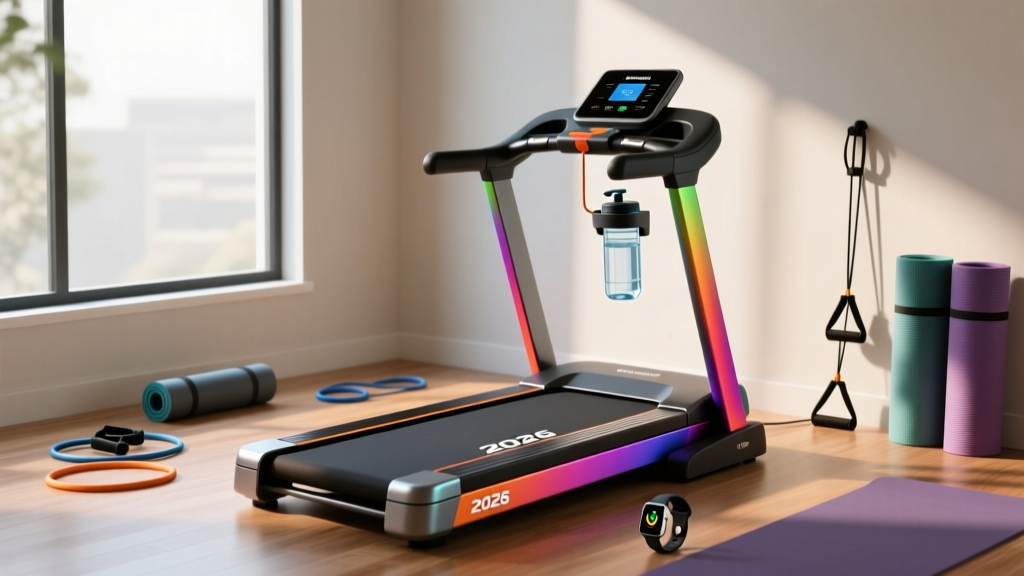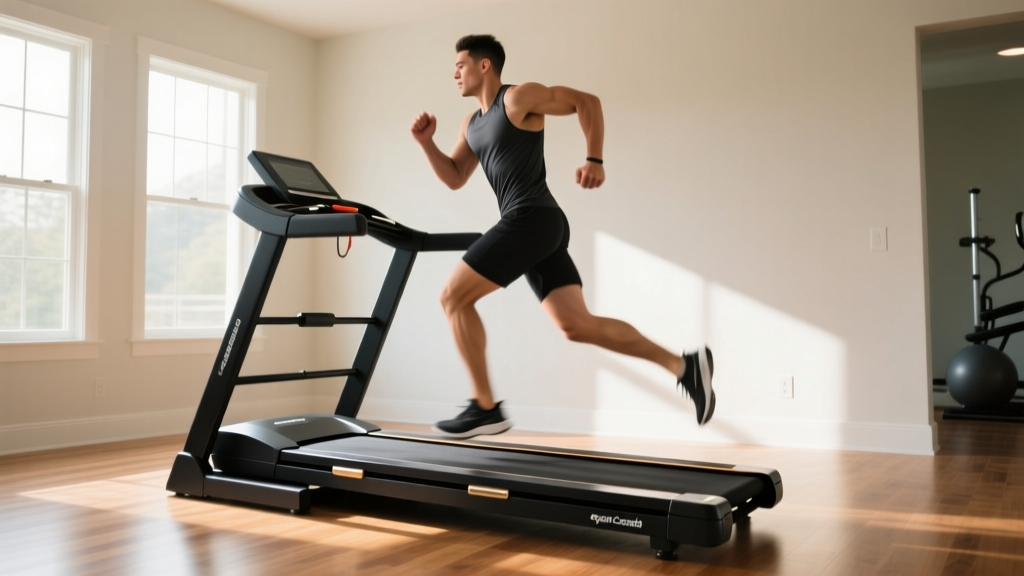
Folding Treadmill Review: Safe for Treadmill Sprints for Weight Loss?
Can a folding treadmill handle HIIT? We review top small-space models for treadmill sprints for weight loss and share vital maintenance tips for longevity.

The Conflict: Small Spaces vs. High-Impact Sprinting
Urban living and home gym setups in 2026 demand space efficiency, making the folding treadmill a staple for millions. However, fitness enthusiasts are increasingly turning to high-intensity interval training (HIIT) to maximize calorie burn. According to the Mayo Clinic, interval training burns more calories in a shorter time and elevates post-exercise oxygen consumption (EPOC). Naturally, this leads to a critical question: Can a folding treadmill safely withstand the biomechanical punishment of treadmill sprints for weight loss?
The short answer is yes, but only if you select a machine engineered for high-torque impact and adhere to a rigorous, sprint-specific maintenance protocol. When a 180-pound runner sprints at 10 mph, each footstrike generates up to 3.5 times their body weight in impact force—over 600 pounds of downward and shear force. On a folding treadmill, this force is directed straight into the deck's pivot hinge and the hydraulic lift system. If the machine is poorly maintained or structurally inadequate, sprinting will warp the deck, strip the drive belt, and eventually snap the folding mechanism.
2026 Review: Top Folding Treadmills Built for HIIT
Not all folding treadmills are created equal. 'Walking pad' style folders with 1.5 HP motors and 15mm MDF decks will shatter under sprint intervals. For safe treadmill sprints for weight loss, you need a minimum of 3.0 Continuous Horsepower (CHP), a 22-inch by 60-inch running surface, and a reinforced steel pivot hinge. Here are the top contenders for 2026 that bridge the gap between space-saving design and heavy-duty performance.
| Model | Motor (CHP) | Deck Construction | Max Speed | 2026 Price Range | HIIT Suitability |
|---|---|---|---|---|---|
| Sole F85 | 4.0 CHP | 1-inch Phenolic Resin | 12 mph | $1,999 - $2,199 | Excellent |
| Horizon 7.0 AT | 3.0 CHP | Heavy-Duty MDF w/ Cushioning | 12 mph | $1,099 - $1,299 | Very Good |
| ProForm Pro 9000 | 3.6 CHP | ReBound Pro Deck | 12 mph | $1,299 - $1,499 | Good (with strict care) |
Sole F85: The undisputed king of folding treadmills for heavy impact. The 4.0 CHP motor handles rapid speed transitions (e.g., jumping from 3 mph to 10 mph) without amperage spikes that degrade the motor controller. The 1-inch phenolic deck resists bowing under repetitive sprint loads.
Horizon 7.0 AT: The best mid-range option. Its 3.0 CHP motor and rapid-charge Bluetooth connectivity make it ideal for app-guided sprint intervals. However, the MDF deck requires more frequent lubrication to prevent heat buildup during high-friction sprinting.
⚠️ CRITICAL WARNING: Under-Desk Walking PadsNever attempt treadmill sprints for weight loss on flat, non-folding 'under-desk' walking pads (e.g., Urevo, Sunny Health models under $400). These lack safety rails, side handgrips, and the structural cross-beams required to absorb sprinting torque. Attempting HIIT on these devices is a severe laceration and fracture risk.
The Sprinter's Maintenance Protocol: Preserving the Folding Hinge
As noted in the Consumer Reports Treadmill Buying Guide, routine maintenance extends a machine's life by up to 40%. But for users performing treadmill sprints for weight loss, standard maintenance is insufficient. The extreme acceleration and deceleration of HIIT demand a specialized care regimen.
1. Belt Tension and Deflection Management
Sprinting causes the drive belt to stretch and the walking belt to slip if tension is inadequate. Belt slip during a 10 mph sprint can result in a catastrophic fall.
- The Deflection Test: With the machine off, reach under the center of the walking belt and lift. It should rise exactly 2 to 3 inches off the deck. If it lifts higher than 3 inches, it is too loose.
- Adjustment: Locate the rear roller tension bolts. Turn both the left and right bolts exactly one-quarter (1/4) turn clockwise. Re-test. Never over-tighten, as this will destroy the rear roller bearings and over-amp the motor.
- Frequency: Perform this check every 60 miles or bi-weekly if you are sprinting 3+ times a week.
2. High-Torque Lubrication Schedule
Friction is the enemy of the folding treadmill motor. Sprinting generates immense heat between the belt and the deck. If the deck dries out, the friction coefficient spikes, forcing the motor to draw excess amperage, which will eventually fry the lower control board.
- Lubricant: Use only 100% pure liquid silicone treadmill lubricant. Never use WD-40 or petroleum-based products.
- Application: Lift the belt edges and apply exactly 0.5 oz of silicone down the center line of the deck. Run the treadmill at 3 mph for 5 minutes to distribute it.
- Sprinter Schedule: While casual walkers lubricate every 6 months, HIIT sprinters must lubricate every 90 days or 130 miles, whichever comes first.
3. Pivot Hinge and Hydraulic Lift Care
The folding mechanism is the weakest structural link during a sprint. The downward force of sprinting creates a 'seesaw' effect on the pivot pin.
- Inspection: Every 3 months, fold the treadmill up and inspect the steel pivot pin and surrounding welds for micro-fractures or metal dust (a sign of grinding).
- Lubrication: Apply a light coat of white lithium grease to the pivot pin and the hydraulic cylinder joints. Do not use standard oil, which attracts dust and creates an abrasive paste.
- Locking Mechanism: Ensure the safety latch pin fully engages when the deck is lowered. A partially engaged latch will bear the brunt of your sprinting impact and eventually shear off.
Motor Cooling and Dust Mitigation
'The number one cause of premature treadmill motor death in home environments is not overuse; it is dust ingestion acting as a thermal insulator on the motor windings.' — Home Fitness Equipment Repair Technicians Association
When you perform treadmill sprints for weight loss, the motor operates at peak thermal capacity. The internal fan pulls air through the motor hood to cool the copper windings. In a home environment, this air is full of dust, pet dander, and skin cells.
The Fix: Every 90 days, unplug the treadmill, remove the motor hood cover (usually 4-6 Phillips head screws), and use a vacuum with a brush attachment to clean the motor fins and the lower control board. Pay special attention to the drive belt area, where rubber dust from the belt accumulates. Wipe the drive belt with a damp cloth to remove rubber residue, ensuring maximum grip on the front roller pulley.
Longevity Framework: When to Replace Parts
Even with perfect maintenance, the high-impact nature of treadmill sprints for weight loss means parts will eventually wear out. The American Heart Association recommends vigorous activity for cardiovascular health, but your machine needs a replacement timeline to keep up with your heart health goals.
| Component | Expected Lifespan (HIIT User) | Failure Signs | Estimated Replacement Cost |
|---|---|---|---|
| Walking Belt | 2.5 - 4 Years | Fraying edges, visible stretching, persistent slipping | $80 - $150 |
| Deck Board | 4 - 6 Years | Audible 'thwack' on footstrike, visible center groove/wear path | $120 - $250 |
| Drive Belt | 5 - 7 Years | High-pitched squealing during rapid acceleration | $30 - $60 |
| Motor Brushes | 7 - 10 Years | Motor sparking, sudden shutoffs under heavy load | $40 - $90 |
Final Verdict: Balancing Space and Performance
Integrating treadmill sprints for weight loss into a small-space living situation is entirely feasible in 2026, provided you refuse to compromise on structural integrity. Avoid the temptation to buy ultra-compact, lightweight folders. Invest in a heavy-duty folding model like the Sole F85 or Horizon 7.0 AT, and treat the machine like a high-performance vehicle. By strictly adhering to the 2-inch belt deflection rule, maintaining a 90-day silicone lubrication schedule, and keeping the pivot hinge greased and dust-free, your folding treadmill will safely support your most explosive HIIT workouts for years to come.
More gear to consider
All reviews
NordicTrack C1650 Treadmill Belt Maintenance Trends

Under Desk Treadmill Review: Smooth Fitness 5.65 Alternative

Precor TRM 885 Treadmill vs 2026 Folding Treadmills for Small Spaces

Stair Climber Home Setup vs Life Fitness Integrity Series Treadmill
Escape the Treadmill to Oblivion: Space-Saving Stationary Bikes